
rfid
Categories
Containers for hazardous wasteContainers for oily wasteContainers for flammable substancesLaboratory containersImmersion containersPiston containersOther containersAccessories for containersContainers for removing liquidsContainers for acids and basesBiodegradable waste containersContainers for washing and cleaningContainers for sorbent/sandType I containersType II containers
Fireproof cabinetsSecurity cabinetsCabinets for batteries and accumulatorsCabinets for hazardous substancesCabinets for gas cylindersUnder-table cabinetsCabinets with pull-out shelvesCabinets for personal protective equipment (PPE)Cabinets for plant protection productsWorkshop cabinetsFans and filter fans for cabinets
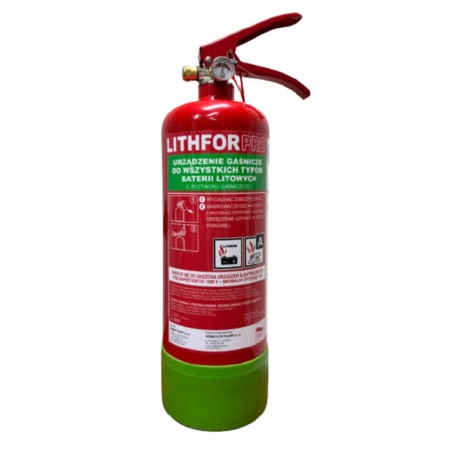
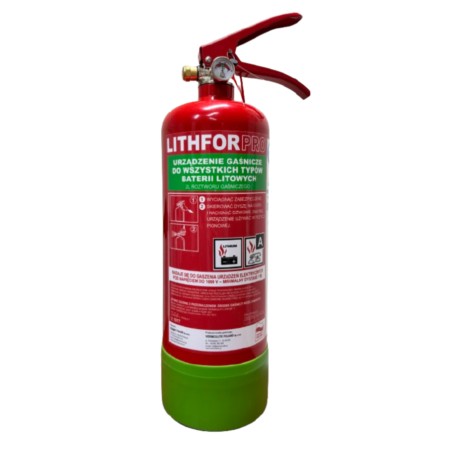
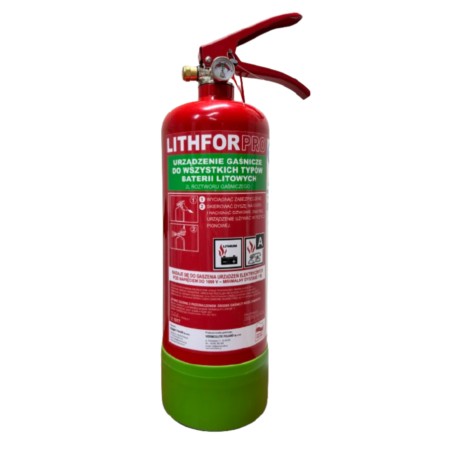
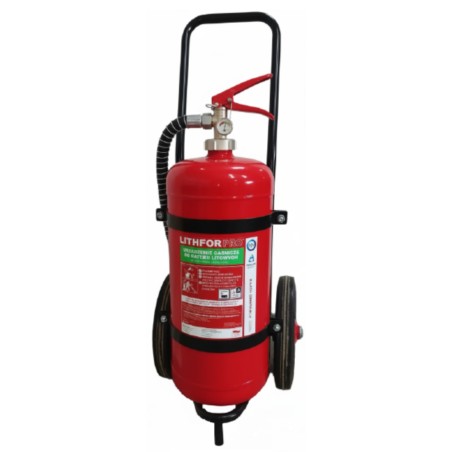
Fire extinguishers and extinguishing agents for batteries and accumulators
Fire extinguishers and extinguishing agents for batteries and accumulators are now a mandatory element of equipment in every company. Lithium-ion batteries are present at every turn in the modern production facility and warehouse. Along with the growing need for their use, one of the most difficult fire hazards to control in industry is increasing. A Li-Ion battery fire is a violent, self-sustaining chemical reaction that cannot be extinguished with a standard powder extinguisher or CO₂.
At 4safety you will find specialist fire extinguishers and extinguishing agents for lithium-ion batteries and accumulators. They have been selected with the realities of industrial environments in mind – production halls, high-bay warehouses and charging zones. If needed, use the help of our team of advisors and complete your set online.
5 Products.
Sort by:
Fire extinguishers and extinguishing agents for batteries and accumulators – Why won’t an ordinary fire extinguisher put out a Li-Ion battery fire and what happens inside the cell?
Most OHS specialists are well familiar with the division of fires into classes A, B, C or D. However, a lithium-ion battery fire does not fit into any of these categories in a way that would allow standard procedures to be applied. It is a hazard that follows its own rules, and to counteract it effectively, you first need to understand the chemical mechanism behind it.
The internal decomposition of a Li-Ion battery cell begins at a temperature of about 80°C. If the process is not stopped at this stage, the phenomenon known as thermal runaway is triggered. The breakdown of one cell is enough to heat neighboring cells to a critical temperature, causing a cascading chain reaction. From the moment it starts, only minutes may pass before a violent fire outbreak occurs. The flame temperature of a lithium battery can reach as high as 1400°C — a value at which most conventional extinguishing agents lose their effectiveness. The increase in pressure inside the casing leads to its rupture and the release of flammable gases, which rapidly intensifies the fire and produces dense, toxic smoke.
Why don’t extinguishing powder or CO₂ work?
Both agents are designed to cut off oxygen from the outside or cool the burning surface. Meanwhile, a lithium-ion battery is itself a source of oxygen. It generates oxygen during electrochemical decomposition. No agent acting only from the outside is capable of interrupting this reaction. What is more, extinguishing powder does not cool the cell, and without intensive cooling even an extinguished battery may reignite after several or even dozens of minutes.
A fire in the charging area for forklift trucks or in a warehouse of backup batteries can engulf the entire hall within a few minutes, leading to production downtime lasting many days, destruction of infrastructure and costly post-accident proceedings. That is why specialized fire extinguishers and extinguishing agents for Li-Ion batteries and accumulators are an essential element of protection in every modern facility.
How to choose a fire extinguisher for batteries and accumulators in an industrial plant — A practical guide
Understanding the technology is the first step. The second is selecting the right equipment for the specific conditions of the plant. A fire extinguisher that is too small, an unsuitable agent or poor placement of the equipment may make the investment in safety ineffective at the moment of real danger.
Checklist for the OHS specialist
Before choosing a fire extinguisher or extinguishing system, answer the following questions:
- Battery energy capacity (Wh) — this is the basic selection parameter. The higher the energy stored in the battery pack, the larger the fire extinguisher or the more efficient the automatic system required.
- Number and concentration of cells — one battery in a drawer and fifty packs at a charging station are two completely different hazard scenarios.
- Supervision mode — are employees constantly present in the charging zone? If not, an automatic extinguishing system is a necessity, not an option.
- Surroundings — the presence of flammable materials nearby, the volume of the room, ventilation, distance from other areas of the plant.
- Certification — make sure the selected equipment has CNBOP certification (Scientific and Research Centre for Fire Protection) or complies with EN 15276-10. This is a requirement in the event of an inspection by the National Labour Inspectorate and the State Fire Service.
Employer’s legal responsibility
Equipping the plant with suitable firefighting equipment is an obligation arising from regulations. The Regulation of the Minister of Internal Affairs and Administration on the fire protection of buildings and the Fire Protection Act impose on the employer the obligation to provide firefighting equipment adapted to the type and scale of hazards in a given facility. In plants where lithium-ion batteries are used, standard powder fire extinguishers do not meet this requirement due to the specific nature of the Li-Ion hazard. Therefore, fire extinguishers and extinguishing agents for batteries and accumulators are the core of modern fire protection systems.
Choose a solution with the help of a 4safety expert
Not sure which fire extinguishers and extinguishing agents for batteries and accumulators are right for your plant? Take advantage of 4safety’s free technical consulting. Our specialists will analyze your battery installation, help you select the appropriate equipment and plan its placement in accordance with applicable standards. We operate comprehensively – from needs assessment, through product selection, to support in implementing OHS procedures.
Safety in the plant starts with the right decision. Make it now — before the need arises.
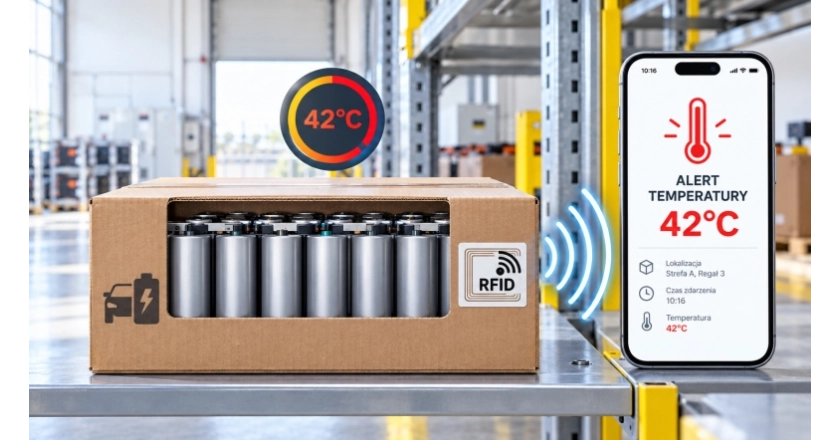
See how this product works in practice
Articles that may interest you
Storage of hazardous substances
Szafy ogniotrwałe – Normy, wymagania i zastosowania - Dokumenty Google
Read more
Odpowiadasz za zabezpieczenia i bezpieczeństwo pracowników w przedsiębiorstwie przemysłowym lub zakładzie produkcyjnym? Inwestycja w szafy ogniotrwałe stanowi zatem jeden z ważniejszych elementów na liście zabudżetowanego wyposażenia.