See our comprehensive guide and choose the ideal industrial mats for your facility based on the work environment, industry, the time an employee stands at the workstation, and occupational health and safety standards requirements.
Categories
Containers for hazardous wasteContainers for oily wasteContainers for flammable substancesLaboratory containersImmersion containersPiston containersOther containersAccessories for containersContainers for removing liquidsContainers for acids and basesBiodegradable waste containersContainers for washing and cleaningContainers for sorbent/sandType I containersType II containers
Fireproof cabinetsSecurity cabinetsCabinets for batteries and accumulatorsCabinets for hazardous substancesCabinets for gas cylindersUnder-table cabinetsCabinets with pull-out shelvesCabinets for personal protective equipment (PPE)Cabinets for plant protection productsWorkshop cabinetsFans and filter fans for cabinets
Anti-slip mats
79 Products.
Show:
Sort by:
Anti-slip mats are the foundation of employee safety in production plants, warehouses, halls, ports, shops, but also offices and public institutions—wherever there is a risk of slipping. They are an invaluable element that increases comfort and convenience at work, protecting against injuries and accidents.
Did you know that slips and falls are responsible for 20 to 30% of long-term absences from the workplace? Anti-slip mats are an excellent way to reduce the number of accidents when there is a potential risk of slipping. Floor mats are an ideal and inexpensive solution that protects your facility from hazards related to moisture while ensuring safety for employees and guests. Choose the right type of mat for your company and check what to pay attention to.
Properties of a good anti-slip mat:
A good industrial mat must meet several key properties to effectively fulfill its role:
- Slip resistance: this is the basic feature of industrial mats. The mat should effectively reduce the risk of employees slipping, especially on wet or oily surfaces. It should have a special structure that reduces slipping while providing grip for employees and customers.
- Resistance to industrial conditions: the mat should withstand harsh conditions present in industry, such as contact with oils, chemicals, or high temperatures.
- Easy maintenance: industrial mats should be easy to keep clean and hygienic.
- Ergonomics: mats provide flexibility and cushioning, which translates into employee comfort and a reduction in pain associated with standing work.
- Durability: a good industrial mat should last for a long time without the need for frequent replacement.
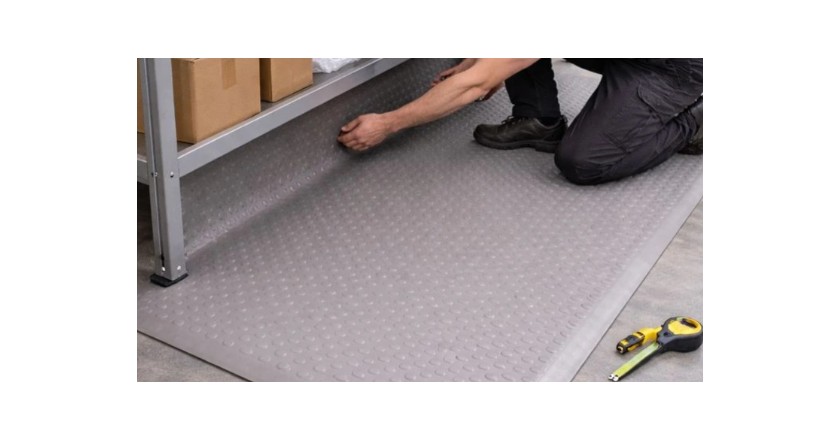
- Possibility of individual adjustment: the mat should be fitted to the workstation, cut to size, and finished with special edging strips that protect against tripping.
- Adapted to the conditions prevailing in the plant: an anti-slip mat may also have other properties that increase safety, e.g. it may have antistatic properties.
Hazards that an industrial mat protects against:
An anti-slip mat plays a key role in ensuring employee safety in many industries. It protects against various hazards, including:
- Slips and falls: the mat effectively reduces the risk of slipping on wet, oily, or slippery surfaces. Especially in wet areas, on smooth floors, and hard surfaces such as tiles and laminate, these mats increase traction while also providing fatigue relief.
- Spinal and joint injuries: Ergonomic mats cushion pressure on employees' joints and spine, which reduces the risk of pain-related ailments. They are essential for standing workers to provide reliable grip and cushioning.
- Protection from cold: in some cases, industrial mats insulate against cold floors, which increases comfort, protects joints, and reduces the risk of colds for employees working while standing.
How to choose the right anti-slip mat?
There is a wide selection of various types of floor mats available on the market, fulfilling different functions. Regardless of whether you need a standard industrial mat or a mat for rooms with high cleanliness standards, you will certainly find a mat suitable for your needs. However, when you are looking for a mat for your company, the variety of available options can be overwhelming.
The first step is to precisely define your needs. What task is the mat you are looking for supposed to perform? Do you need a mat that will provide comfort and support for an employee who spends many hours standing in one place? Or perhaps you want a mat that will effectively protect against slips and falls?
Precisely defining your needs will allow you to narrow the search area down to a specific type of mat, which will significantly facilitate the selection process. Regardless of the specific requirements of your workplace, we offer a wide selection of mats made from the highest quality materials that have undergone rigorous quality testing.
When choosing an anti-slip mat, it is worth considering several key issues:
- Type of industry: the type of work and the type of industry will influence the choice of the appropriate mat. For example, in the food industry, it is important that the mat is easy to clean and resistant to chemicals.
- Working conditions: determine whether the mats will be exposed to oils, chemicals, or high temperatures. Choose mats that meet the appropriate safety standards.
- Size and shape: adjust the size and shape of the mat to the specific work area. Mats must be well fitted to workstations in order to fulfill their functions.
- Ergonomics: if employees spend a lot of time standing, mats with ergonomic properties should be chosen, thicker and softer.
The impact of an ergonomic anti-slip mat on comfort and productivity:
An industrial mat with anti-slip properties can significantly improve employee comfort and productivity. This benefits both employees and employers:
Reduced pain complaints: Ergonomic mats cushion pressure on the joints, which translates into less pain in the spine and joints.
Greater productivity: Work comfort affects employee efficiency. Hard standing work becomes less tiring.
Lower absenteeism: Thanks to the reduction of injuries and health complaints, employee absenteeism may be lower.
Types of anti-fall mats:
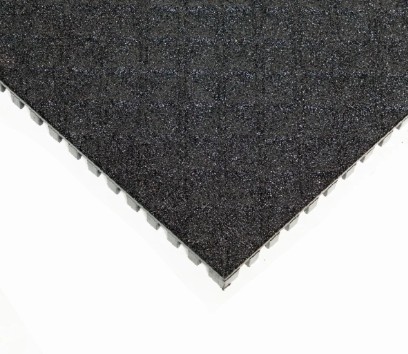
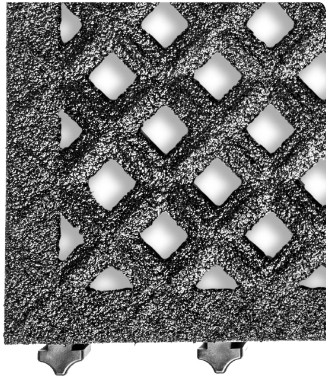
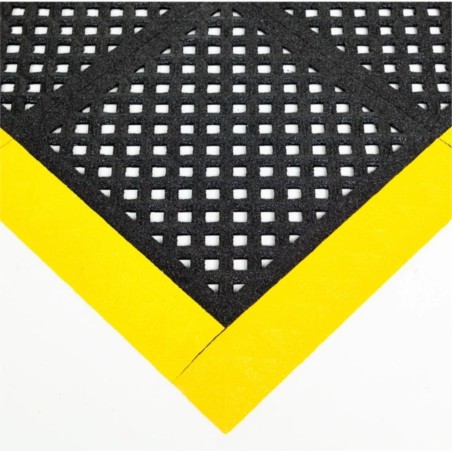
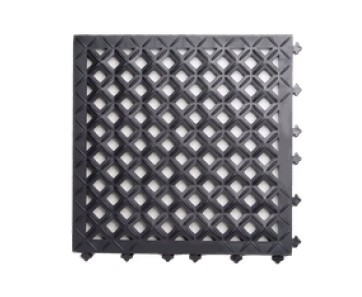
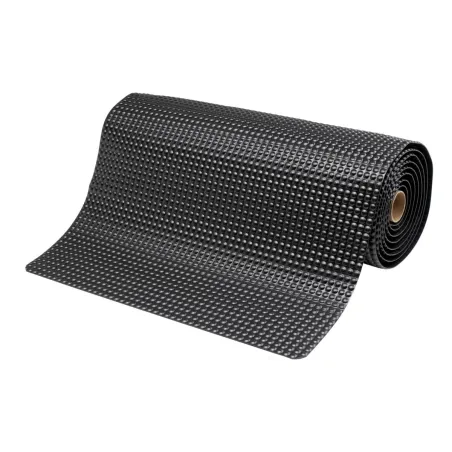
- drainage mats - allow liquids to flow through and prevent them from accumulating on the mat,
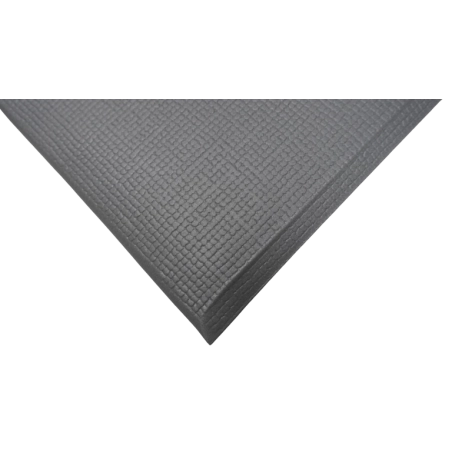
- workstation mats - mats with cushioning properties that affect employee comfort,
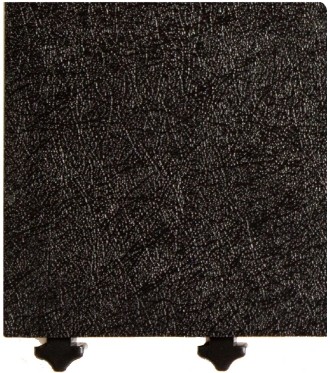
- tile mats - ideal for complex areas, you can conveniently adapt them to your needs,
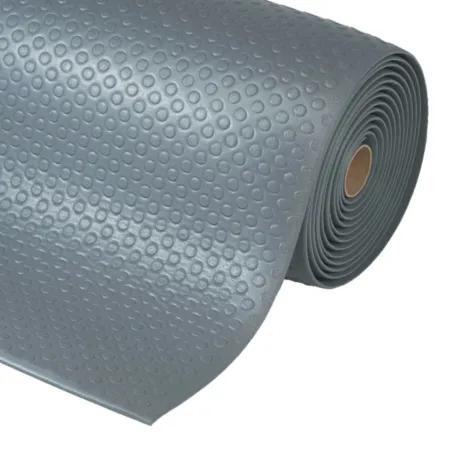
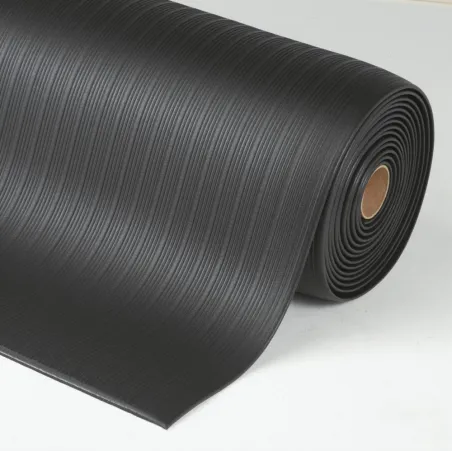
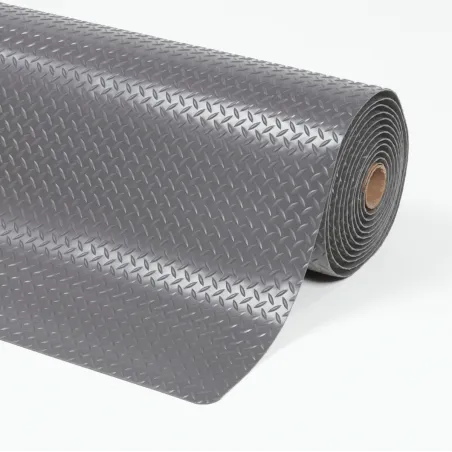
- roll mats - best for large workspaces, flexible and comfortable.
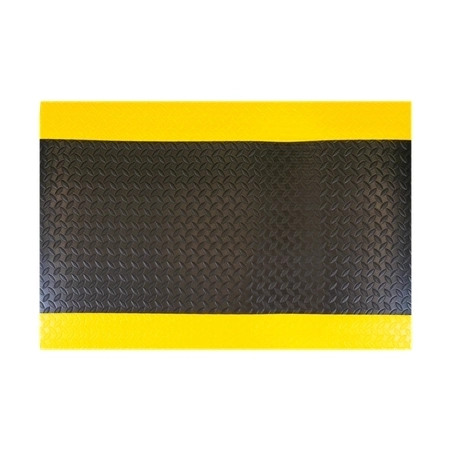
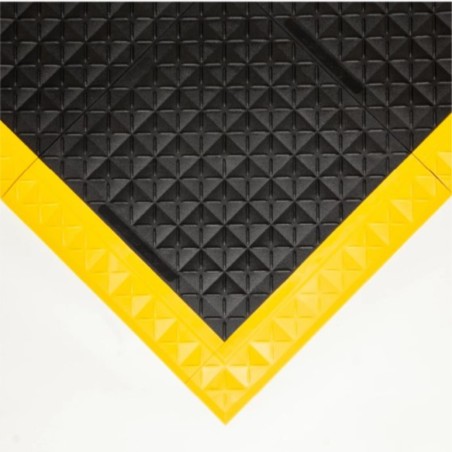
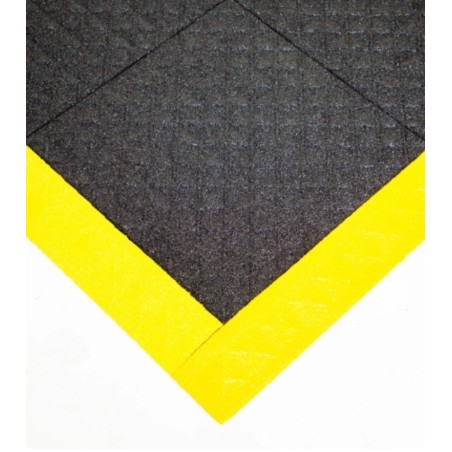
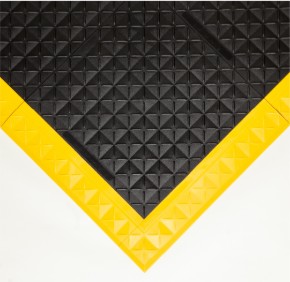
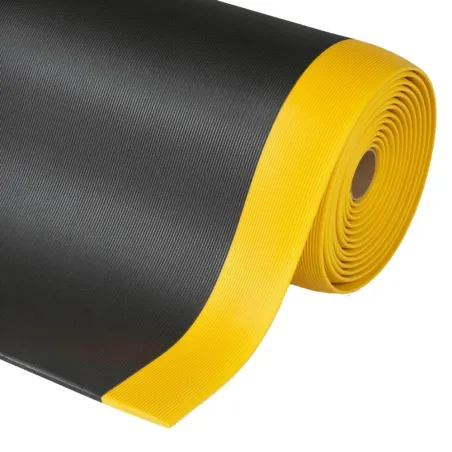
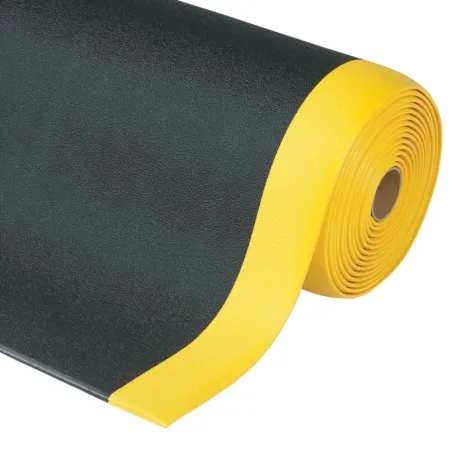
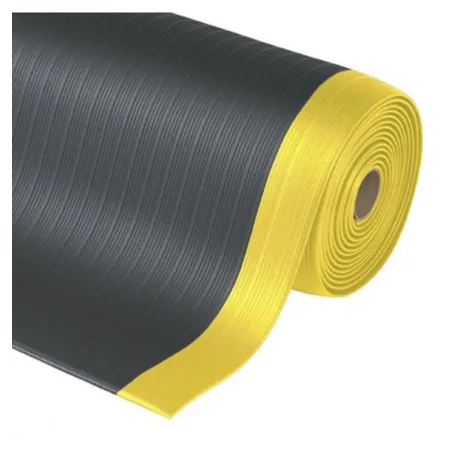
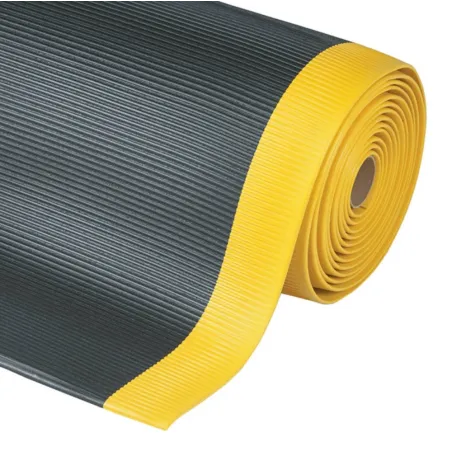
Mats come in various colors. The most common choice is black and gray with yellow edges.
Some industrial mats can be used outdoors.
Learn what properties outdoor mats should have:
Weather resistance: outdoor anti-slip mats must be resistant to weather conditions such as rain, snow, frost, and UV radiation. The materials used to manufacture these mats should retain their properties even in difficult weather conditions.
High traction: these mats should have a surface that ensures maximum grip, even in wet or slippery conditions.
Abrasion resistance: mats used outdoors must be resistant to wear caused by frequent use and exposure to various types of loads, such as pedestrian traffic or vehicle passage.
Drainage: in the case of rainfall or melted snow, the mats should have an appropriate drainage system that allows water to drain from beneath the mat.
Chemical resistance: if the mats will be exposed to contact with chemical substances, they should be resistant to corrosion and damage caused by aggressive substances.
Durability: outdoor mats should be made of durable materials that will withstand long-term use and changing weather conditions.
Edge safety: the edges of the mat should be designed in such a way as to minimize the risk of tripping or slipping on them.
It is also worth paying attention to the specific needs and conditions prevailing in a given outdoor area in order to choose mats that will best meet expectations and guarantee user safety.
In our offer you will find mats with the new REDSTOP technology.
Redstop effectively eliminates the problem of slipping and shifting of floor mats on various types of smooth floor surfaces. Such surfaces include vinyl composite tiles, painted concrete or surfaces coated with epoxy resin, vinyl flooring, and ceramic tiles. These mats increase the friction between the underside of the mat and a clean, dry floor surface, resulting in a secure and stable fixing of the mat, without leaving sticky or adhesive residue.
When we talk about floor mats and their slip resistance, we most often focus on the user standing or walking on the mat surface and on the appearance of the mat itself. However, mat slippage refers to the movement of the mat as a whole and the interaction between the underside of the mat and the floor surface on which it lies. This phenomenon occurs more often in workplaces where floors are smooth, level, or protected with special coatings. Mats tend to shift especially when the user steps onto or off the mat, as well as in applications requiring frequent turning or movement. In smaller mats, placed at workstations or for individual use, this problem is more visible, as larger mats often have sufficient weight to remain in place.
The assessment of mat movement or slippage consists in analyzing its Coefficient of Friction (COF). The coefficient of friction defines the ratio of the friction force between two surfaces to the force pressing them together. This indicator depends on the type of materials from which these surfaces are made. For example, ice on a steel surface has a low COF, while rubber on asphalt achieves a high coefficient of friction. Coefficient of friction values can range from almost zero to values exceeding 1. The higher the number, the greater the slip resistance or resistance to sliding.
The Occupational Safety and Health Administration (OSHA) recommends a minimum coefficient of friction of at least 0.5. This indicator helps ensure adequate slip resistance on surfaces we walk or work on. In some cases, it may be necessary to use a higher COF value, for example when carrying objects, pushing or pulling them, as well as when walking up or down ramps. It should be remembered that coefficient of friction values are not constant and can be influenced by various variables, such as temperature, air humidity, or even the condition of the mat surface itself. For floor coverings and their anti-slip properties, the weight pressing the mat to the floor and the overall condition of the floor surface (whether it is wet, oily, dirty, etc.) are also important.
Take care of the safety and comfort of your employees. By browsing the offers of available anti-slip mats, you will find many options tailored to the needs of various industries and businesses. Investing in good industrial mats is an investment in safety and work efficiency.
FAQ
- What materials are used in anti-slip mats?
The materials used in anti-slip mats are usually rubber, PVC, latex, or blends of these materials. Each of them has its advantages and is suitable for different working conditions.
- Are industrial mats resistant to oils and chemicals?
Yes, many industrial mats are specially designed to be resistant to oils, chemicals, and other aggressive substances. However, it is worth carefully checking the mat's specifications before purchase.
- How long should a good industrial mat last?
The durability of an industrial mat depends on its quality and the intensity of its use. A good-quality mat can last for many years.
- Do ergonomic mats really improve work comfort?
Yes, ergonomic mats significantly improve employees' work comfort, especially for those working while standing for longer periods.
- Which industries use industrial mats?
Industrial mats are used in many industries, including manufacturing, the food industry, medicine, warehouses, automotive, and many others.
- What are the differences between anti-slip mats and standard mats?
The main difference is the anti-slip property. Anti-slip mats are designed specifically to prevent slipping.
Choose the right anti-slip mat from our wide range. Our advisor will help you select the ideal products for the conditions in your facility. Additionally, you can arrange for on-site cutting and installation of the mats, which will also save you time.
See how this product works in practice
Ergonomics
How to choose an industrial mat for a facility? A comprehensive guide
Read more
Articles that may interest you
Storage of hazardous substances
Szafy ogniotrwałe – Normy, wymagania i zastosowania - Dokumenty Google
Read more
Odpowiadasz za zabezpieczenia i bezpieczeństwo pracowników w przedsiębiorstwie przemysłowym lub zakładzie produkcyjnym? Inwestycja w szafy ogniotrwałe stanowi zatem jeden z ważniejszych elementów na liście zabudżetowanego wyposażenia.