
Laboratory eyewash stations – Application, requirements and availability
Categories
Containers for hazardous wasteContainers for oily wasteContainers for flammable substancesLaboratory containersImmersion containersPiston containersOther containersAccessories for containersContainers for removing liquidsContainers for acids and basesBiodegradable waste containersContainers for washing and cleaningContainers for sorbent/sandType I containersType II containers
Fireproof cabinetsSecurity cabinetsCabinets for batteries and accumulatorsCabinets for hazardous substancesCabinets for gas cylindersUnder-table cabinetsCabinets with pull-out shelvesCabinets for personal protective equipment (PPE)Cabinets for plant protection productsWorkshop cabinetsFans and filter fans for cabinets
Eye washers
16 Products.
Sort by:
In an industrial environment where workers come into contact with toxic, corrosive substances or high temperatures, proper eye and face protection is a priority. That is why eyewash stations, also known as eye washers or eye rinsers, are an indispensable element of equipment in workplaces with elevated risk. Every eyewash station from 4safety meets the highest standards. So choose quality, effectiveness, and compliance with safety standards. Join the group of satisfied partners today.
Do you have questions and need support in putting together the right equipment set for your industrial hall or company? The 4safety team is at your disposal. Eyewash stations hold no secrets for us, so they do not have to hold any for your team either. Choose comprehensive cooperation and find out what we have to offer as experienced experts.
Eyewash stations – why does quality matter?
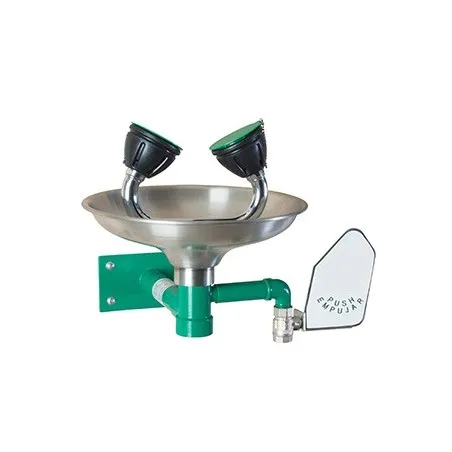
The main task of eyewash stations is the immediate and effective rinsing of contaminants and harmful substances from an employee’s eyes and face. This device must ensure an adequate water flow, proper temperature, and optimal operating time to effectively reduce the risk of serious eye damage. Eyewash stations are used not only in the event of accidents. It is worth using them after work in industrial-production plants or warehouses. Their purpose is to reduce the risk of particles or chemical substances getting into the eyes and onto the face after removing protective clothing together with goggles.
High-quality eyewash stations:
- provide a stable and even stream of water,
- are made of materials resistant to corrosion and chemicals,
- have approvals and certificates confirming their compliance with European and American safety standards (e.g. EN 15154-2, ANSI Z358.1),
- are easy to use, even in an emergency,
- enable immediate access to water with the appropriate parameters.
The lack of adequate-quality eyewash stations may result in insufficient effectiveness of eye rinsing. This increases, among other things, the risk of complications, permanent vision damage, and even loss of the ability to work. Do not take risks and ensure comprehensive equipment for your company with 4safety.
Eyewash stations are not all that we have to offer. In the remaining categories, elements of equipment waiting for you include, among others:
- spill containment pallets,
- sorbents,
- bollards,
- containers for hazardous waste,
- safety cabinets,
- industrial mats.
And many other components. If you need support in putting together a set, we are at your disposal. Just contact us by phone or email.
Where should high-quality eyewash stations be installed?
Eyewash stations are installed almost everywhere there may be a threat to workers’ eyes or face. They are widely used, among others, in:
- the foundry industry,
- the metallurgical industry,
- the chemical industry,
- the paint industry,
- steelworks and foundries,
- production plants where fine particles and dust are released during production processes,
- wastewater treatment plants and water treatment stations,
- rooms with pool chemicals.
In accordance with occupational health and safety principles, eyewash stations should be placed in easily accessible locations so that an injured worker can use them within a few seconds of exposure to harmful substances. Their placement is particularly important in:
- chemical laboratories,
- production and industrial plants,
- wastewater treatment plants and water treatment stations,
- chemical substance warehouses,
- battery charging rooms,
- paint shops, electroplating plants, and metal foundries.
Additionally, eyewash stations should be installed in places with constant access to clean water and free from obstacles that could hinder their use in an emergency. Learn more with 4safety.
Eyewash stations as part of a comprehensive safety system
High-quality eyewash stations are not only mandatory equipment in many industrial plants, but also a key element of the employee health protection system. Their use should be supplemented with regular training, technical inspections, and device performance tests to ensure their effectiveness in every situation.
Investing in high-quality eyewash stations is a guarantee of a quick and effective response in the event of a threat. By choosing the right models, entrepreneurs minimize the risk of serious accidents and take care of their team’s safety, in accordance with applicable standards and best practices in the field of occupational health and safety protection.
Eyewash stations – FAQ – Frequently asked questions
When is the use of an eyewash station in the workplace mandatory?
The obligation to install eyewash stations in the workplace results from occupational health and safety regulations as well as from European standards – such as PN-EN 15154. They clearly indicate that eyewash stations must be available wherever employees are exposed to contact with chemical substances that pose a threat to eyesight or the skin of the face. This applies especially to sectors where acids, alkalis, organic solvents, irritating liquids, or toxic dusts are present. The lack of an eyewash station in such conditions may lead to serious health injuries and expose the employer to legal consequences resulting from failure to fulfill OHS obligations. This responsibility includes both fines and the possibility of the plant's operations being stopped by the labor inspectorate.
How does an eyewash station work and what are its basic functions?
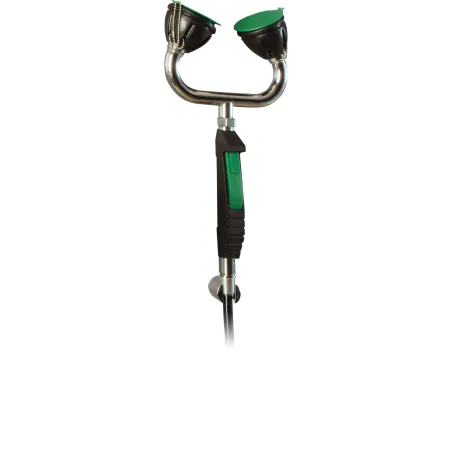
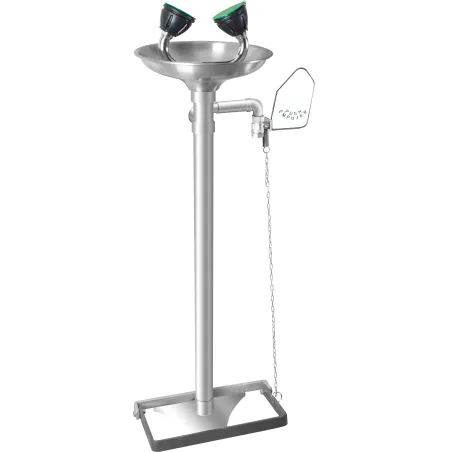
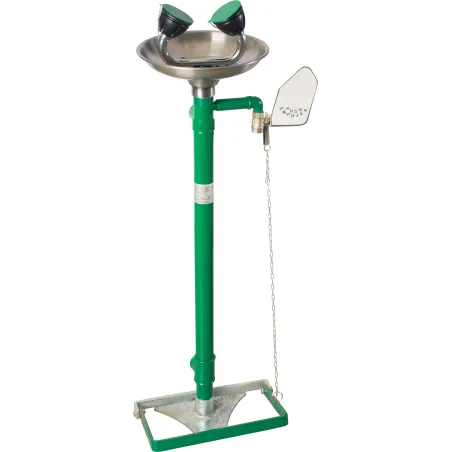
An eyewash station is a device intended to enable quick and effective rinsing of the eyes in an emergency situation. The mechanism should begin operating by activating the valve – e.g. starting the eyewash station with a foot pedal, a hand lever, or automatically after tilting the head assembly. Water should flow simultaneously from two nozzles positioned at an optimal spacing, allowing both eyes to be rinsed at the same time without the need to use hands. A key parameter is constant and gentle water pressure with an appropriate flow rate – most often within the range of 6 to 12 liters per minute. The water temperature is also important, and it should be within the range of 15 to 37°C.
What types of eyewash stations are there and which of them work best in industrial plants?
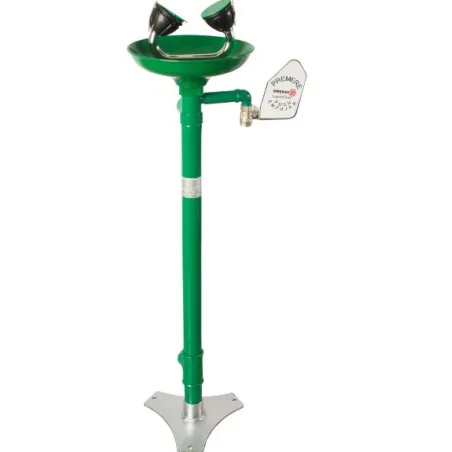
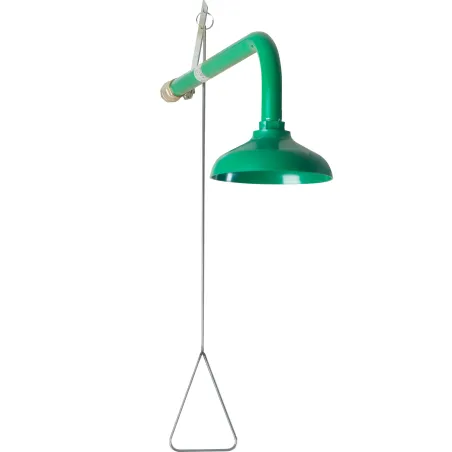
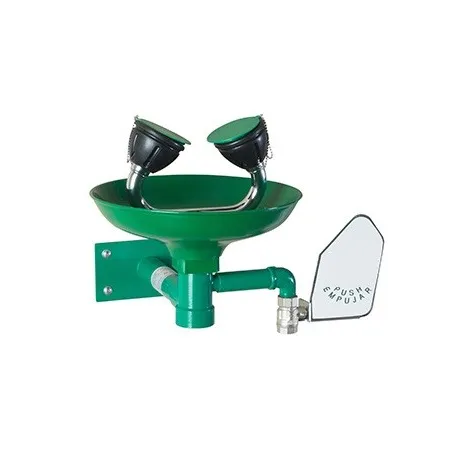
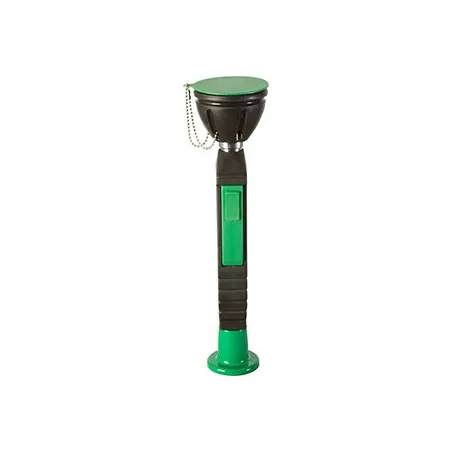
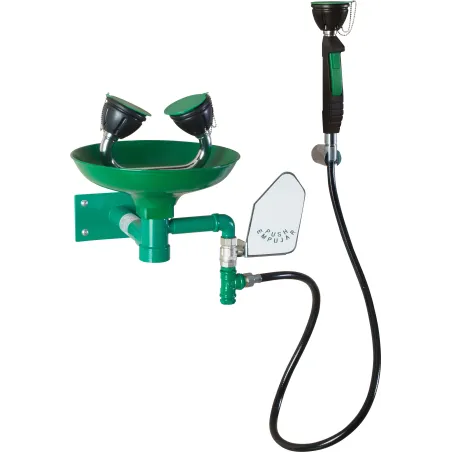
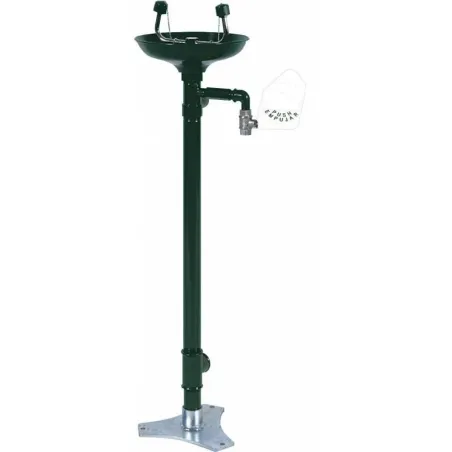
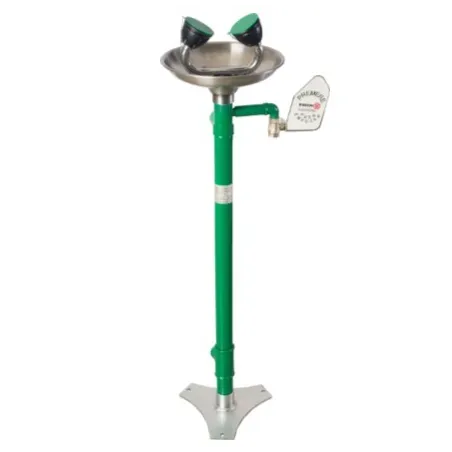
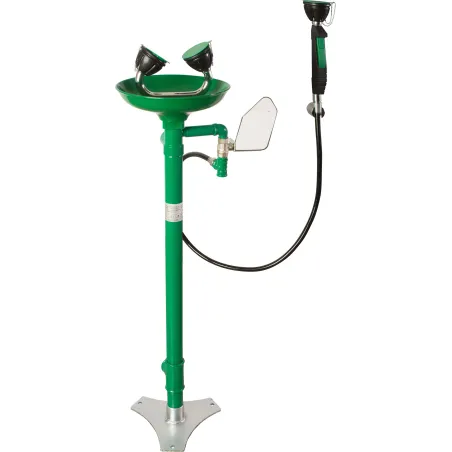
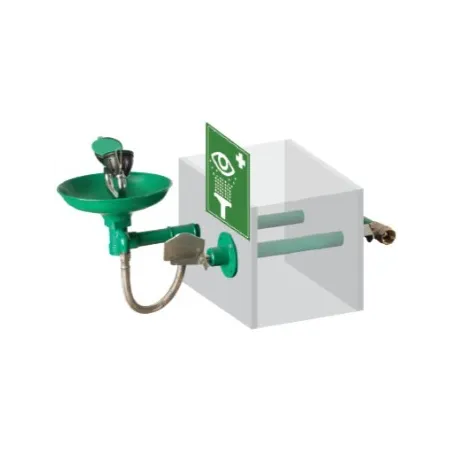
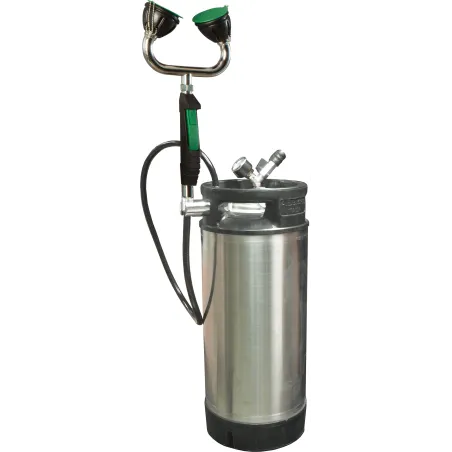
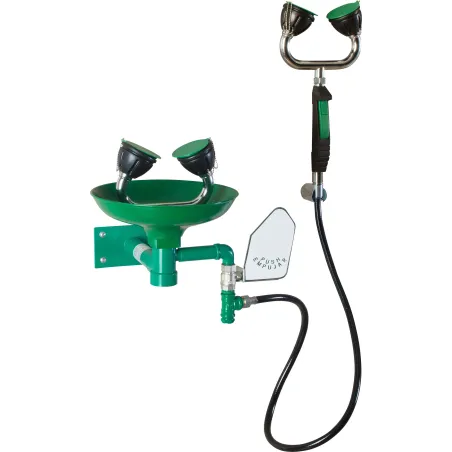
The most universal are freestanding eyewash stations, which can be placed anywhere in the production hall, ensuring broad access for employees. In places with limited space, wall-mounted or countertop eyewash stations work perfectly – ideal for laboratories and chemical plants. In the case of facilities where there is a risk of dangerous substances coming into contact with both the eyes and the entire body, combination versions are recommended – combining the function of an eyewash station and an emergency shower. In places where there is no permanent connection to the water supply network, mobile eyewash stations can be used – equipped with a water tank and a pressure valve.
What criteria should be taken into account when choosing an eyewash station for a workplace?
The key aspect is location. Eyewash stations must be located in the immediate vicinity of the risk zone and provide access within a few seconds. It is also important to ensure a constant source of clean water at the proper temperature and pressure. The eyewash station should be made of materials resistant to corrosion, chemicals, and mechanical damage – especially if it will be used in a demanding production environment. Attention should be paid to operating ergonomics. The device must be easy to start and must not require the use of great force. Ease of cleaning and maintenance is equally important. The final choice should also take into account compliance with current standards and legal requirements, because only then will the eyewash station fulfill its role in an emergency. Therefore, choose solutions from 4safety.
How should eyewash stations be properly maintained and tested to ensure their effectiveness?
In accordance with OHS guidelines and manufacturers' recommendations, eyewash stations should be tested at least once a week. Tests include: checking water pressure, nozzle patency, cleanliness of components, and correct operation of valves. In the case of portable eyewash stations, it is also extremely important to regularly empty and refill the tank with fresh water – according to the manufacturer's schedule. All maintenance activities should be documented in the form of an inspection log. This makes it possible to maintain full control over the technical condition of the equipment and also facilitates audits and inspections.
See how this product works in practice
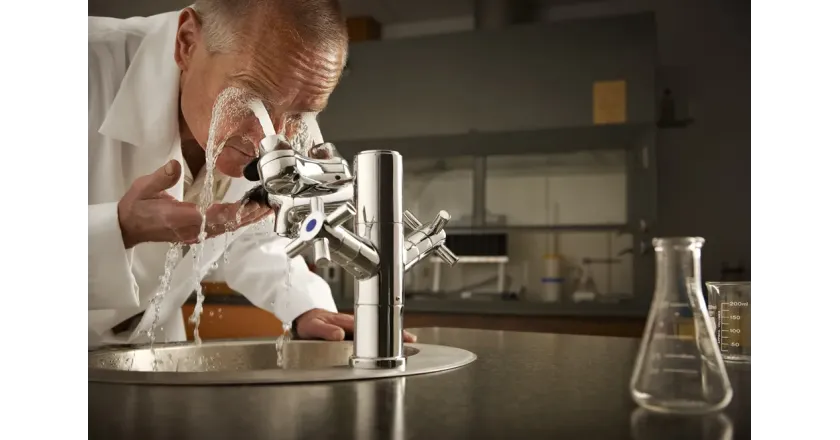
Laboratory eyewash stations
Laboratory eyewash stations – Application, requirements and availability
Read more
Articles that may interest you
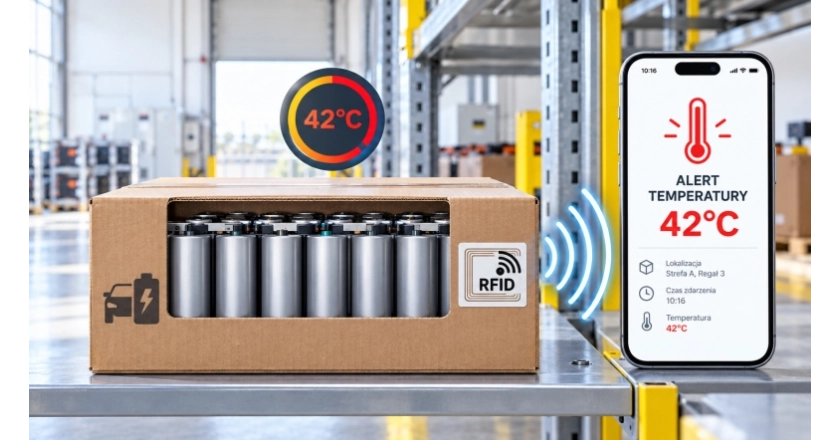
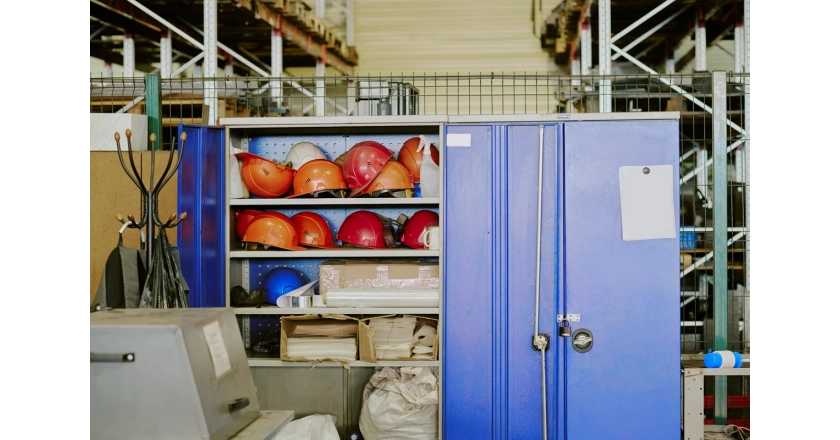
Storage of hazardous substances
Szafy ogniotrwałe – Normy, wymagania i zastosowania - Dokumenty Google
Read more
Odpowiadasz za zabezpieczenia i bezpieczeństwo pracowników w przedsiębiorstwie przemysłowym lub zakładzie produkcyjnym? Inwestycja w szafy ogniotrwałe stanowi zatem jeden z ważniejszych elementów na liście zabudżetowanego wyposażenia.