Wiedza
- Case study - implementation of the LOTO system in a production plant
- Lockout/Tagout - what is it and why is it worth introducing LOTO?
- Why is it worth implementing a LOTO system with Marcin from 4safety?
- Case study: implementation of a flexible barrier system in a manufacturing plant!
- Steel or flexible: which industrial bumpers should you choose?
- Case study: protection of high-bay racking with a flexible barrier system
- How to safely store lithium-ion batteries?
- Explosion of lithium-ion batteries — how to avoid it?
- Hazardous substances in the storage container
- Safe crane operating zone
- LED safety projectors
- Classification of flexible barriers
- Everything about IBM
- Do It Yourself - industrial printers
- The meaning of the padlock in the LOTO system
- Why is it worth using ergonomic mats?
- Anti-slip protections
- A catch basin is good practice or a regulatory requirement?
- Industrial shelving - types and applications
- About employee comfort and safety
- Frost and structural monitoring of the facility
- What information should a nameplate contain?
- How to prevent accidents with safety containers?
- Fire-resistant cabinet – what should you pay attention to when buying?
- Selection of a spill containment tray
- Hazardous substances - what to do in the event of a leak?
- Hazardous materials under the supervision of an ADR advisor
- What problems do industrial barriers solve?
- Color coding of pipelines – colors, arrows, inscriptions
- Lasers for communication routes
- Natural neutralization of substances
- Energy-intensive barriers – Types, characteristics and application
How to safely store lithium-ion batteries?
Have you seen another headline online about a battery explosion?
Do you have battery-powered devices in your facility and wonder whether you are handling them properly?
Read on and find out how to store, charge, and use lithium-ion batteries so you can feel safe around them.
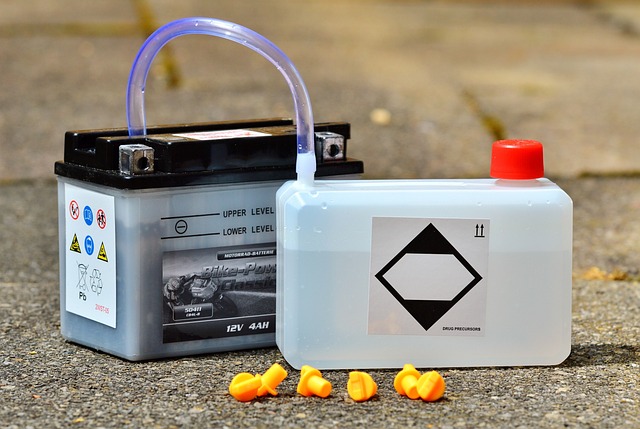
Lithium-ion battery — how to take care of it?
Lithium batteries significantly improve work, but they are not free from hazards. Batteries require special caution during:
USE
the battery should be checked regularly for cracks, bulges, or other damage, as any of these may lead to a fire. In addition, batteries that have been dropped or struck require special attention, even if they do not appear to have external damage at first glance
TRANSPORT AND DISPOSAL
Li-Ion batteries require special disposal; they should not be thrown into regular trash. Vehicles powered by batteries should be parked only in places designated for this purpose, outside the storage area for flammable materials
CHARGING
during charging, the battery should be placed on a hard, dry surface in a well-ventilated area, the charger should be original, charging should be monitored, and the device should not remain under the charger longer than necessary for a full charge. Charging the battery at extreme temperatures, i.e. below 5 °C or above 30 °C, may damage the cells, void the warranty, and even cause a fire
STORAGE
batteries should be stored in a cool, ventilated place. However, they should not be exposed to sub-zero temperatures. Storage at high temperatures (e.g. in a heated room or near a heat source) accelerates the aging process and significantly increases the risk of fire
Why does ignition occur?
Lithium batteries have long been classified as dangerous goods under transport law and are subject to regulations concerning hazardous materials, which are constantly becoming stricter. Improper use of a battery or damage to it can very easily lead to an uncontrolled fire.
Lithium-ion cells are exposed to self-ignition leading to explosion and fire. Most often, an explosion occurs as a result of a short circuit. The cause of an explosion may also be high temperature leading to overheating of the cells. The larger the battery, the greater the number of cells that can ignite in a cascade, causing further explosions.
There may be several causes of battery ignition:
- Improper use or charging, not in accordance with the instructions
- Mechanical damage
- Defective manufacturing
- Or even the ordinary aging of the battery

Battery fires continue to be one of the most difficult and most puzzling incidents for fire services. After the fire is extinguished, quarantine and observation of the battery are necessary because there is a risk of re-ignition. A fire caused by battery ignition is intense and difficult to extinguish, and it spreads quickly. Batteries explode, scattering fragments around the facility. They may also emit fumes and gases harmful to people and the environment. Additionally, the residues left after extinguishing the fire also contain harmful substances.
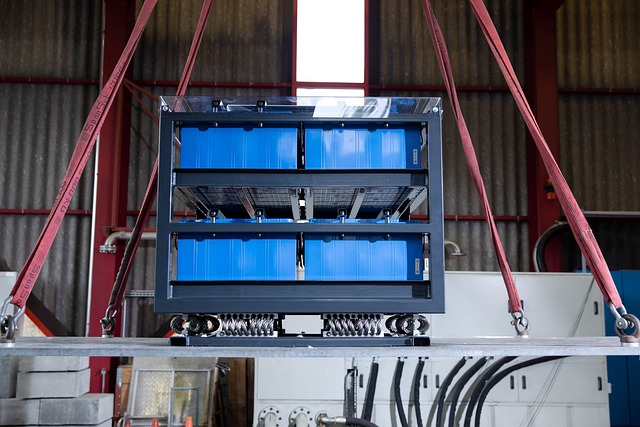
Lithium-ion batteries – hazards
The importance of lithium batteries is constantly increasing in our daily lives. Lithium-ion batteries appear not only in small devices such as phones or laptops, but also increasingly often in industrial equipment and vehicles, e.g. forklifts.
The industrial use of Li-On batteries has increased thanks to their long service life, high power, low maintenance costs, small size, and light weight. A number of benefits also come with risks that are worth knowing about.
The risk associated with cell ignition cannot be completely eliminated. But the level of safety can be increased by using products that enable the safe charging, storage, and transport of batteries. Due to the increasingly frequent use of lithium-ion batteries in everyday life, battery fires are also becoming more and more common.
GOOD TO KNOW
Devices are more susceptible to fires while charging
Storage of lithium-ion batteries
Storing lithium batteries requires special caution. We recommend storing batteries in dedicated fire-resistant cabinets or storage rooms adapted for this purpose, e.g. battery containers.
Even if you have small quantities of batteries in your workplace, you should provide a safe space for their storage and charging. In the event of a fire, a battery stored in a battery cabinet is isolated for an additional 90 minutes, giving valuable time for evacuation and rescue services operations.
What to pay attention to when storing and charging batteries:
✴️ Follow the manufacturer's instructions regarding the general use of batteries.
✴️ Temperature: lithium-ion batteries should be stored at a controlled temperature, preferably between 15°C and 25°C. Extreme temperatures can lead to battery degradation and increase the risk of fire.
✴️ Humidity: battery storage rooms should be dry and well ventilated.
✴️ Batteries should be stored away from flammable materials, chemicals, and other heat sources.
✴️ Warehouses should be equipped with appropriate fire extinguishing systems as well as smoke and fire detection systems.
✴️ Batteries should be sorted according to their condition (new, used, damaged) and types to avoid mistakes and increase safety.
✴️ Batteries should be stored in stable containers or on shelves.
✴️ Use original and dedicated chargers. An inappropriate charger may lead to a short circuit and fire.
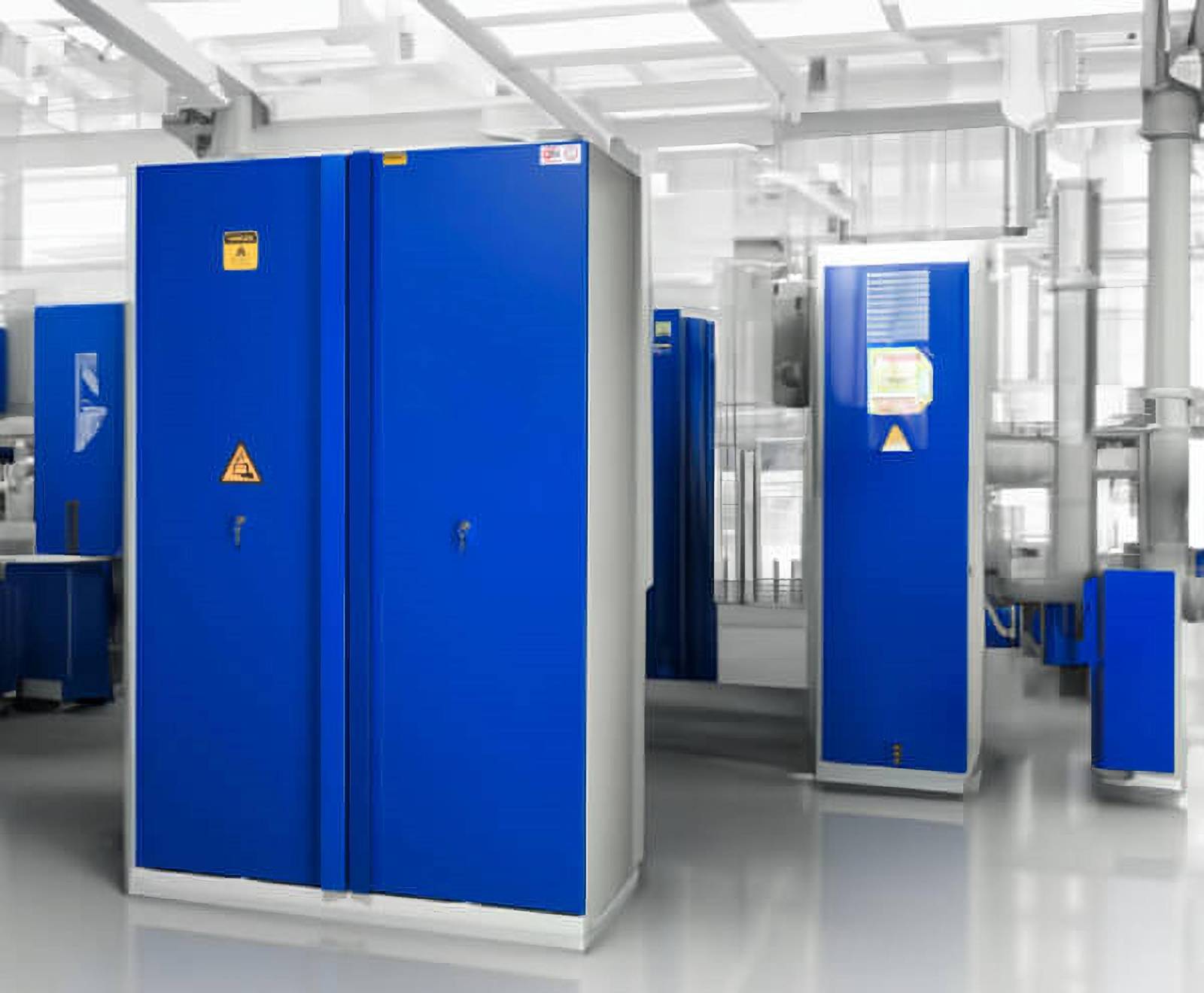
Battery cabinets
(lithium-ion cells)
Cabinets are the ideal solution for safe storage and charging of batteries.
Depending on the model, the cabinets are equipped with ventilation, which prevents heat buildup inside the cabinet.
An automatic fire extinguishing system ensures even greater safety during charging of lithium-ion batteries.
In models with an integrated fire extinguishing system, after fire is detected it is automatically activated and begins extinguishing operations.
An additional quarantine system in the event of a fire will extinguish the batteries and prevent re-ignition.
What features should battery cabinets have?
✅ Fire resistance 90 min - guaranteed fire protection for 90 min
✅ Insulation resistant to extreme temperatures
✅ Interior finish with high resistance even to aggressive vapors
✅ Hydraulic door closure at ambient temperatures above 47°C
✅ Ventilation channels close at a temperature of 70°C
✅ Certificate compliant with the new EN14470-1 TYPE 90 standard
✅ Ability to charge batteries inside the cabinet
✅Grounding option
Cabinet with quarantine system
In the event of a lithium-ion battery fire, it is very important to prevent the further spread of the fire. Thanks to a battery cabinet with additional protection in the form of quarantine, we can effectively and safely cut off the power source of the charging batteries and store them in a water tank, preventing re-ignition.
https://www.youtube.com/watch?v=a20P5-3LHekControl and protection
If lithium-ion batteries catch fire, a special fuse will activate the mechanism that rotates the shelves and moves the batteries to a water tank located at the bottom of the cabinet. At this moment, the batteries will also be disconnected from the charging source.
Discover our other cabinets for safe battery storage:
You may also be interested in: