Wiedza
- Case study - implementation of the LOTO system in a production plant
- Lockout/Tagout - what is it and why is it worth introducing LOTO?
- Why is it worth implementing a LOTO system with Marcin from 4safety?
- Case study: implementation of a flexible barrier system in a manufacturing plant!
- Steel or flexible: which industrial bumpers should you choose?
- Case study: protection of high-bay racking with a flexible barrier system
- How to safely store lithium-ion batteries?
- Explosion of lithium-ion batteries — how to avoid it?
- Hazardous substances in the storage container
- Safe crane operating zone
- LED safety projectors
- Classification of flexible barriers
- Everything about IBM
- Do It Yourself - industrial printers
- The meaning of the padlock in the LOTO system
- Why is it worth using ergonomic mats?
- Anti-slip protections
- A catch basin is good practice or a regulatory requirement?
- Industrial shelving - types and applications
- About employee comfort and safety
- Frost and structural monitoring of the facility
- What information should a nameplate contain?
- How to prevent accidents with safety containers?
- Fire-resistant cabinet – what should you pay attention to when buying?
- Selection of a spill containment tray
- Hazardous substances - what to do in the event of a leak?
- Hazardous materials under the supervision of an ADR advisor
- What problems do industrial barriers solve?
- Color coding of pipelines – colors, arrows, inscriptions
- Lasers for communication routes
- Natural neutralization of substances
- Energy-intensive barriers – Types, characteristics and application
Color coding of pipelines – colors, arrows, inscriptions
Why is it worth marking pipelines?
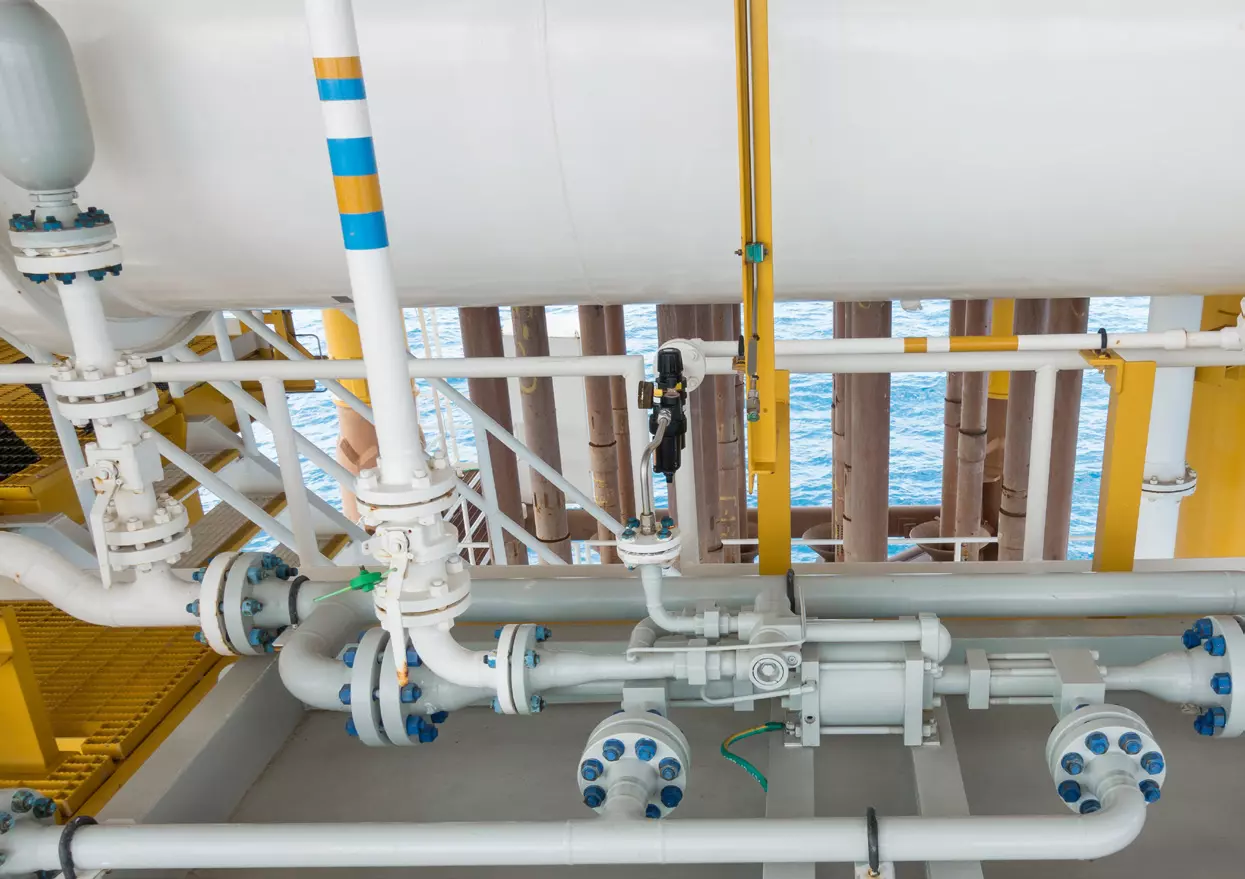
Proper pipeline marking is one of the key aspects of maintaining safety in the workplace. Correctly marked pipelines help employees identify the substances transported through a given pipeline and avoid potential hazards. Color coding includes colors, arrows, and labels that together create clear and intuitive identification systems.
Find out:
- What will you gain from proper pipeline marking?
- How to do it effectively and quickly?
- What are the safety requirements for pipeline marking?
- What are the marking rules according to ISO 20560?
What will you gain from proper pipeline marking?
- How to do it effectively and quickly?
- What are the safety requirements for pipeline marking?
- What are the marking rules according to ISO 20560?
1. Improved safety
Color coding of pipelines makes it easy to identify the substances transported through a given pipeline. Thanks to this, employees can avoid potentially dangerous situations and take appropriate precautions. Color marking also helps in responding quickly to failures or leaks, which can contribute to minimizing damage and hazards.
2. Increased work efficiency
Employees who have easy access to information about the substances transported through pipelines can perform their duties faster and more effectively. Color coding of pipelines eliminates the need to search for information in documentation or ask questions, which translates into greater work efficiency and the ability to respond properly and more quickly in the event of a potential hazard.
3. Elimination of mistakes
Color markings are clear and intuitive, which eliminates the risk of mistakes or misinterpretation of information. Employees can quickly and easily identify the substances transported through pipelines, which minimizes the risk of accidental exposure to hazardous substances or making an error when handling pipelines.
How to mark color-coded pipelines? What rules should be followed?
Marking color-coded pipelines requires compliance with specific rules and guidelines. Below we present several important tips that should be taken into account when marking pipelines:
1. Legibility and visibility
Markings on pipelines must be legible and visible to people working nearby. Depending on the conditions in the workplace, it may be necessary to use appropriate marking techniques, such as using high-visibility colors, enlarged labels, or appropriate light markings or pictograms that make it possible to identify potential hazards or recommended protective measures.
2. Durability and resistance to external conditions
Pipeline markings must be resistant to factors such as moisture, UV radiation, high temperature, and chemicals. Therefore, it is important to use appropriate marking materials and techniques that will ensure long-lasting legibility and visibility, depending on the environment in which the pipelines are located.
3. Use generally accepted colors and terminology
By using appropriate symbols and colors, you will make it easier for employees, guests, and service crews to interpret the markings.
4. Arrows and inscriptions
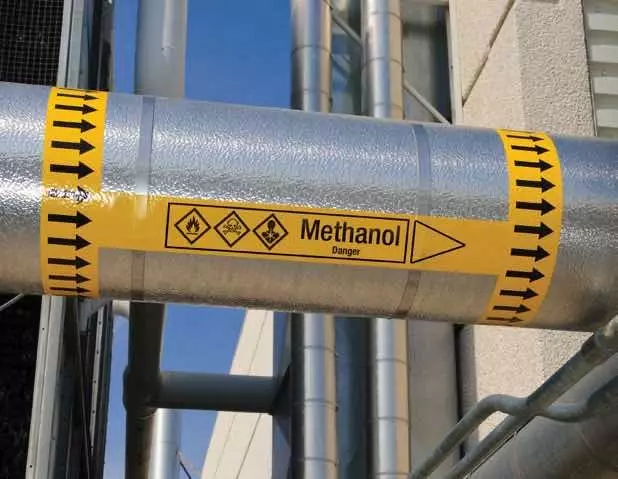
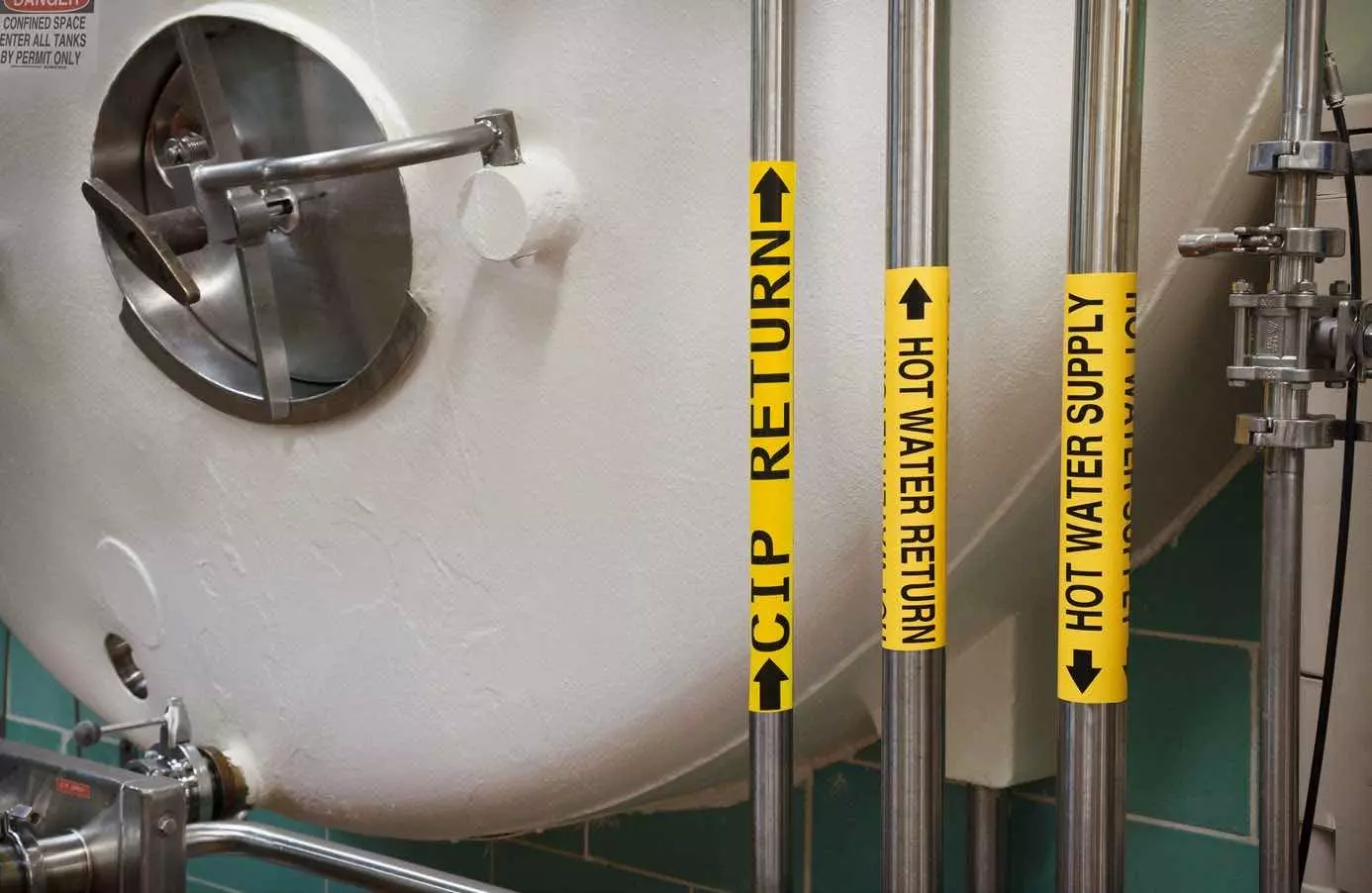
Arrows and inscriptions are also used in the color marking of pipelines. Arrows indicate the direction of substance flow in the pipeline, which helps with quick identification and orientation. Inscriptions contain additional information, such as the name of the substance, identification number, or other important data.
5. Consultation with experts
In the case of color marking of pipelines, it is important to consult appropriate experts who have knowledge of local regulations and standards. An expert can help in selecting appropriate colors, arrows, and inscriptions, as well as in ensuring compliance with safety requirements.
Installation of markings on pipelines
Depending on the conditions prevailing in the working environment as well as the medium flowing in the pipe - you can attach the markers with adhesive or by using another system, e.g. holders.
If self-adhesive markers are used, the adhesive should be properly selected for the pipeline to which the markers are to be attached, and it must not cause its corrosion. If you do not know the corrosion characteristics of the pipeline, the markers can be wrapped around the pipes and bonded using a self-adhesive strip with minimal overlap.
In the case of demanding pipe surfaces - rough, very hot or cold, or if the medium in the pipeline changes frequently, a non-adhesive marker or the use of a holder system may be a better solution. Rigid pipe markers can be fastened and wrapped around pipes, thus allowing their easy replacement.
Pipeline marking in accordance with ISO 20560
ISO 20560, entitled "Pipelines marking - General principles", constitutes a comprehensive set of guidelines aimed at facilitating pipeline identification and ensuring consistency and clarity of markings across various industrial sectors.
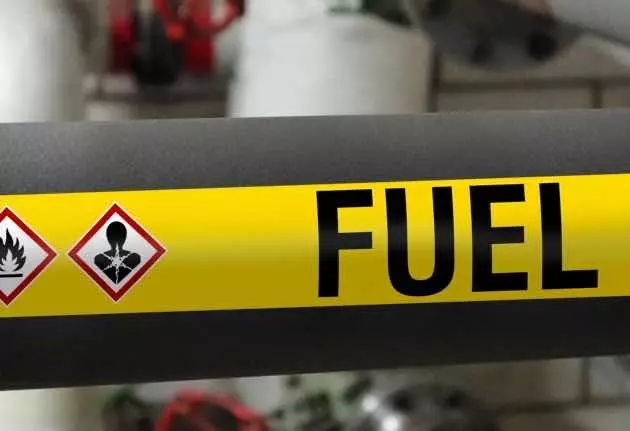
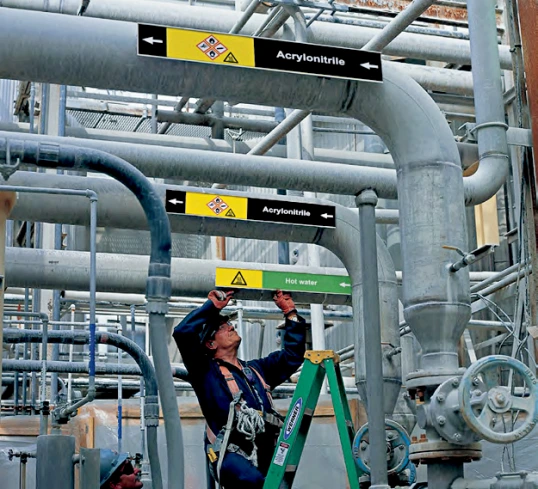
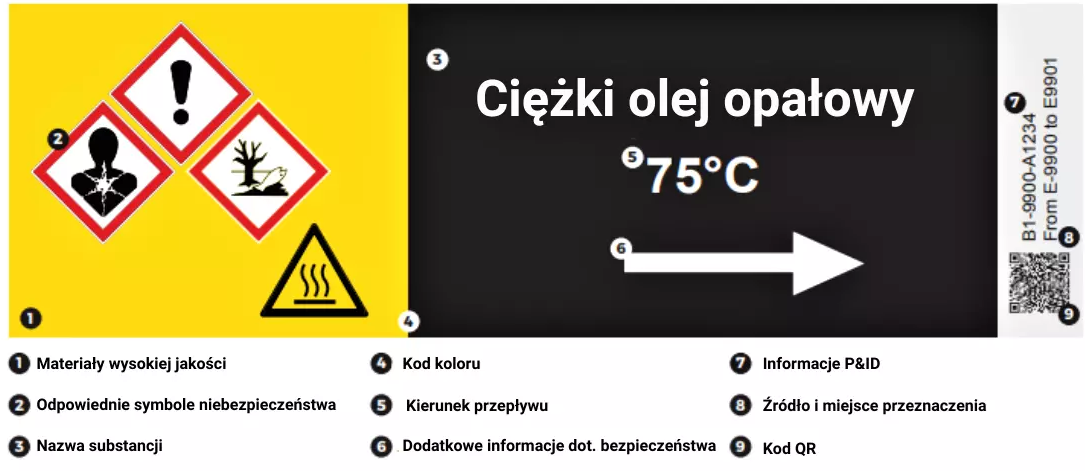
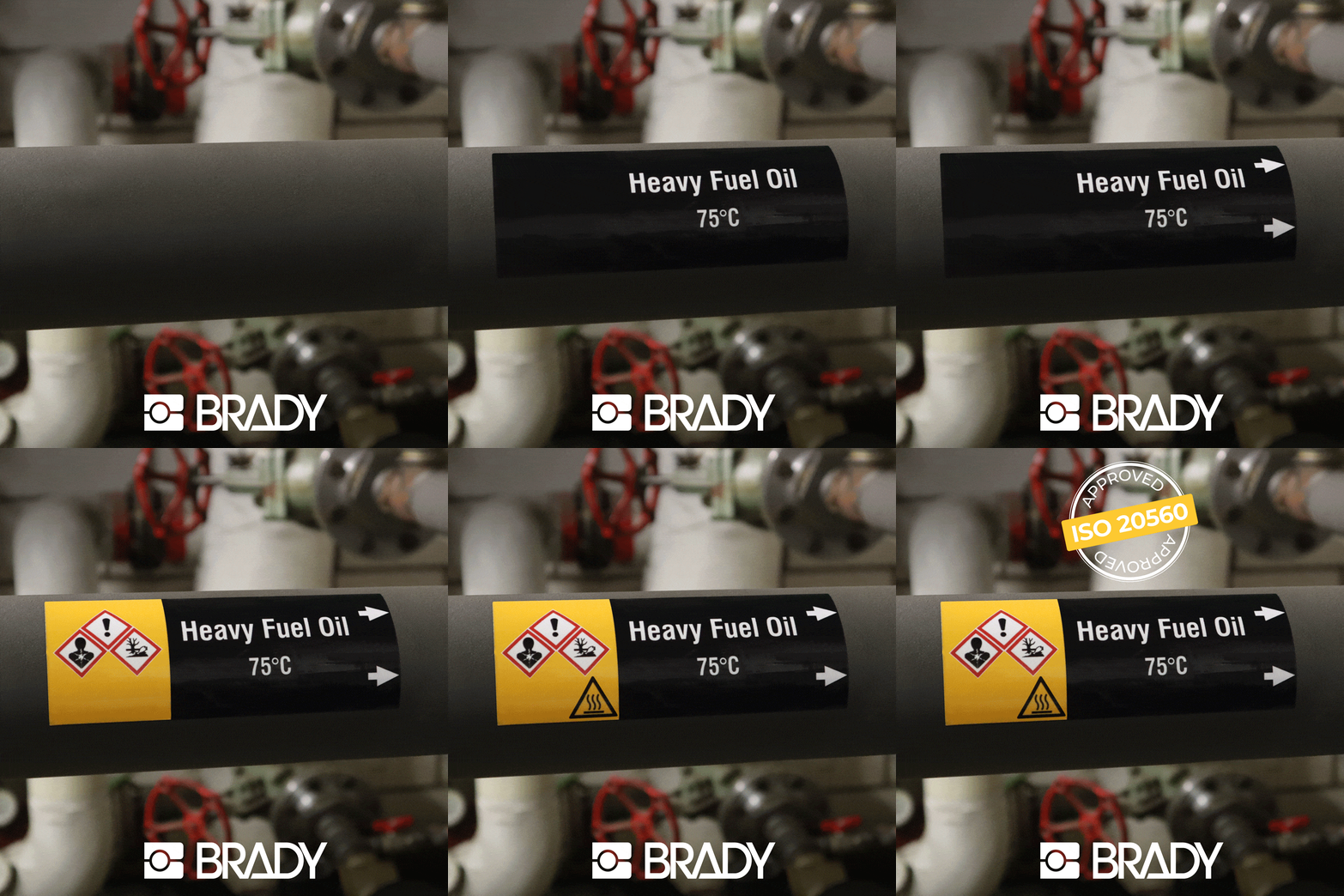
According to ISO standards, pipe markers are a combination of two color zones:
- The primary identification color zone, in which the name of the contents and additional safety information such as pressure, temperature, and velocity may be placed.
- A safety color visualizing increased risk by means of GHS (CLP) or ISO7010 warning signs.
What information in the pipeline marking system should be included according to the ISO standard?
- Color coding for identification of the substance contained in the pipeline.
- The name of the substance in the pipeline - the name should be clearly visible (if the marker is wrapped around the pipeline, the name should be visible from every side.
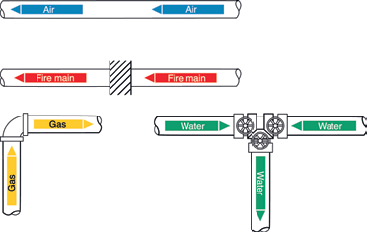
- Arrows indicating the direction of flow.
- Warning signs and GHS symbols.
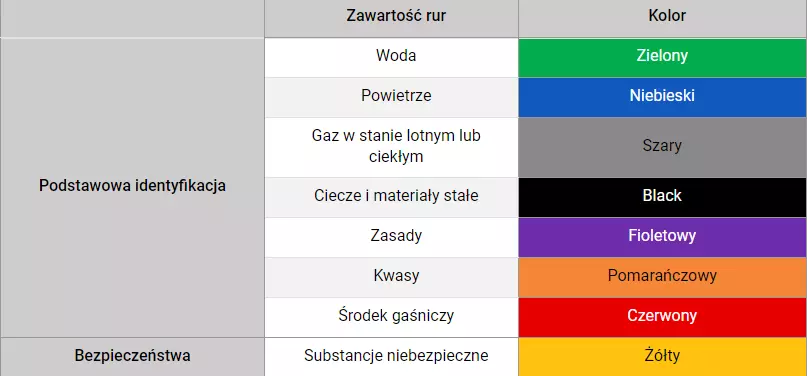
Color markings of pipelines
The ISO 20560 standard contains consistent color markings for international use. In some countries, their own standards are used; these are usually included in national pipe marking standards.
Where and how to attach pipeline markers?
- at equal intervals, so that the name of the medium in the pipeline can be read from any place;
- at both ends or at the connection points of valves, pumps, tanks, installations, etc.;
- at every branch;
- on each side of the wall, ceiling, and other passages;
- at the inlet and outlet of the process line;
- next to staircases and platforms in the case of overhead pipelines;
- at the beginning and end of pipe racks;
IMPORTANT! The distances between pipe markers indoors should not be greater than 10 meters. In the case of markers for outdoor applications, these distances may be greater, provided there are no obstacles nearby and the markers are clearly visible and legible from every location.
Marking containing text and numbers, which provide additional information about the substance transported in the pipeline, should be written in a language understandable to operating and maintenance personnel.
Durability of marking: Pipeline marking should be resistant to weather conditions, corrosion, UV radiation, and other factors that may affect its durability. ISO 20560 requires the use of durable marking materials that maintain legibility and strength for a long time.
Documentation: According to ISO 20560, it is important to maintain appropriate documentation regarding pipeline marking. It should contain information about the type of substances transported in the pipeline, the colors and symbols used in the marking, the location of the marking, and any other relevant information regarding identification and safety.
In addition, ISO 20560 also applies to tank marking and provides a quick overview of how installations are connected.
 https://youtu.be/JbTxi6f5b9Y
How to mark pipelines effectively and durably?
Choose an industrial printer!
Increase efficiency and safety with an industrial printer. Use it for other markings and to speed up work. With it, you will print pipeline markings quickly and durably.
With an industrial printer you will also print:
- pictograms and OHS signs
- pressure gauge markings
- markings for wires and cables,
- you will mark hazardous materials,
- inspection and repair markings,
- you will create labels, nameplates,
- you will create information boards and signs
In a dynamic work environment, it is extremely important to respond quickly to changes.
With an industrial printer, you will respond immediately to:
- missing pipeline markings,
- ambiguously marked pipelines,
- changes, installation repairs,
- gaps in workplace visualization,
- lack of clear OHS pictograms,
- missing information boards and signs.
Additionally:
- you do not create designs, you do not wait for shipment from the printing house,
- you do not create inventory stock,
- you do not generate costs related to ordering labels, storage,
- you will respond quickly in the event of an audit,
- you will streamline and facilitate work thanks to clear markings,
- you will minimize the risk of mistakes resulting from the lack of markings for energy sources,
Labels for industrial printers should be of high quality, made of special materials and adhesives, resistant to harsh industrial conditions.
Click and see our industrial printer suggestions
Do you need pipeline markers?
You can print durable industrial-condition-resistant markings compliant with the ISO standard on our industrial printers
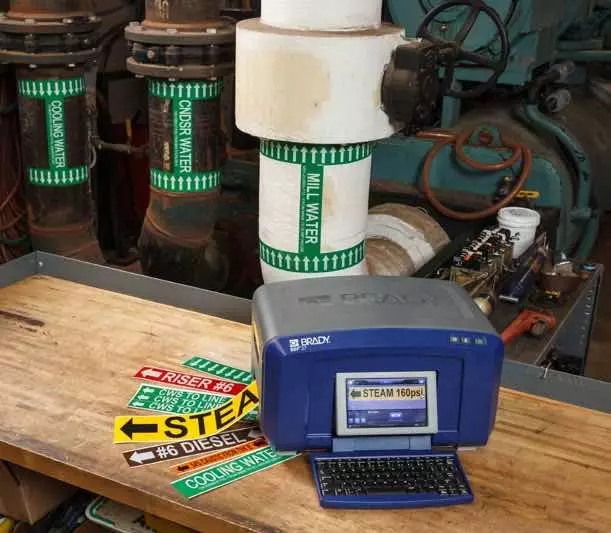
You can easily design pipe markers using a computer and the application from the Brady Workstation platform. Just enter the pipe diameter and the name of the substance, and the application will present an editable pipe marker compliant with ISO 20560 for printing using a printer.
Print markings and much more in literally just a few clicks thanks to an industrial printer using a special application with ready-made marking and label templates.