Wiedza
- Case study - implementation of the LOTO system in a production plant
- Lockout/Tagout - what is it and why is it worth introducing LOTO?
- Why is it worth implementing a LOTO system with Marcin from 4safety?
- Case study: implementation of a flexible barrier system in a manufacturing plant!
- Steel or flexible: which industrial bumpers should you choose?
- Case study: protection of high-bay racking with a flexible barrier system
- How to safely store lithium-ion batteries?
- Explosion of lithium-ion batteries — how to avoid it?
- Hazardous substances in the storage container
- Safe crane operating zone
- LED safety projectors
- Classification of flexible barriers
- Everything about IBM
- Do It Yourself - industrial printers
- The meaning of the padlock in the LOTO system
- Why is it worth using ergonomic mats?
- Anti-slip protections
- A catch basin is good practice or a regulatory requirement?
- Industrial shelving - types and applications
- About employee comfort and safety
- Frost and structural monitoring of the facility
- What information should a nameplate contain?
- How to prevent accidents with safety containers?
- Fire-resistant cabinet – what should you pay attention to when buying?
- Selection of a spill containment tray
- Hazardous substances - what to do in the event of a leak?
- Hazardous materials under the supervision of an ADR advisor
- What problems do industrial barriers solve?
- Color coding of pipelines – colors, arrows, inscriptions
- Lasers for communication routes
- Natural neutralization of substances
- Energy-intensive barriers – Types, characteristics and application
What problems do industrial barriers solve?
Why do you need industrial fencing in your facility?
Robotization and automation in industrial plants are in full swing. The result is improved production processes, increased efficiency, and reduced costs. This also brings new challenges in ensuring safety and the continuity of production processes.
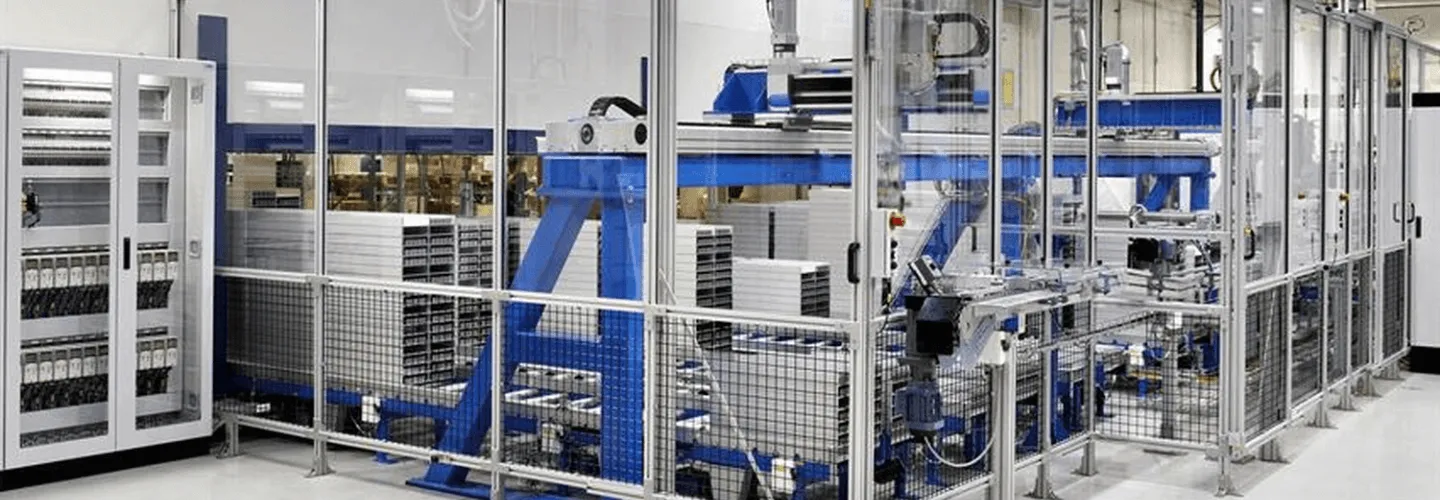
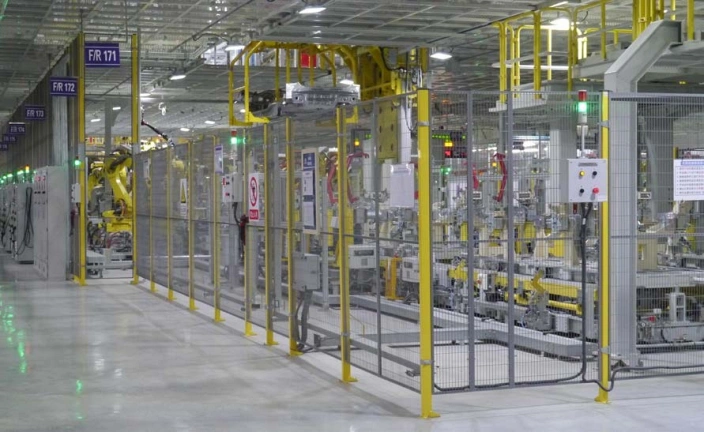
In your work, you face challenges such as:
- protecting employees, preventing accidents,
- securing production cells and robots against unauthorized or accidental entry by employees, forklifts, or other vehicles,
- maintenance - limiting downtime and failures.
If there is a risk, it must be protected.
You need industrial fencing that will effectively protect people, robots, and busy production lines.
Guards that will stop the impact of a robot in the event of a failure. They will withstand the force of an approaching forklift.
You should be sure that when a failure occurs, no part of the guarding system will fail. The system should also be strength-matched to the risk present in the facility.
The quality and durability of machine fencing depend not only on the material of manufacture but also on the standards they should meet.
Machine guards should be tested and meet the required standards. Especially such as the EUROPEAN MACHINERY DIRECTIVE.
This directive requires machine manufacturers to meet specific technical requirements and document them to ensure that their products are safe for users.
According to ISO 13857, fencing should not have gaps exceeding 180 mm. Anything exceeding 180 mm is referred to as “whole-body access,” where a person can gain access to the protected area.
Machine guards are also a component of the device and are subject to CE. The door is a movable guard, the fencing is a fixed guard.
Our guarding systems meet all the standards mentioned above. Additionally, panels, posts, and brackets are tested in accordance with the recommendations for impact testing in Annex C of the revised ISO 14120 standard.
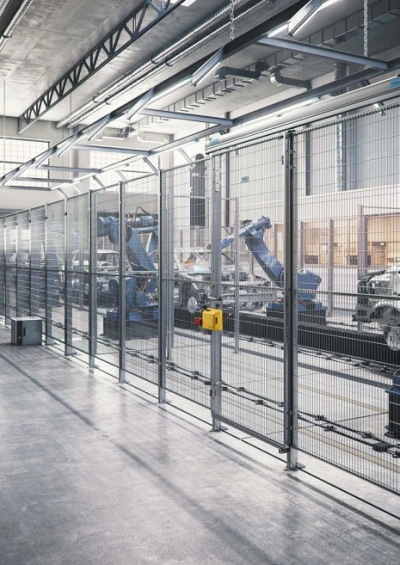
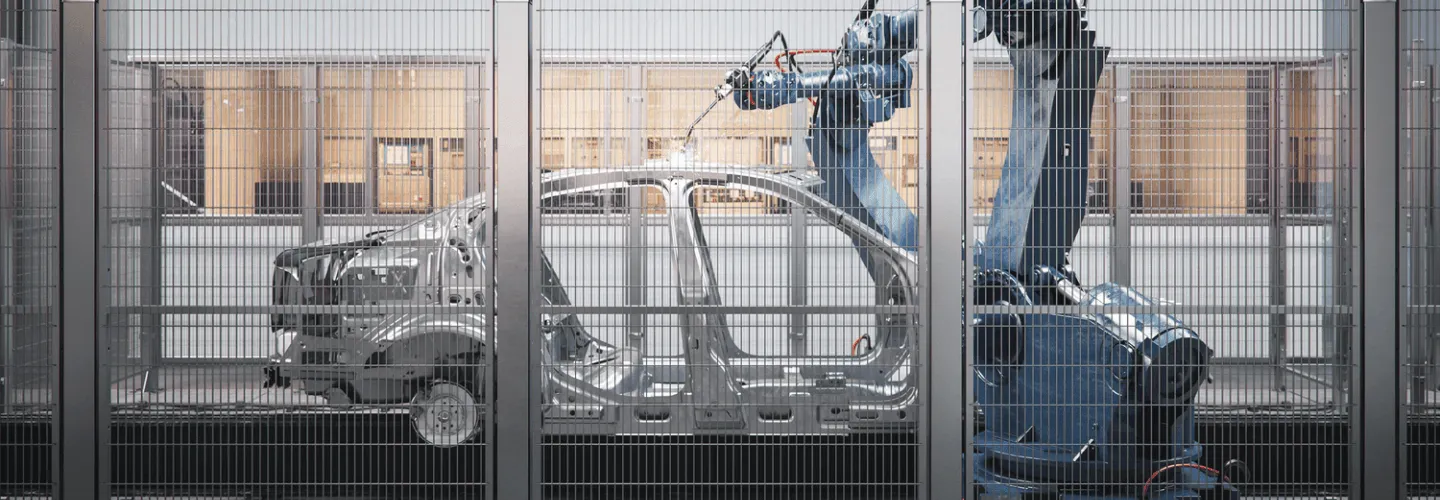
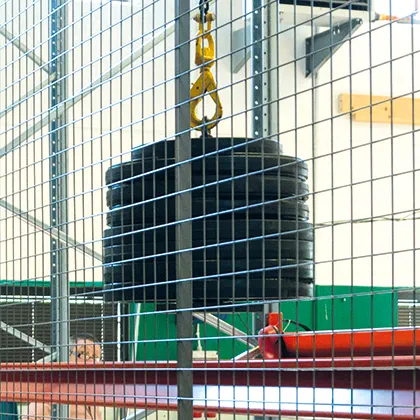
Special strength tests will also give you confidence. The tests are carried out by dropping weights onto the guard. The weights correspond to forces from 309 joules up to 2,000 joules.
For comparison, an impact of 1,600 joules is equivalent to a 100 kg impact on the protection at a speed of 20 km/h.
All systems and components are tested. The results can be found in our test reports, where we specify the type of panel, post, and bracket. The product information shows what force the product was subjected to and how much energy it can withstand.
Appropriate barriers and guards provide:
- Employee safety: they separate dangerous zones and equipment, preventing hazardous situations.
- Traffic continuity: they prevent uncontrolled interaction between different zones and equipment, which helps maintain continuity of movement in production processes.
- Equipment protection: guards and barriers protect equipment from mechanical damage and other external factors.
- Easier cleanliness maintenance: they separate zones and machines, making it easier to maintain order in the facility.
- Increased production efficiency: by preventing hazardous situations and maintaining traffic continuity, barriers affect production continuity.
- Increased productivity: they allow for better management of production processes and increased efficiency.
- Improved aesthetics: depending on the material and color, machine fences can also improve the aesthetics of the production facility.
How to choose the right industrial partitions and what should you pay attention to?
- Determine what your needs are. What work is carried out in the given area. What dangers and risks are present on both sides of the protective walls. Whether there is forklift traffic, whether there are substances that may splash. Which areas should be protected, and what robots and machines operate there.
- Check what requirements the technical barriers should meet and what strength they should be characterized by. What the insurance company's requirements are.
- Choose the construction material: steel mesh, polycarbonate, sheet metal. Features of the barrier – should it be mesh, transparent, or completely solid? Colors, appropriate equipment: doors, locks, reinforcements, etc.
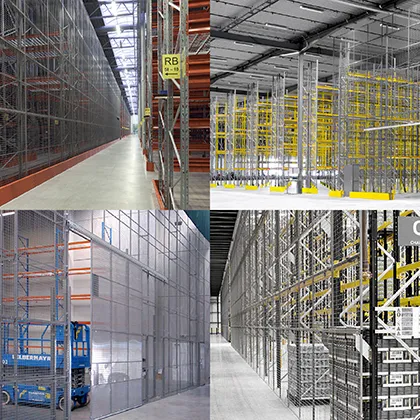
Safety barriers should be suitably durable, depending on the environment.
Choose the most durable guards possible. Ideally, the barriers should have impact tests carried out on all component parts - confirmed by a certificate from an independent organization, e.g. TUV. Remove liability and rely on appropriate protective systems.
When the only constant is change. Choose a type of industrial guards that you can modify and adapt to the changing architecture of the plant. Versatility in terms of replacing panels and adapting to changing production conditions – this is a factor that will pay off in the future.
Related services
Learn more
Industrial barriers - selection and installation Check