Wiedza
- Case study - implementation of the LOTO system in a production plant
- Lockout/Tagout - what is it and why is it worth introducing LOTO?
- Why is it worth implementing a LOTO system with Marcin from 4safety?
- Case study: implementation of a flexible barrier system in a manufacturing plant!
- Steel or flexible: which industrial bumpers should you choose?
- Case study: protection of high-bay racking with a flexible barrier system
- How to safely store lithium-ion batteries?
- Explosion of lithium-ion batteries — how to avoid it?
- Hazardous substances in the storage container
- Safe crane operating zone
- LED safety projectors
- Classification of flexible barriers
- Everything about IBM
- Do It Yourself - industrial printers
- The meaning of the padlock in the LOTO system
- Why is it worth using ergonomic mats?
- Anti-slip protections
- A catch basin is good practice or a regulatory requirement?
- Industrial shelving - types and applications
- About employee comfort and safety
- Frost and structural monitoring of the facility
- What information should a nameplate contain?
- How to prevent accidents with safety containers?
- Fire-resistant cabinet – what should you pay attention to when buying?
- Selection of a spill containment tray
- Hazardous substances - what to do in the event of a leak?
- Hazardous materials under the supervision of an ADR advisor
- What problems do industrial barriers solve?
- Color coding of pipelines – colors, arrows, inscriptions
- Lasers for communication routes
- Natural neutralization of substances
- Energy-intensive barriers – Types, characteristics and application
How to prevent accidents with safety containers?
The best-designed containers made from the most durable materials will not fulfill their function if you do not follow the rules for their proper use.
1. Do not overfill containers beyond their maximum capacity. Follow the maximum fill level markings. It is best to stick to the rule - I fill to 90% of the capacity to maintain a margin for possible changes in the volume of the substance due to temperature.
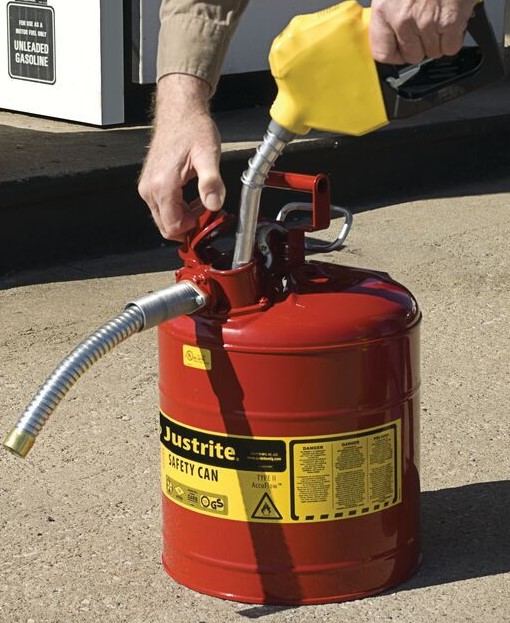
2. When pouring liquids, use a flexible hose - this will prevent the buildup of electrostatic charges and possible sparking.
3. Do not pour gasoline near hot engines. Even a few drops of flammable liquid spilled on a hot engine can cause an explosion!
4. Vent the safety can before filling it. This is especially important to remember at high air temperatures. High temperature causes an increase in pressure inside the container, which may cause liquid to splash during pouring. Place the can in an upright position and open the fuel filler cap to reduce the pressure.
5. Check whether the container is damaged, punctured, whether the lid is deformed, leaking, or cracked.
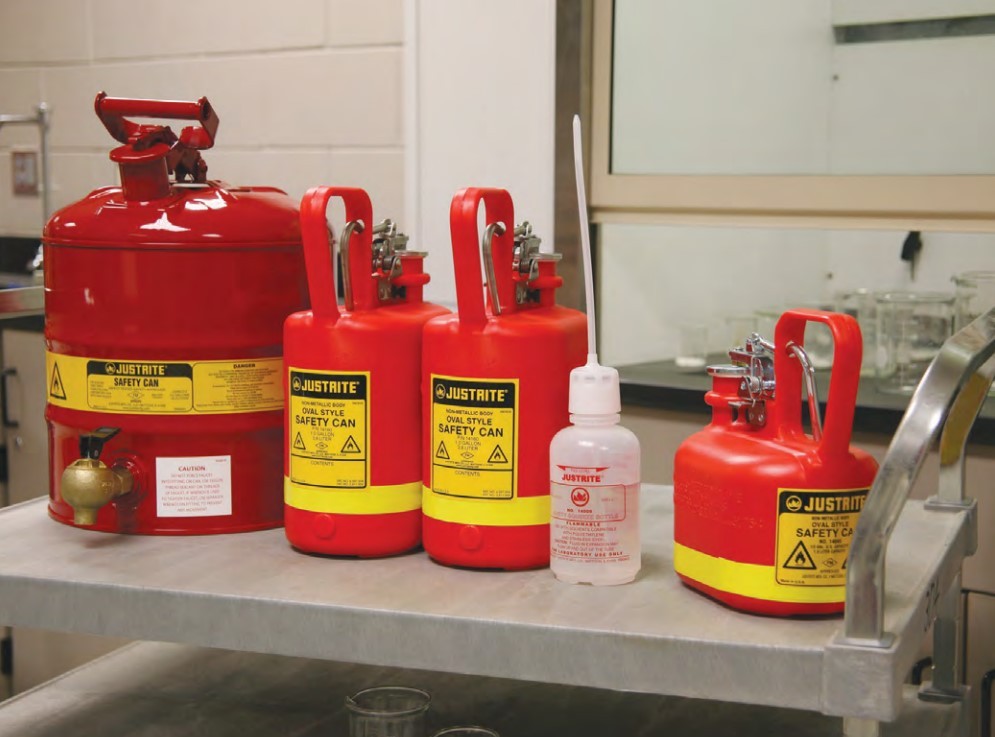
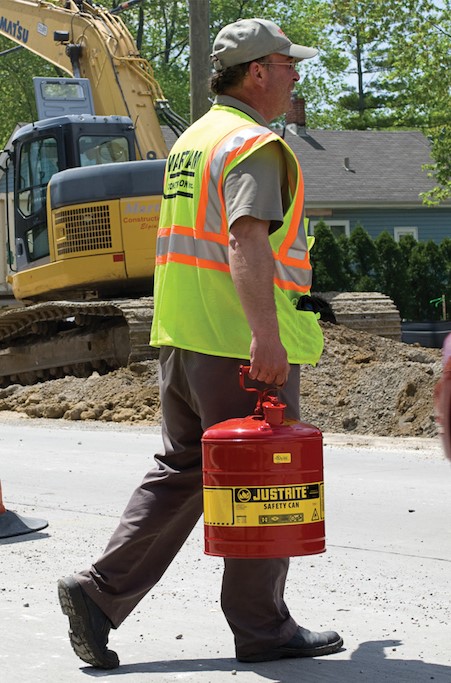
Safety containers are designed to prevent injuries while working with flammable substances. The automatic vent reduces pressure and prevents explosion. Flame arresters dissipate heat to prevent ignition caused by flame flashback. Type II safety cans are equipped with hoses that make it easier to pour liquid into narrow openings, reducing the risk of spills.
In our offer you will find various types and sizes of safety containers, containers for hazardous waste, and chemicals.
Safety containers meet NFPA and OSHA standards, most of them are approved by FM Global and UL, and many models are accepted worldwide with TUV certification.