Wiedza
- Case study - implementation of the LOTO system in a production plant
- Lockout/Tagout - what is it and why is it worth introducing LOTO?
- Why is it worth implementing a LOTO system with Marcin from 4safety?
- Case study: implementation of a flexible barrier system in a manufacturing plant!
- Steel or flexible: which industrial bumpers should you choose?
- Case study: protection of high-bay racking with a flexible barrier system
- How to safely store lithium-ion batteries?
- Explosion of lithium-ion batteries — how to avoid it?
- Hazardous substances in the storage container
- Safe crane operating zone
- LED safety projectors
- Classification of flexible barriers
- Everything about IBM
- Do It Yourself - industrial printers
- The meaning of the padlock in the LOTO system
- Why is it worth using ergonomic mats?
- Anti-slip protections
- A catch basin is good practice or a regulatory requirement?
- Industrial shelving - types and applications
- About employee comfort and safety
- Frost and structural monitoring of the facility
- What information should a nameplate contain?
- How to prevent accidents with safety containers?
- Fire-resistant cabinet – what should you pay attention to when buying?
- Selection of a spill containment tray
- Hazardous substances - what to do in the event of a leak?
- Hazardous materials under the supervision of an ADR advisor
- What problems do industrial barriers solve?
- Color coding of pipelines – colors, arrows, inscriptions
- Lasers for communication routes
- Natural neutralization of substances
- Energy-intensive barriers – Types, characteristics and application
Case study: protection of high-bay racking with a flexible barrier system
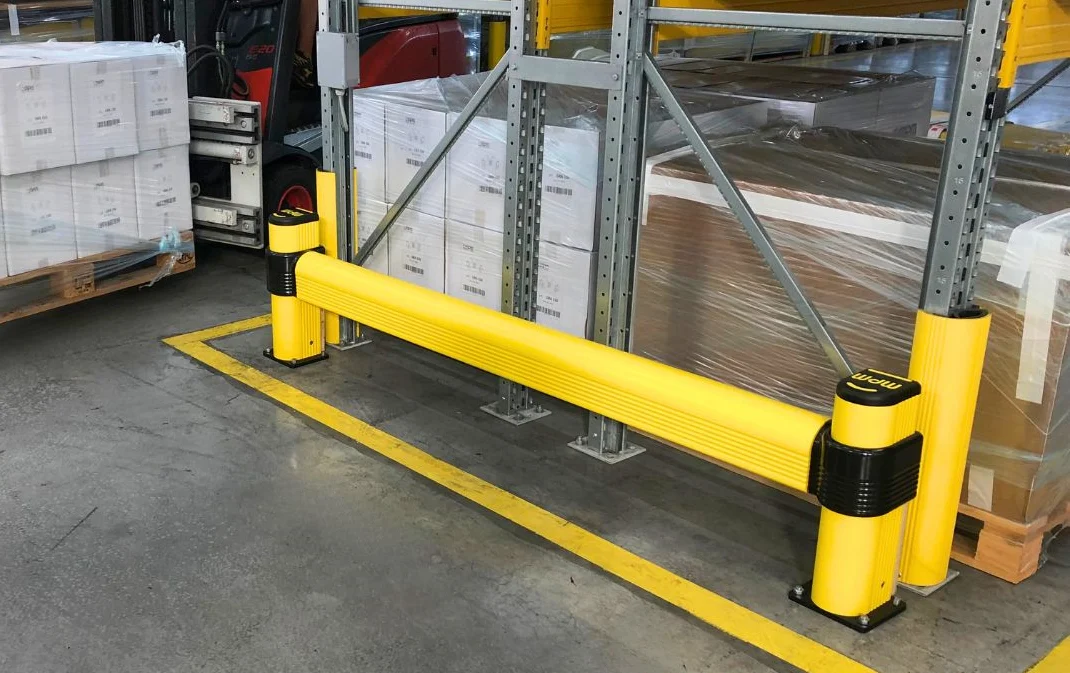
Protection of high-bay racks with a flexible barrier system
Client description:
Our client is a well-known manufacturer specializing in the production of food additives, flavorings, and colorants. They operate a modern facility that requires efficient and safe solutions for storing semi-finished products and finished goods. The facility uses forklifts to transport materials, which requires safe storage systems.
Situation:
To accommodate growing inventory and expand production, the Client recently built a new hall with high-bay racks. These racks are responsible for storing various products, from raw materials to finished goods. Due to the high turnover of inventory, forklift traffic is intense, so the stability and safety of the racks are very important.
Problem:
The existing racks were equipped with basic metal frame guards. However, these guards offered insufficient protection and durability, quickly becoming damaged. Their rigid construction meant that they were unable to effectively protect the entire rack structure and its contents. In the event of a collision with a forklift, these guards often bent and tore off, making them ineffective. This meant that the racks, as well as the valuable inventory stored on them, were exposed to potential accidents and damage.
Client goals:
- Minimizing operational downtime: The Client sought to prevent any disruptions to the production workflow caused by rack damage or accidents, ensuring smooth operation.
- Reducing the risk of accidents: the main goal was to eliminate the risk of accidents and collisions between forklifts and racks, thereby protecting employee well-being and preventing potential inventory losses.
- Maintaining uninterrupted productivity: to ensure a continuous production flow, it was necessary to avoid any incidents that could lead to delays or downtime.
- Ensuring comprehensive protection: The Client emphasized the need for a protective solution that would cover the entirety of the racks, offering reliable protection against impacts and collisions.
The Client is very aware of the dangers and losses associated with collisions in the hall. They themselves decided that they needed additional protection, knowing that basic metal guards would not be sufficient for their facility and the fairly intense traffic present there, and that the risk of forklift collisions with the racks was too high. They approached us with an inquiry about more reliable rack protection.
The Client is very aware of the dangers and losses associated with collisions in the hall. They themselves decided that they needed additional protection, knowing that basic metal guards would not be sufficient for their facility and the fairly intense traffic present there, and that the risk of forklift collisions with the racks was too high. They approached us with an inquiry about more reliable rack protection.
Solution:
A sales visit by the Product Manager.
What such a visit included:
- Interview with the Client to better understand the facility's needs, work rhythm, and the challenges they face every day.
- Analysis of traffic routes and critical points.
- Measurements and initial selection of the type of protective barriers for traffic routes, gates, and racks.
- The Client's questions and objections.
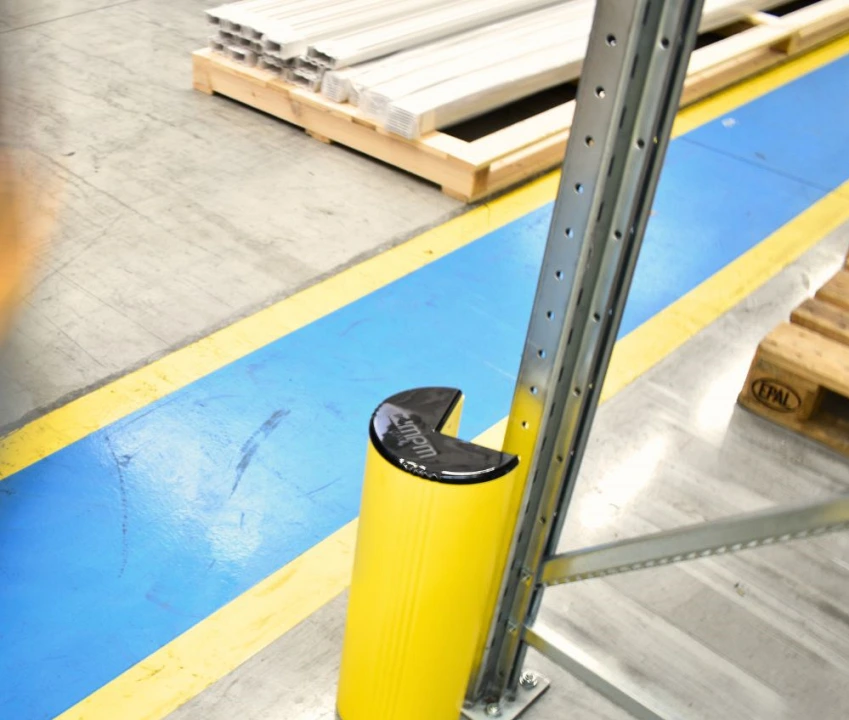
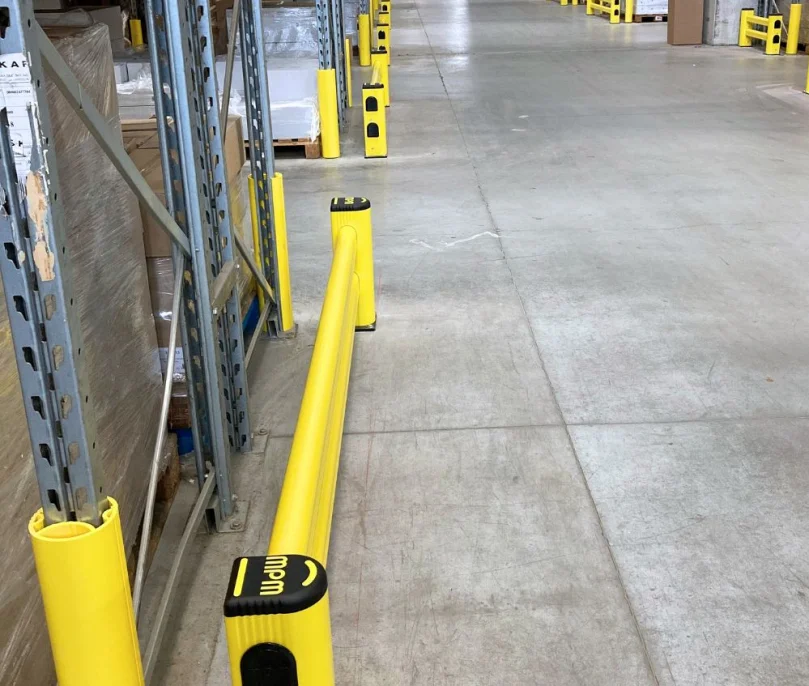
After a thorough assessment of the client's requirements, there was no doubt that a more flexible and durable barrier system was needed. Adam recommended implementing flexible barrier systems designed specifically for high-bay storage racks and securing other sensitive high-risk areas prone to damage, such as all gates and doors, docks, ventilation systems, and columns in the hall.
All these elements were protected with impact barriers made of durable flexible materials from MPM. In our projects, we have used various types of barriers from different manufacturers, but MPM barriers require the least repair and maintenance during later use. They are simply the most durable, designed to absorb vehicle impacts of varying force, effectively protecting rack structures and preventing catastrophic failures.
After the offer was approved, we proceeded with the assembly and installation of the barriers according to the earlier arrangements in the design.
See what a failure caused by an “innocent forklift impact into a high-bay storage rack” can look like
https://youtu.be/ic3F9wCsHp0
Benefits the Client gained after implementing protective barriers for warehouse racks:
- Increased workplace safety: the risk of accidents and collisions was significantly reduced, promoting a safer environment for employees and reducing the risk of injuries.
- Uninterrupted operation: by reducing the risk of rack damage and accidents, the client achieved their goal of maintaining uninterrupted productivity and minimizing operational downtime.
- Long-term cost savings: the durable nature of the new barrier systems led to reduced maintenance and replacement costs, contributing to long-term savings.
- Peace of mind (priceless): the customer gained the certainty they were looking for, knowing that their high-bay racks are equipped with the highest level of protection, minimizing the risk associated with collisions.
Why are flexible barriers the best for protecting high-bay racks?
https://youtu.be/xmjnNEqd88U
Do you have high-bay racks?
Make sure they are sufficiently protected!
Schedule a free consultation with our expert.
They will verify whether you need flexible barriers, in which places, provide advice, and help you choose the most optimal solution.
STEEL OR FLEXIBLE: WHICH INDUSTRIAL BARRIERS SHOULD YOU CHOOSE? click and see a complete comparison of barrier types.