Wiedza
- Case study - implementation of the LOTO system in a production plant
- Lockout/Tagout - what is it and why is it worth introducing LOTO?
- Why is it worth implementing a LOTO system with Marcin from 4safety?
- Case study: implementation of a flexible barrier system in a manufacturing plant!
- Steel or flexible: which industrial bumpers should you choose?
- Case study: protection of high-bay racking with a flexible barrier system
- How to safely store lithium-ion batteries?
- Explosion of lithium-ion batteries — how to avoid it?
- Hazardous substances in the storage container
- Safe crane operating zone
- LED safety projectors
- Classification of flexible barriers
- Everything about IBM
- Do It Yourself - industrial printers
- The meaning of the padlock in the LOTO system
- Why is it worth using ergonomic mats?
- Anti-slip protections
- A catch basin is good practice or a regulatory requirement?
- Industrial shelving - types and applications
- About employee comfort and safety
- Frost and structural monitoring of the facility
- What information should a nameplate contain?
- How to prevent accidents with safety containers?
- Fire-resistant cabinet – what should you pay attention to when buying?
- Selection of a spill containment tray
- Hazardous substances - what to do in the event of a leak?
- Hazardous materials under the supervision of an ADR advisor
- What problems do industrial barriers solve?
- Color coding of pipelines – colors, arrows, inscriptions
- Lasers for communication routes
- Natural neutralization of substances
- Energy-intensive barriers – Types, characteristics and application
Why is it worth using ergonomic mats?
Increased work efficiency
The function of ergonomic mats was well described in James M. Kendrick’s article in “Occupational Health & Safety” from April 1 999: “Anti-fatigue mats are designed to cause natural and imperceptible swaying of the body, which triggers slight movements of the calf and leg muscles. This, in turn, has a positive effect on blood circulation and prevents blood from pooling in the veins, which is the cause of fatigue”.
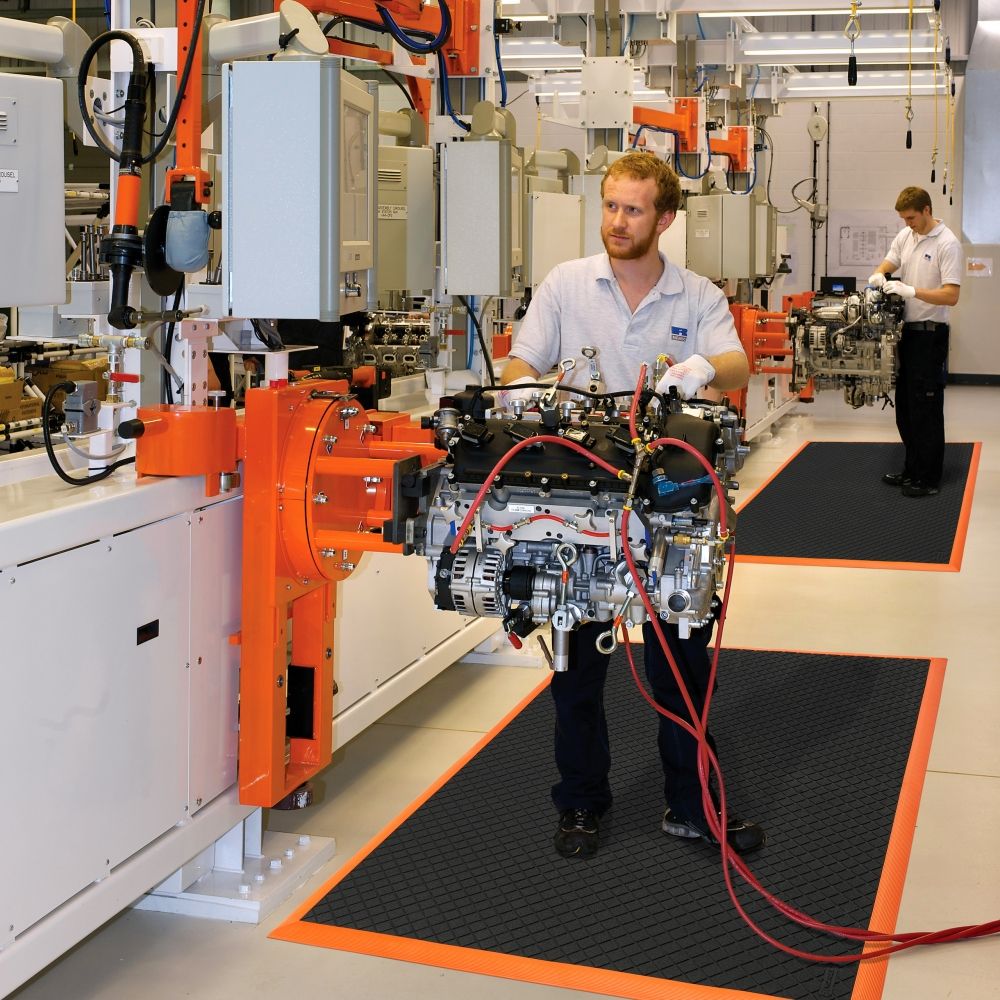
In many industries, employees must work in a standing position, walking and/or carrying heavy loads. According to experts, ergonomic mats:
- increase work efficiency
- increase employee satisfaction
- reduce absenteeism
- reduce chronic illnesses associated with prolonged standing
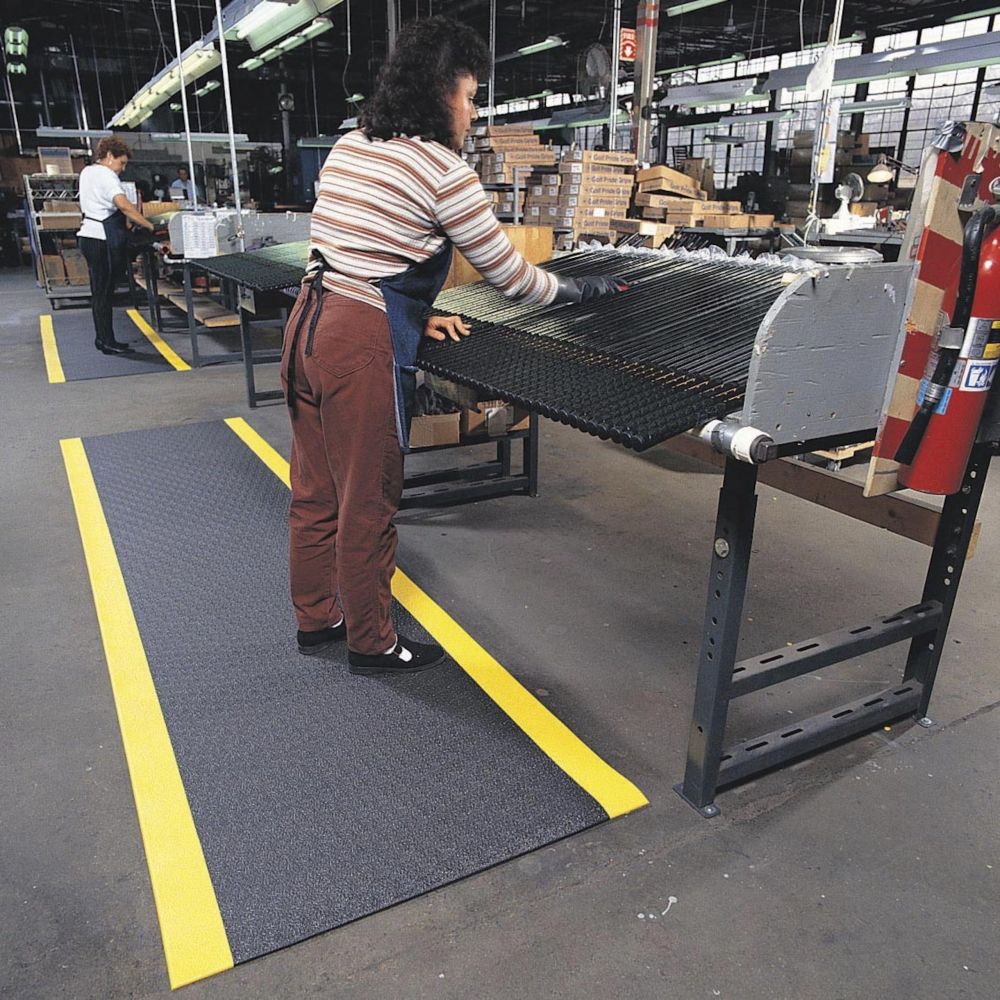
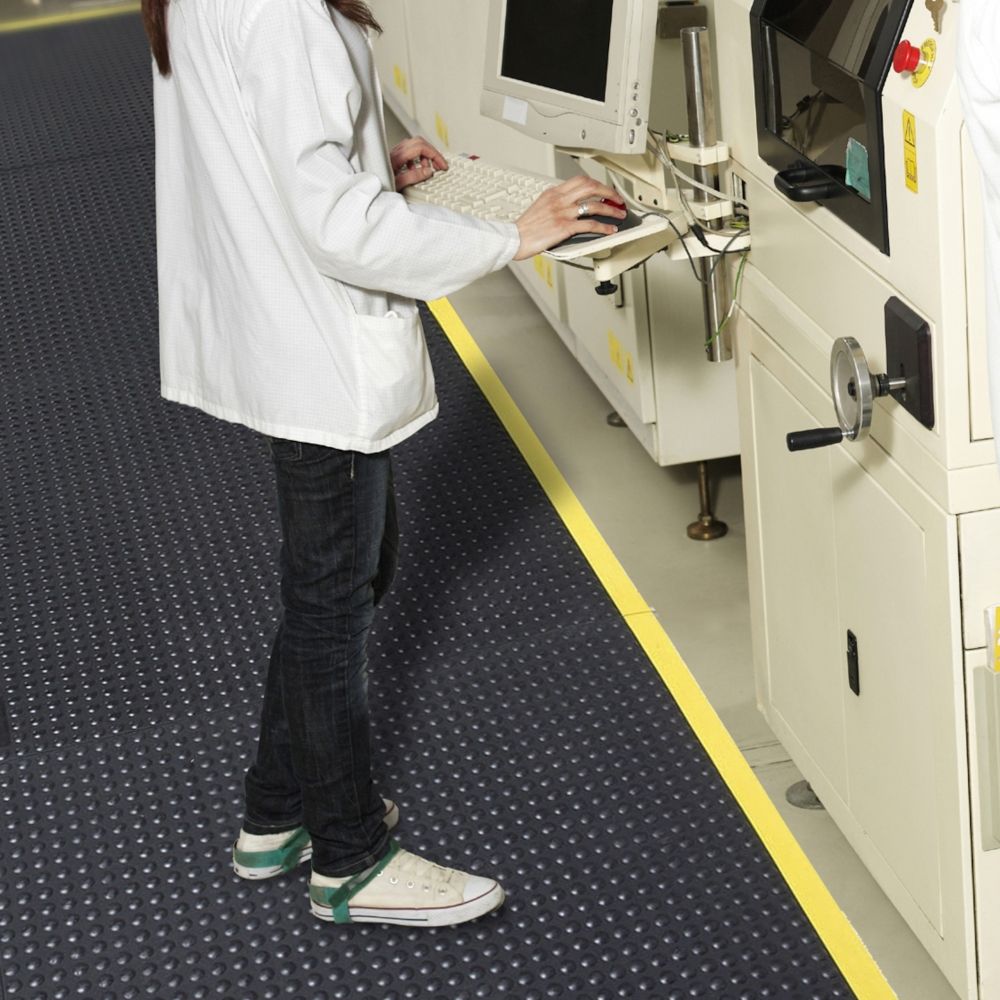
Standing on a hard surface for a long time can lead to many problems:
- in a standing position, the muscles contract, which reduces blood flow - this causes muscle and joint pain as well as blood pooling
- pronation or excessive flattening of the feet - this is tiring and even painful, and may lead to plantar fasciitis and other serious foot complications
The most severe lower back pain occurs in people who stand for 4 hours or longer per day.
Reduction of accidents
As Kendrick noted, the cushioning effect of anti-fatigue mats causes continuous micro-movements of the feet, which minimizes blood pooling in the legs. This may help reduce the number of slips and falls.
The mat also protects against cold and moisture on the floor. There are reasons to believe that less fatigue also means a lower likelihood of accidents and generally higher efficiency. Other benefits include fewer workdays lost due to injuries, lower health insurance payouts, and compliance with new occupational health and safety requirements.
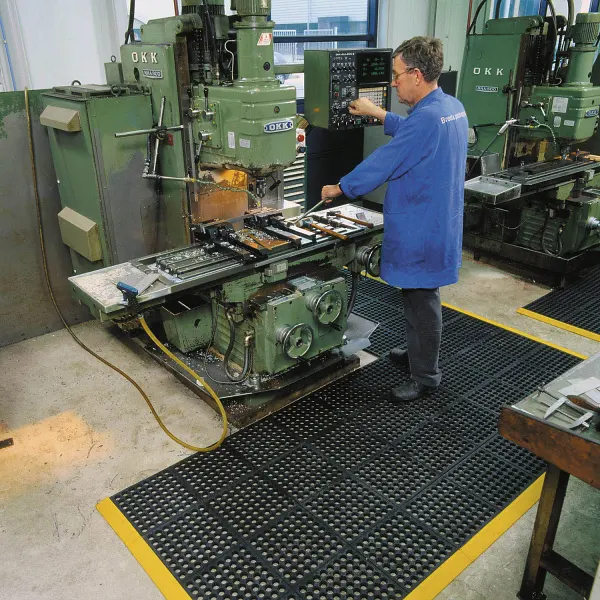
Note
Excessively intensive cushioning can also have a negative effect. Too much “softness” or too much give actually increases fatigue, because the muscles become overworked. An extreme example here would be running on the beach. Floor mats are made in such a way as to increase employee satisfaction and productivity.
Scientific research
Discomfort and fatigue of the lower limbs caused by prolonged standing is a frequently identified but rarely documented problem. Early studies, such as Morgora (1972), showed that the incidence of lower back pain is highest among workers who regularly remained standing for more than four hours each working day.
Bousseman et al. (1982) pointed out that standing for a long time is a direct cause of pain and discomfort.
Later studies conducted by Dr. Mark Redfern and Dr. Don Chaffin from the University of Michigan Ergonomics Center in 1988, and by Paula Hinnen and Stephan Konza from the Department of Industrial Engineering at Kansas State University in 1994, emphasized the differences between standing on hard and soft floors. The conclusions of both studies were consistent: mats have a significant impact on fatigue and comfort in various parts of the body.
Recent research conducted by Prof. Dr. Redha Taiara (2011) from the University of Reims (France) showed the impact of using ergonomic mats on the mechanics of the human body in the work environment. By observing workers and measuring foot pressure in people who remained standing for a long time, Prof. Taiar was able to identify two causes of fatigue and develop a two-track approach to combating musculoskeletal disorders associated with prolonged standing.
The first cause of fatigue: “Cinderella” fibers
The effects of prolonged standing at the musculoskeletal level begin with the “training” of the muscles. In order for the body to remain in an upright position, that is, standing, the muscles have been automatically trained. This upright posture is rooted in our neuromuscular system and each time we then use the same muscles, unconsciously. The automatic action of the muscles is stored in our brain and carried out systematically. The muscle fibers involved in these activities are also called “Cinderella” fibers, because they will keep working even when they are tired… This is the beginning of musculoskeletal problems (pain, contractures, tendon inflammation…).
The second cause of fatigue: lack of balance
In addition to using the same muscles too often, when the system lacks balance, the muscles must work harder in search of it, and their short reaction time is maintained at the expense of energy (fatigue). In order to maintain an upright position, one must have a well-adjusted postural balance, which reduces the number of pathologies and their consequences in daily life. In short, to regain the balance between quick reaction and saving energy, one must become aware of the different foot pressures on the ground and of the most appropriate muscle action (from feet to head). Prof. Taiar emphasized that “without a mat there is a dysfunction in body balance, which can cause pathologies, the development of which is accelerated by performing the same activities all the time.” Such an imbalance is very dangerous for the body. The use of anti-fatigue mats makes it possible to achieve proper balance and equal distribution of body weight on the right and left leg.
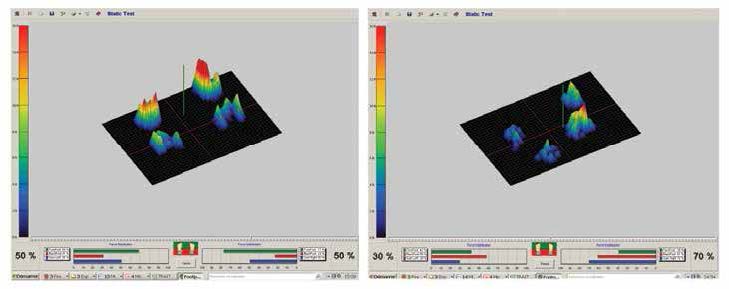
Two causes: a two-track solution
For this reason, Taiar recommends a two-track approach to reducing fatigue. First, the worker must change foot pressure to improve the standing position. This top-down approach helps eliminate the build-up of pressure points on the foot and “Cinderella” fibers). To this end, he advises workers to regularly change pressure points in the shoe.
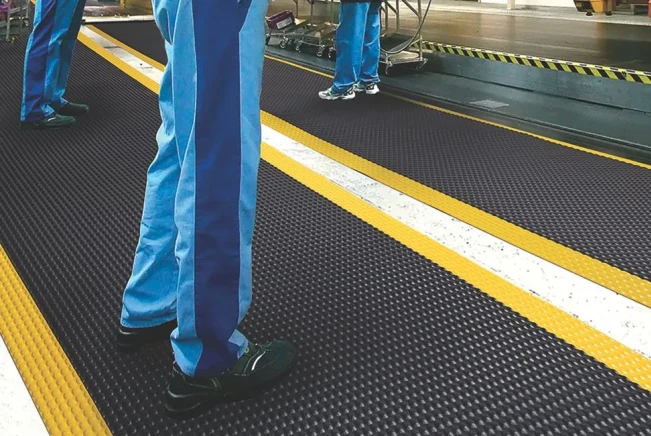
Secondly, the use of anti-fatigue mats made from the latest materials. This bottom-up approach helps eliminate pressure points from the floor through even weight distribution. Anti-fatigue mats correct balance and restore even distribution of body weight on the right and left leg
Anti-fatigue mats are a combination of ergonomic design and a cushioning surface, which evenly distributes body weight and stimulates micro-movements of the feet, minimizing blood stagnation in the legs. Prof. Taiar’s research confirms that the use of anti-fatigue mats causes a significant reduction in pain.
Confirmation from workers
The research also used information obtained from workers who compared working on an anti-fatigue mat and directly on a hard surface, and recorded their level of comfort and fatigue after each hour of work during an eight-hour shift. One worker commented: “A lower level of fatigue in the legs at the end of the day, fewer problems with muscles and joints, better weight absorption.” Prof. Dr. Redha Taiar is an expert in biomechanics, human motor activities, and kinematic and kinetic analysis of biomedical technologies.

Choose mats perfect for your facility!
Fill out this short form and a regional advisor will contact you to help match mats to workstations.