Wiedza
- Case study - implementation of the LOTO system in a production plant
- Lockout/Tagout - what is it and why is it worth introducing LOTO?
- Why is it worth implementing a LOTO system with Marcin from 4safety?
- Case study: implementation of a flexible barrier system in a manufacturing plant!
- Steel or flexible: which industrial bumpers should you choose?
- Case study: protection of high-bay racking with a flexible barrier system
- How to safely store lithium-ion batteries?
- Explosion of lithium-ion batteries — how to avoid it?
- Hazardous substances in the storage container
- Safe crane operating zone
- LED safety projectors
- Classification of flexible barriers
- Everything about IBM
- Do It Yourself - industrial printers
- The meaning of the padlock in the LOTO system
- Why is it worth using ergonomic mats?
- Anti-slip protections
- A catch basin is good practice or a regulatory requirement?
- Industrial shelving - types and applications
- About employee comfort and safety
- Frost and structural monitoring of the facility
- What information should a nameplate contain?
- How to prevent accidents with safety containers?
- Fire-resistant cabinet – what should you pay attention to when buying?
- Selection of a spill containment tray
- Hazardous substances - what to do in the event of a leak?
- Hazardous materials under the supervision of an ADR advisor
- What problems do industrial barriers solve?
- Color coding of pipelines – colors, arrows, inscriptions
- Lasers for communication routes
- Natural neutralization of substances
- Energy-intensive barriers – Types, characteristics and application
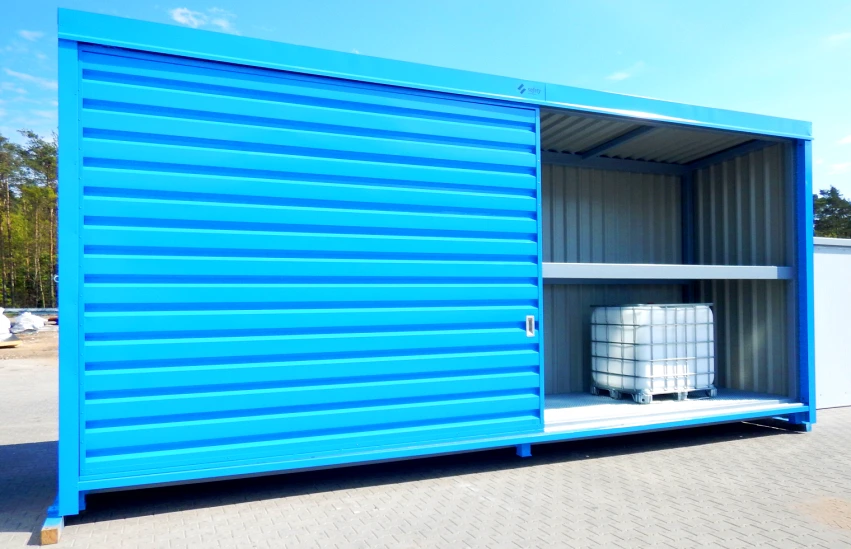
Hazardous substances in the storage container
Increase employee safety and minimize the risk of environmental contamination with storage containers
Check what to pay attention to when choosing a container for hazardous substances.
 https://www.youtube.com/watch?v=Zv5d-34n2Yo
Hazardous substances in a storage container
A production plant should have a properly designated area for storing raw materials and waste. Storage containers are a convenient and safe way to store hazardous substances.
Discover the advantages and benefits of moving hazardous substances outside:
- increased employee safety - thanks to separating hazardous substances from the workplace,
- reduced bureaucracy - in most cases, to install a storage container you will not need a building permit, which helps you avoid time-consuming formal procedures,
- fast delivery time - within 2–8 weeks from the order, a container will appear on your site, ready for use immediately,
- space saving - if there is not much free space in your facility and you do not want to expand the hall, an outdoor storage container provides additional storage space. You can place a chemical container even next to a wall, which makes it possible to store a larger amount of substances close to the facility,
- versatility and mobility - in the event of an organizational change, you can move it to another location. You can modify and retrofit the storage unit if such a need arises,
- lower insurance premiums - lower risk and hazard for the main building may affect the insurer's assessment and reduce premiums,
- easier management of hazardous substances - when only storage for daily demand is allowed in the workplace.
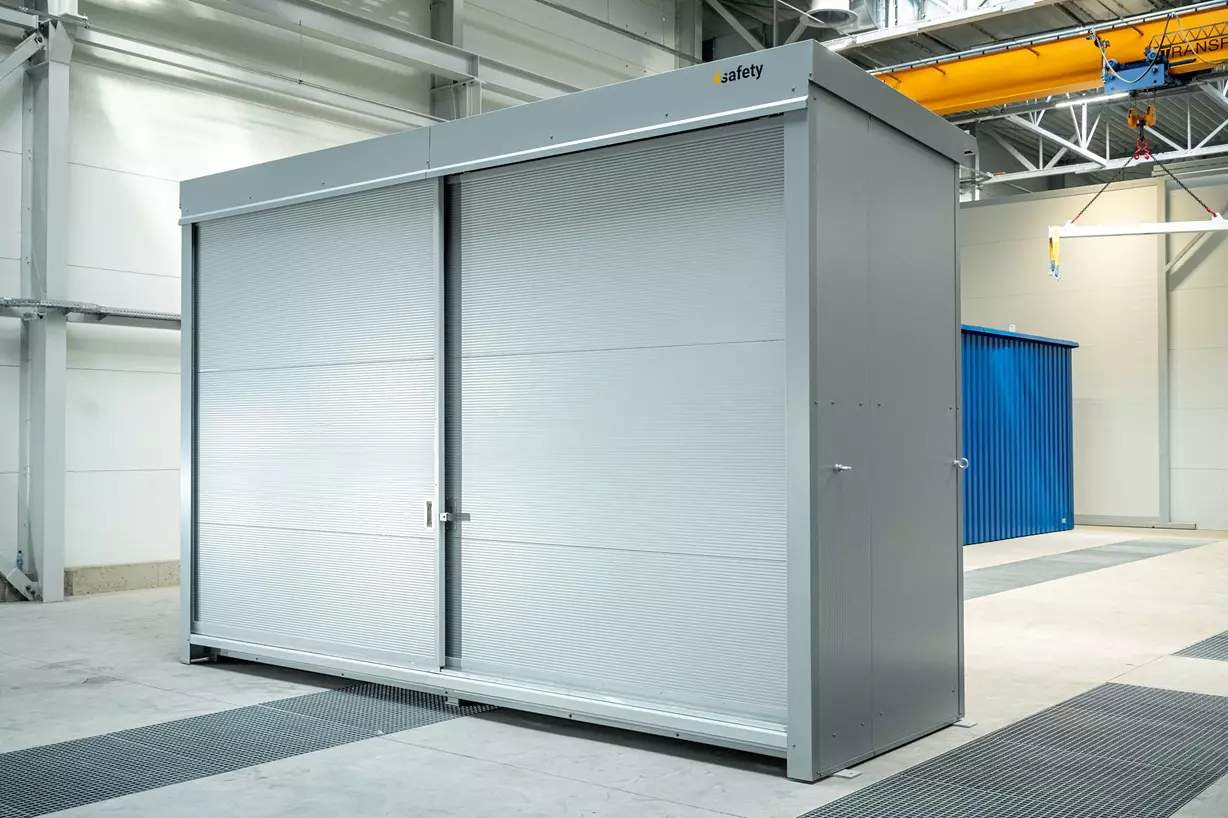
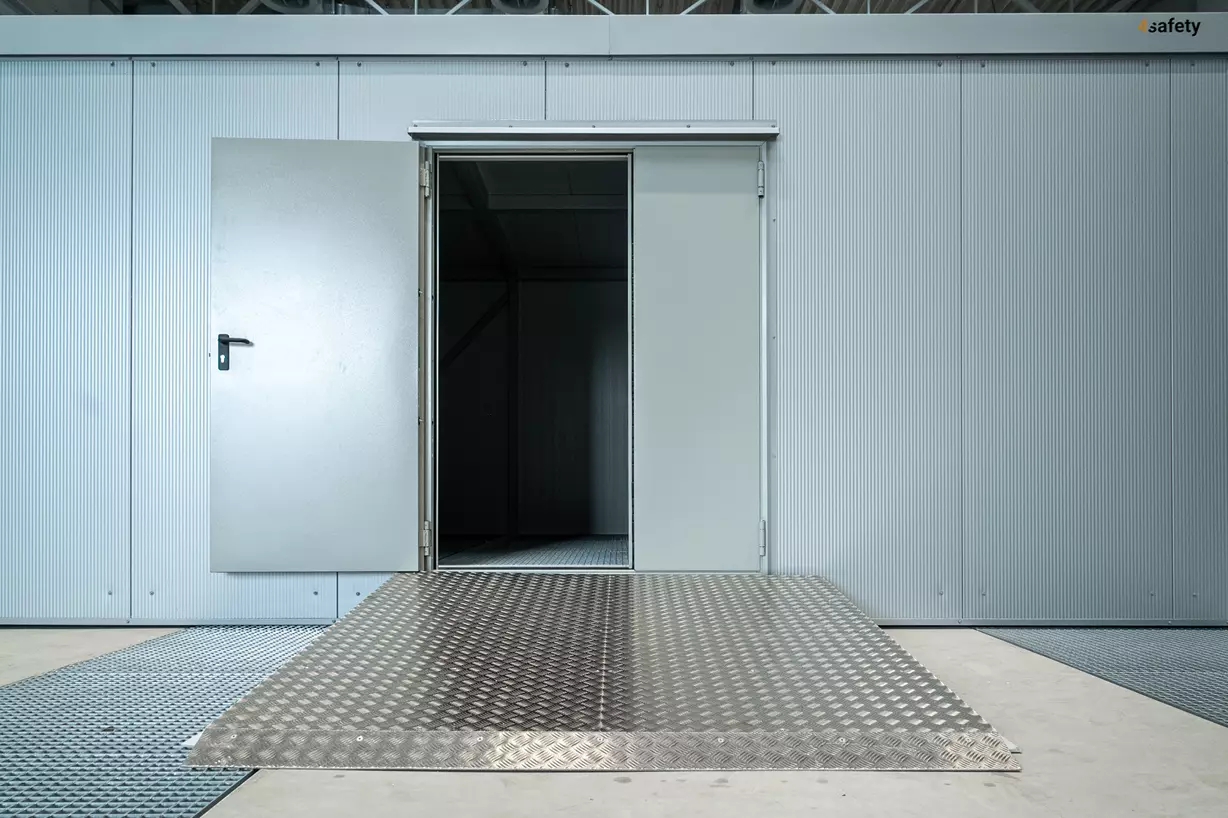
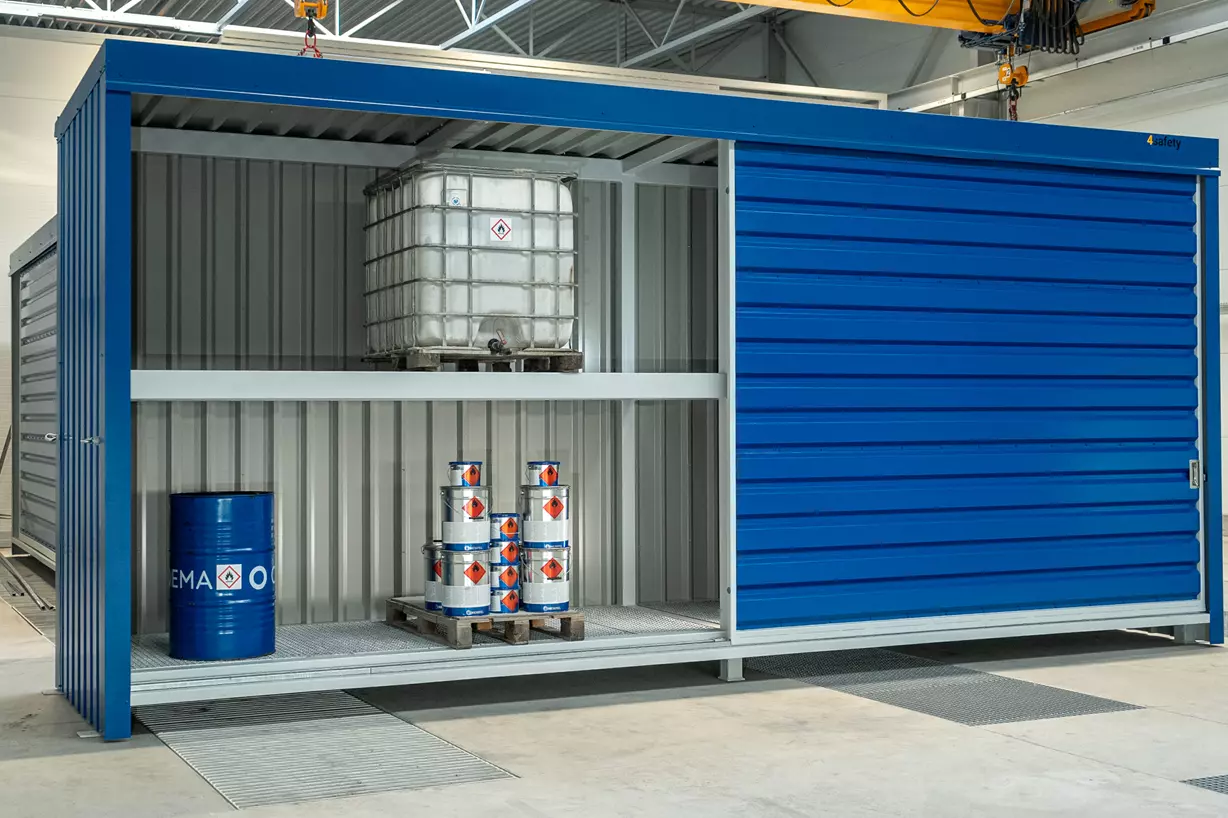
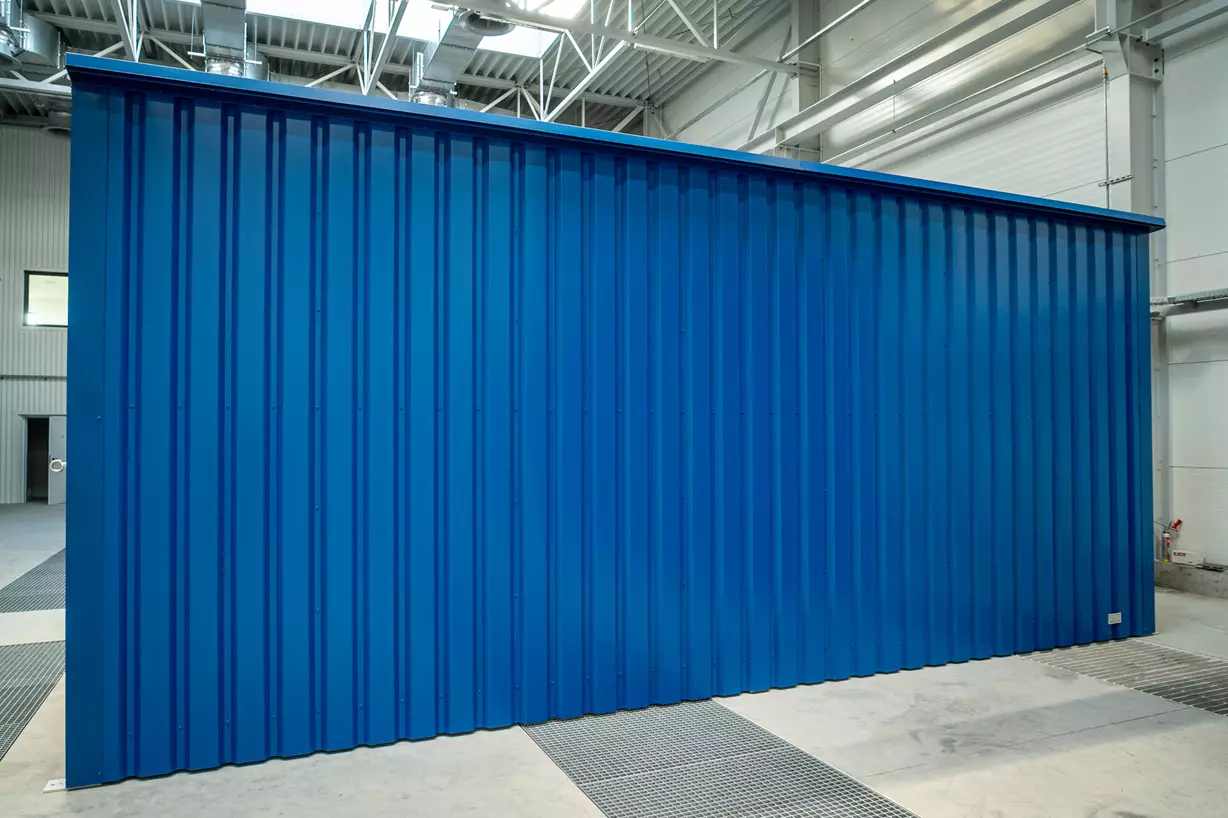
What to pay attention to when choosing a container for hazardous substances
1. What types of substances do you store and will you store in the future?
When choosing the right chemical storage unit, the first point is the type of substances being stored.
Each type of chemical substance belongs to a specific class of dangerous goods. Each can also create a specific risk to people, property, and the environment. Therefore, a hazardous materials container should be designed and constructed to minimize this risk.
When choosing a chemical container, you should first familiarize yourself with the safety data sheet for the substances in question. If you need advice in this area — we will help with an independent expert assessment, OZW, or a fire protection opinion.
According to the characteristics of the substances, choose the appropriate container insulation, fire resistance, and equipment.
Thermal insulation protecting the container can be made of sandwich panels filled with mineral wool or PIR foam. Thanks to this, the substances are protected against high and low temperatures.
For flammable substances stored close to a building or plot boundary, and under other conditions resulting from fire safety assessments, especially those concerning the management of combustible waste, you may need a fire-resistant container. The measure of fire resistance is the time, expressed in minutes, from the start of a fire until a building element reaches one of the three limit criteria known as REI. The most popular are REI 60 and REI 120 fire-resistant containers.
When storing hazardous substances capable of forming an explosive mixture with air, i.e. flammable liquids, flammable gases, and combustible dusts, containers adapted for storing such substances will be necessary. In such containers, there should be an electrical installation compliant with the ATEX directive and explosion-proof ventilation also in ATEX design. Additional equipment will result from the explosion risk assessment. If you plan to place a container in an already existing explosion hazard zone, we will design the container in ATEX design also for the external electrical components of the container
2. In what quantity and how will you store hazardous substances?
When assessing the quantity of stored substances, pay attention to the development of your plant and the possibility of greater storage needs in the future. Choose the container for the estimated quantities with a reserve for the future.
Take into account the type of packaging in which the substances will be stored, as well as their size and weight.
3. How will you store substances in the container? Actively or passively?
Active storage, meaning the use of substances inside the container, e.g. transferring from a large container to a small one, requires more space and equipping the container with additional devices. A container for active storage may have a designated workstation, a dispensing device, drum racks, etc.
Passive storage is a situation where distribution does not take place inside the container and the container is removed in its entirety and used elsewhere. In this case, a loading ramp may be needed for convenient movement with a forklift.
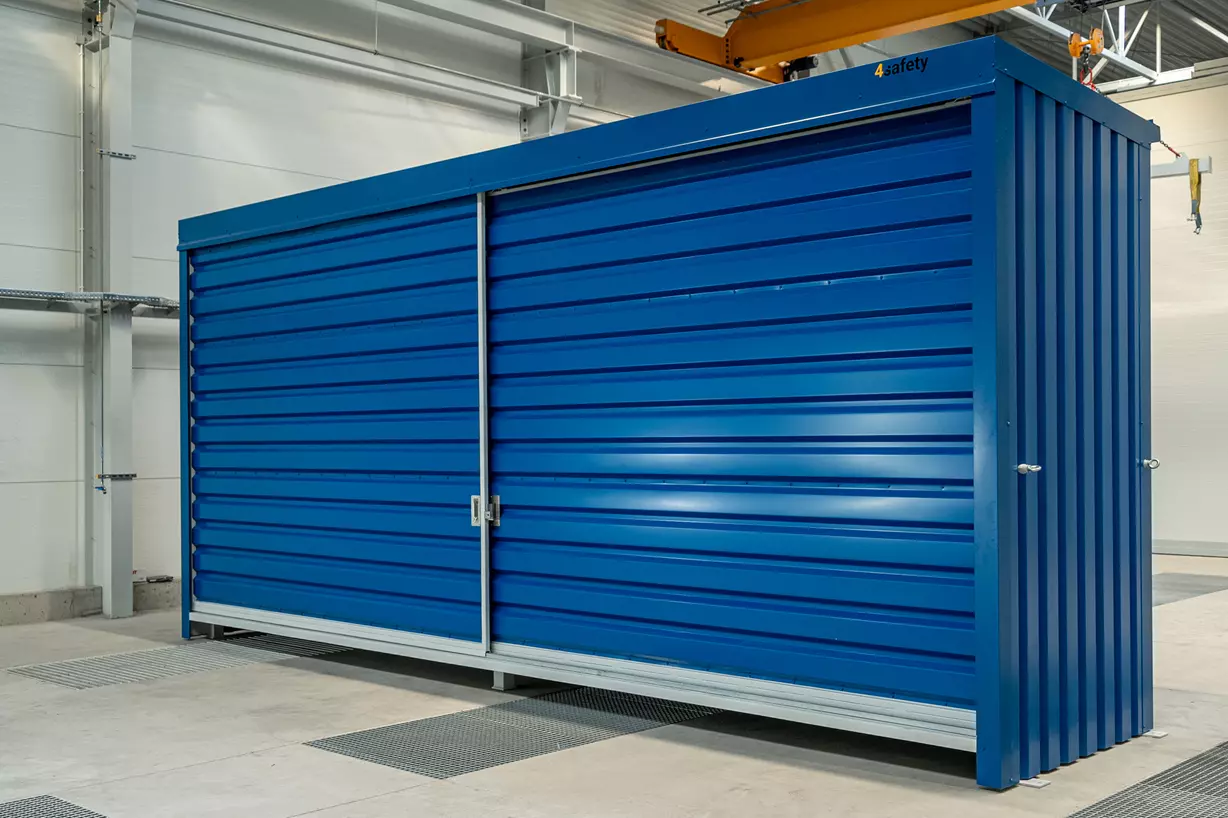 Previous
Next
Previous
Next
What to pay attention to when choosing a container for hazardous substances
4. Under what atmospheric conditions will the substances be stored?
When storing substances in outdoor warehouses, you should take into account the weather conditions prevailing in a given location. A key issue is storing chemicals at the appropriate temperature. For substances sensitive to temperature changes, it is worth using additional container equipment such as air conditioners, ventilation, also in ATEX class if necessary. Attention should be paid to sunlight exposure, whether the container will be exposed to sunlight. If so, it will be necessary to use insulation to limit the heating of the substances inside.
Depending on the type of substance stored, it is necessary for the warehouse to meet specific criteria. For example, when storing highly corrosive substances, it is necessary to:
- ensure the appropriate storage temperature,
- choose a tank made of material with high chemical resistance and a tight, hermetic construction,
- protect against substance leakage; spill containment trays should be used,
- the warehouse should be properly ventilated,
- the tanks should not be exposed to UV radiation.
5. What container equipment should be selected?
Depending on the type of substance, you will need additional container equipment.
Each of the hazardous substance containers we offer is equipped as standard with a spill containment tray on the floor. In the case of a two-level container, trays can also be added on the second level.
You can additionally equip the container with:
- mechanical ventilation
- smoke and fire detectors,
- gas detection
- lighting,
- air conditioners,
- shelving,
- heating,
- temperature monitoring,
- workstations,
- equipment for transferring substances,
- loading ramps.
- another pair of doors,
- blinds, partition walls or separation barriers.
6. How to properly position a storage container?
The ground for placing the container should be properly prepared. It is important to level and harden the ground. Depending on the gross weight that the container together with full containers will create, it is sometimes necessary to pour foundations that will withstand the given weight.
7. In what containers will you store the chemicals?
Most often, hazardous substances are stored in the packaging supplied by the manufacturer, usually drums and IBC containers. Depending on the quantity and type of packaging, choose the number of levels, storage racks, and spill containment trays.
Proper storage of hazardous substances is the responsibility of every employer. A properly selected and manufactured chemical container protects against leaks and external factors, reduces the risk of environmental contamination, and increases employee safety.
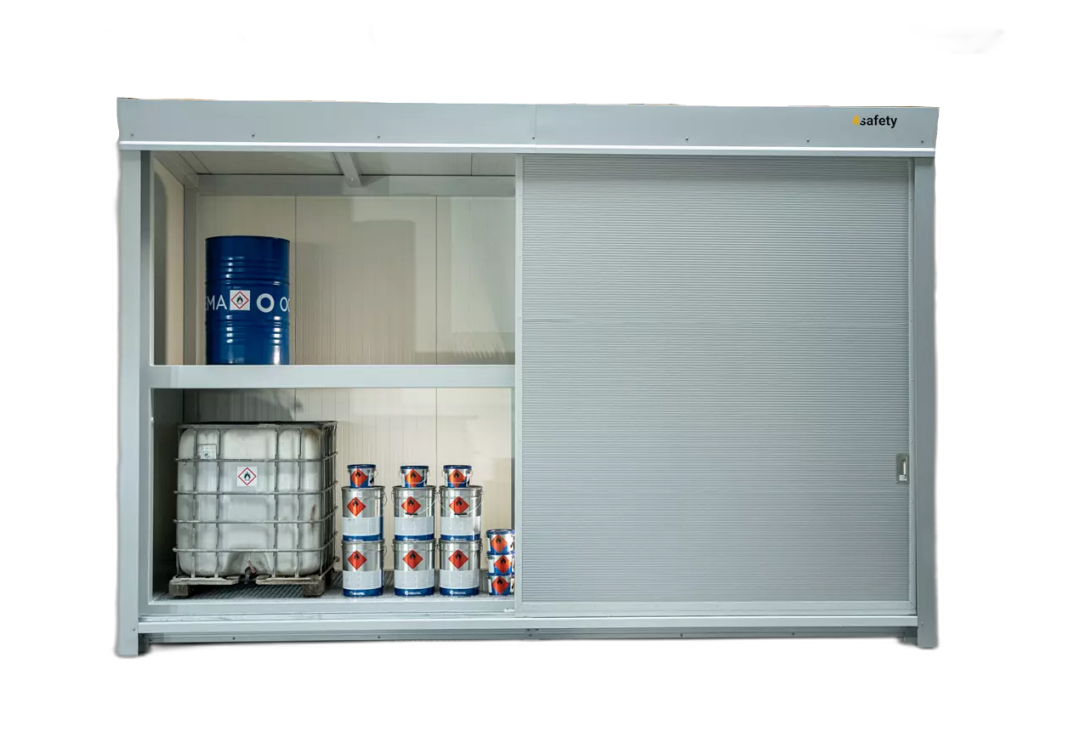
Do you want to store substances safely and conveniently in a storage container?
Schedule a free consultation with an expert. Send us the form, and a regional advisor will contact you to discuss your storage needs.
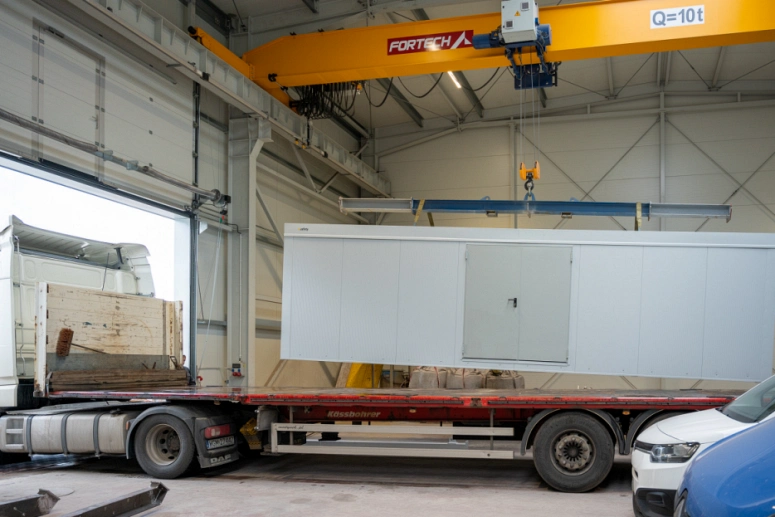
What does buying a container from 4safety look like in a few steps?
- if necessary, we will propose preparing an OZW — an explosion risk assessment or a fire protection opinion.
- an expert will conduct a site visit and review the safety data sheets of the substances,
- the design department will prepare the designs and foundation drawing,
- we can provide oversized transport and unloading,
- we can anchor and install the warehouse,
- after one year, a warranty inspection should be carried out.