Wiedza
- Case study - implementation of the LOTO system in a production plant
- Lockout/Tagout - what is it and why is it worth introducing LOTO?
- Why is it worth implementing a LOTO system with Marcin from 4safety?
- Case study: implementation of a flexible barrier system in a manufacturing plant!
- Steel or flexible: which industrial bumpers should you choose?
- Case study: protection of high-bay racking with a flexible barrier system
- How to safely store lithium-ion batteries?
- Explosion of lithium-ion batteries — how to avoid it?
- Hazardous substances in the storage container
- Safe crane operating zone
- LED safety projectors
- Classification of flexible barriers
- Everything about IBM
- Do It Yourself - industrial printers
- The meaning of the padlock in the LOTO system
- Why is it worth using ergonomic mats?
- Anti-slip protections
- A catch basin is good practice or a regulatory requirement?
- Industrial shelving - types and applications
- About employee comfort and safety
- Frost and structural monitoring of the facility
- What information should a nameplate contain?
- How to prevent accidents with safety containers?
- Fire-resistant cabinet – what should you pay attention to when buying?
- Selection of a spill containment tray
- Hazardous substances - what to do in the event of a leak?
- Hazardous materials under the supervision of an ADR advisor
- What problems do industrial barriers solve?
- Color coding of pipelines – colors, arrows, inscriptions
- Lasers for communication routes
- Natural neutralization of substances
- Energy-intensive barriers – Types, characteristics and application
Hazardous materials under the supervision of an ADR advisor
Hazardous materials under the supervision of an ADR Consultant
The most important point is to understand the essence of the ADR convention. That is, the set of rules concerning the transport of goods classified as dangerous.
It is worth clarifying at the outset that ADR is not only transport from point A to point B, but also all related loading and unloading activities. It is enough that you perform only one of these activities to be obliged to apply the requirements of the ADR Agreement.
If you do not transport, but only store hazardous materials, your company is also obliged to appoint an ADR Consultant and act in accordance with their recommendations, because you are involved in loading and unloading.
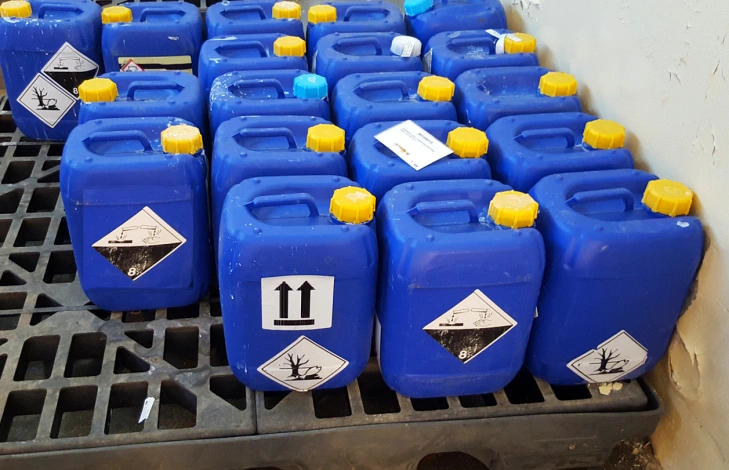
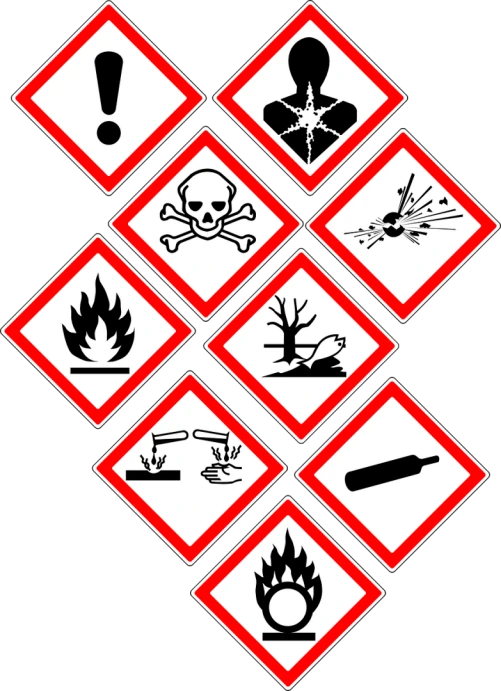
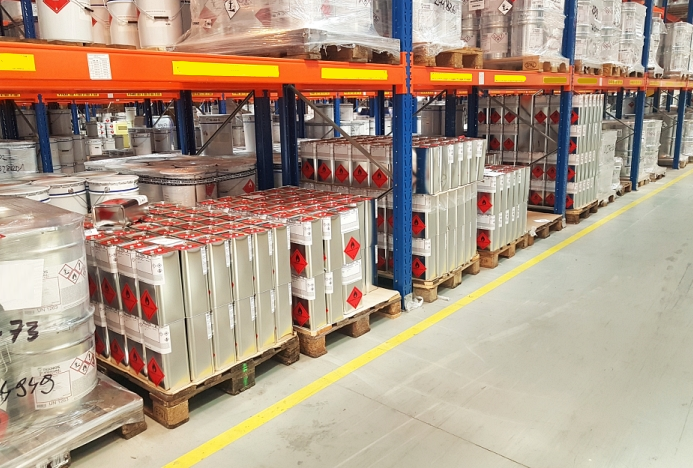
What is a hazardous material in your warehouse?
Hazardous materials are materials that pose risks to safety, health, life, or property.
These are not only goods stored on shelves. They are also goods used during operation, such as floor cleaning agents.
Substances packed in various types of packaging will pose risks when they are classified in accordance with the CLP Regulation or transport regulations.
The CLP Regulation concerns the classification, labeling and packaging of substances and mixtures. The main objective of CLP is to verify whether a given substance or chemical material is characterized by properties qualifying it as posing risks.
Where can information be found about the risks associated with a given hazardous substance?
• in the safety data sheet in section 2. - the CLP Classification and types of hazards will be described,
• in the safety data sheet in section 14. - you will find the ADR classification for those materials that will also be treated as dangerous during transport.
Please note that CLP and ADR are two legal aspects of classification and both must be taken into account when storing hazardous materials.
Why?
- Because not every ADR good will have a safety data sheet – for example, articles containing hazardous materials (lighters, batteries, etc.).
- Not every material with a safety data sheet will be dangerous in transport – for example, irritating or sensitizing materials – these hazards are not transport hazards, but they are of great importance for people using such materials.
Additionally, it should be remembered that warehousing is not only storage itself, but also processes related to receiving goods (unloading), sorting, and their dispatch and preparation for shipment (loading).
Who is responsible for the safety of hazardous materials in the warehouse?
An OHS specialist or an ADR consultant?
The correct answer is – both experts.
- The ADR Consultant supervises the safety of loading and unloading processes.
- The OHS specialist controls the safety of the entire warehousing process.
Who should be covered by ADR training?
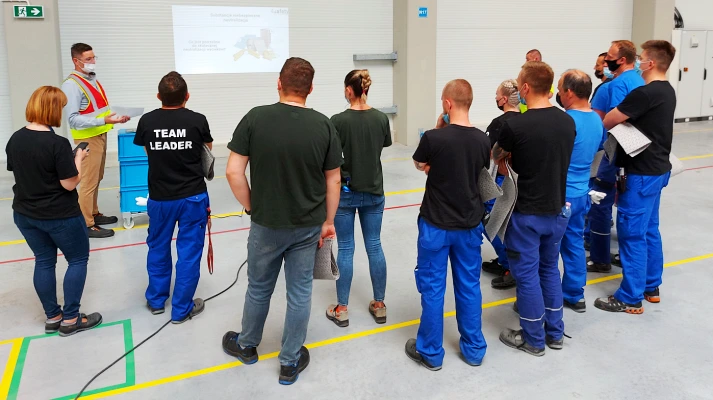
The warehouse employees who prepare ADR goods for shipment and carry out their loading and unloading should be covered by the training, regardless of the quantity, packaging size, and frequency.
Such training must be conducted by an ADR Advisor, documented, and repeated periodically.
One of the elements of ADR training is safety training, the purpose of which should be to familiarize employees with safe methods of conduct and rescue procedures.
If hazardous materials are loaded and unloaded at your facility, contact our experienced ADR expert.