Wiedza
- Case study - implementation of the LOTO system in a production plant
- Lockout/Tagout - what is it and why is it worth introducing LOTO?
- Why is it worth implementing a LOTO system with Marcin from 4safety?
- Case study: implementation of a flexible barrier system in a manufacturing plant!
- Steel or flexible: which industrial bumpers should you choose?
- Case study: protection of high-bay racking with a flexible barrier system
- How to safely store lithium-ion batteries?
- Explosion of lithium-ion batteries — how to avoid it?
- Hazardous substances in the storage container
- Safe crane operating zone
- LED safety projectors
- Classification of flexible barriers
- Everything about IBM
- Do It Yourself - industrial printers
- The meaning of the padlock in the LOTO system
- Why is it worth using ergonomic mats?
- Anti-slip protections
- A catch basin is good practice or a regulatory requirement?
- Industrial shelving - types and applications
- About employee comfort and safety
- Frost and structural monitoring of the facility
- What information should a nameplate contain?
- How to prevent accidents with safety containers?
- Fire-resistant cabinet – what should you pay attention to when buying?
- Selection of a spill containment tray
- Hazardous substances - what to do in the event of a leak?
- Hazardous materials under the supervision of an ADR advisor
- What problems do industrial barriers solve?
- Color coding of pipelines – colors, arrows, inscriptions
- Lasers for communication routes
- Natural neutralization of substances
- Energy-intensive barriers – Types, characteristics and application
Selection of a spill containment tray
Lack of awareness of the scale of threats is one of the main causes of dangerous situations in industry. Many accidents could be avoided by having knowledge of the proper protection of stored and transferred substances and the ability to use this knowledge in practice. The storage and management of hazardous substances is a broad and rapidly changing issue, however, the main goal of safe storage remains the protection of the environment and employees while maintaining the highest possible efficiency of technological processes.
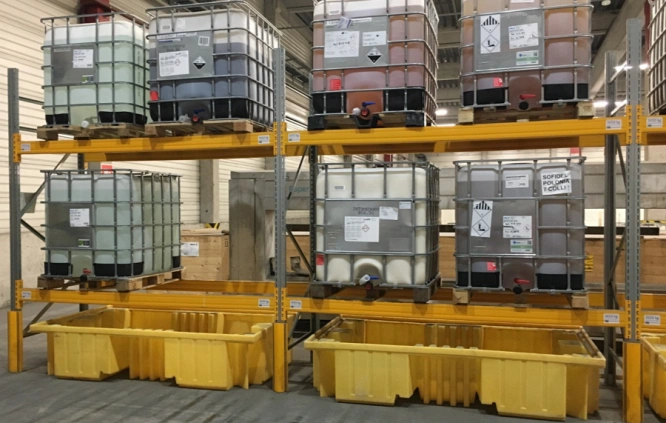
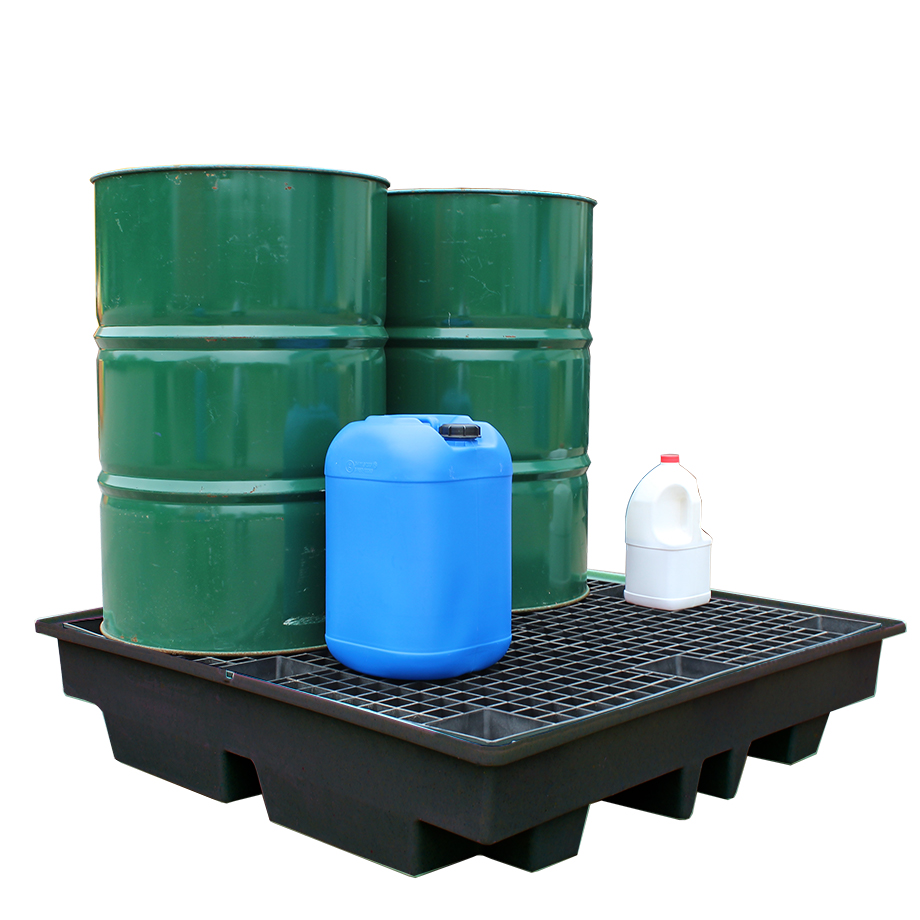
Spill containment trays
They are the primary measure preventing dangerous liquid spills in workplaces. They serve as a place for dispensing liquids from containers and drums. They protect groundwater from contamination, help maintain cleanliness in the workplace, and also eliminate the risk of accidents resulting from slipping and falling.
What should be taken into account when choosing a tray?
Spill containment trays must – depending on their intended use – meet various requirements. Spill containment trays with integrated fork pockets are ideally suited for transport by forklift truck within the workplace. In addition, the containment capacity is also important. A spill containment tray should in every case be thoroughly tested and certified.
Attention should be paid to:
- tray dimensions
- containment capacity
- load capacity
- quantity and size of stored containers
- with grating or without grating
- what standards it meets and what certificates it has
- whether there is a need for the tray to be grounded
- whether there is a need to connect trays into one system
- whether there is a need to drive onto the tray with a truck
- resistance to chemical substances
- resistance to mechanical damage
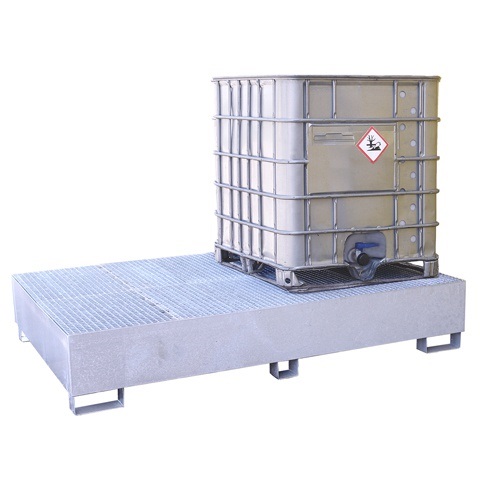
What size spill containment pallet?
A spill containment pallet prevents leaks and helps maintain cleanliness, and it must be able to hold the contents of the largest container or at least 10% of the stored volume. If, in a water protection area, it is permitted to store materials hazardous to groundwater, the spill containment pallet must be able to hold 100% of the total stored volume.
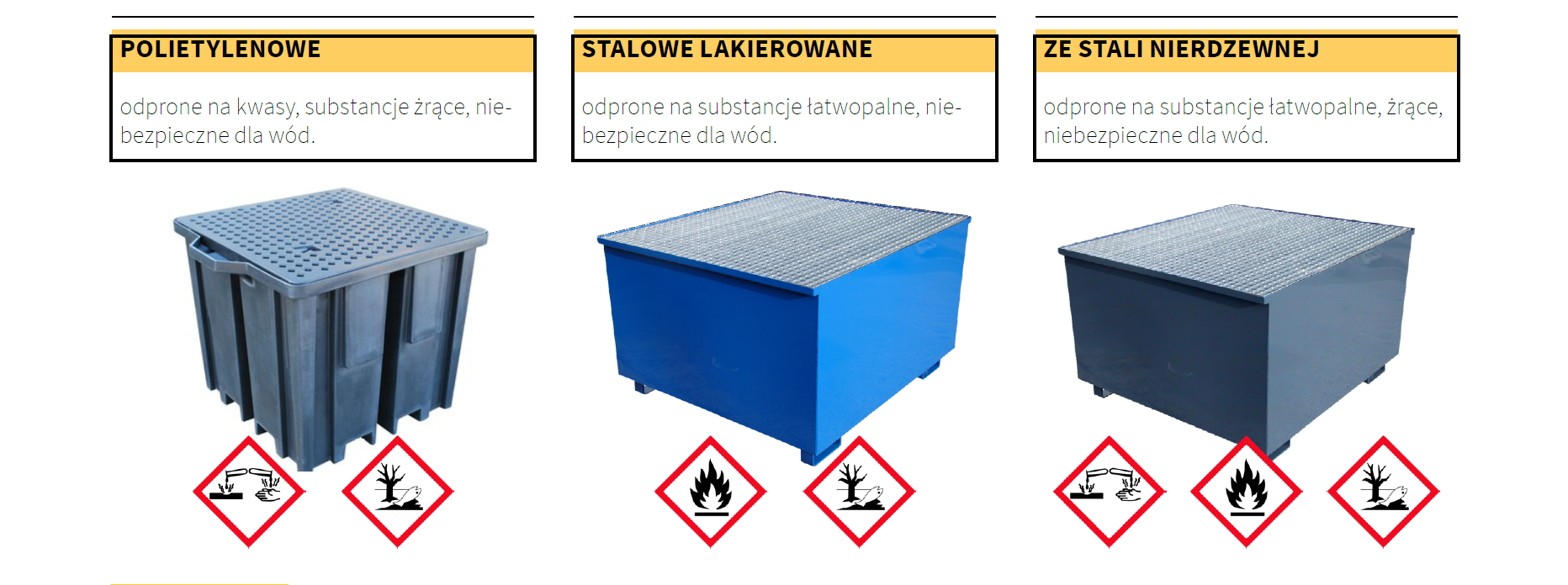
What material for a spill containment pallet?
For storing materials hazardous to groundwater and flammable substances such as oils and varnishes, stainless steel spill containment pallets are used, alternatively galvanized or painted ones. For storing aggressive chemicals such as acids and alkalis, spill containment pallets made of stainless steel or HDPE plastic are best suited. Depending on the properties and hazard potential of hazardous materials, appropriate measures should be taken; for example, for acids or lyes, special PE inserts for the spill containment pallet should be provided.
A general rule that can be treated as good practice is to follow the material of the container in which the given substance was supplied by the manufacturer.
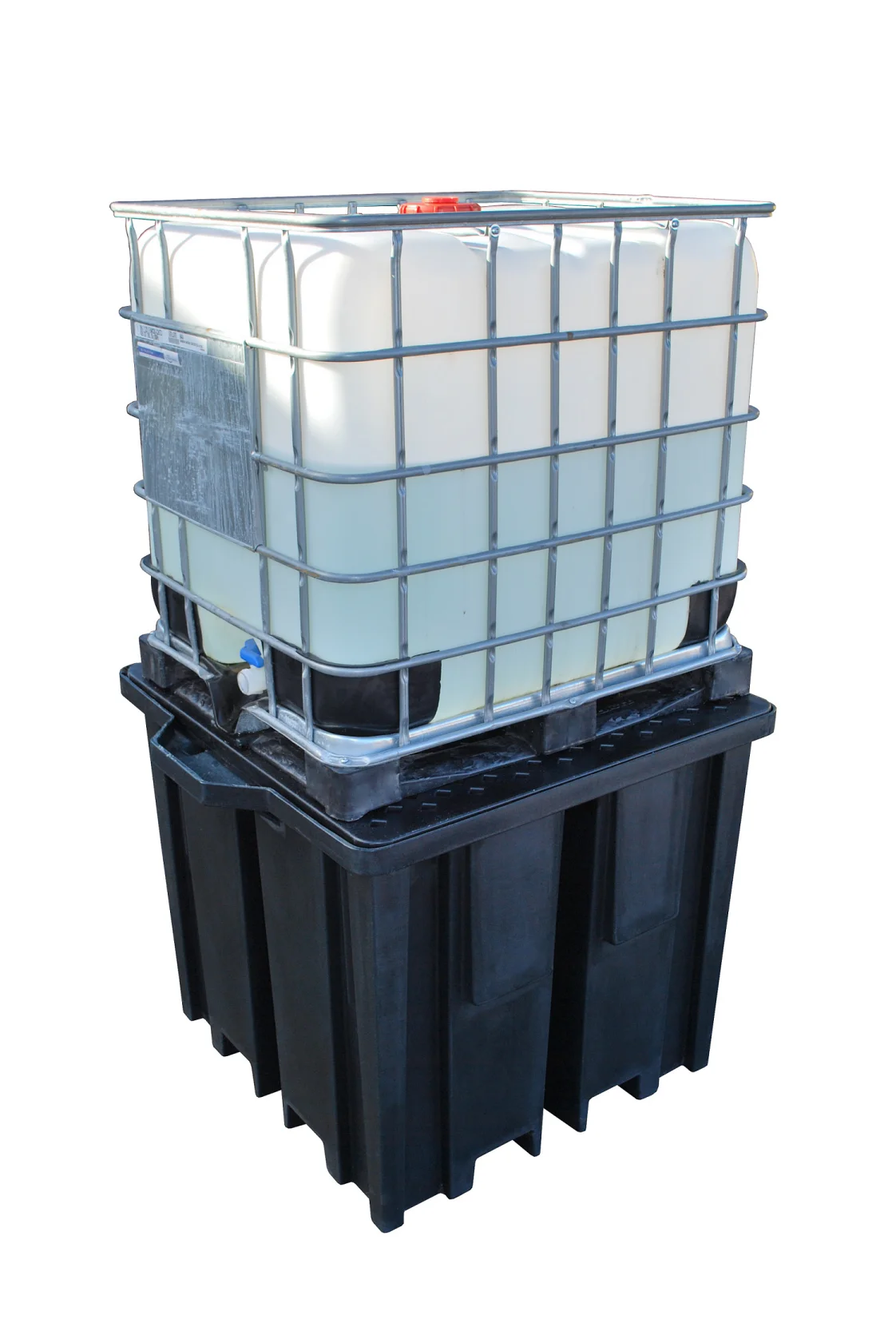
Pallets intended for chemical storage are made of polyethylene in black, which conceals dirt, from 100% recycled material, or of virgin HDPE in yellow or blue. High-quality pallets have a durable structure resistant to use in harsh industrial conditions. A monolithic, seamless design, excess spill containment capacity, removable self-centering grates, and wide recesses in the base for forklift handling provide safety and convenience in use. An optional access ramp for square pallets for 4 drums is securely attached to the pallet and enables loading drums with a manual pallet truck. Efficient use of warehouse space allows a choice of pallets in a square or inline arrangement.
What about flammable liquids?
In the case of flammable media, fire safety regulations must be taken into account. If an explosive atmosphere is present, compliance with the ATEX 2014/34/EU directive is required. When storing flammable liquids, the storage room must be appropriate, i.e. with constant ventilation, explosion protection, and structural fire protection. One of the most important aspects cannot be overlooked - the storage temperature.
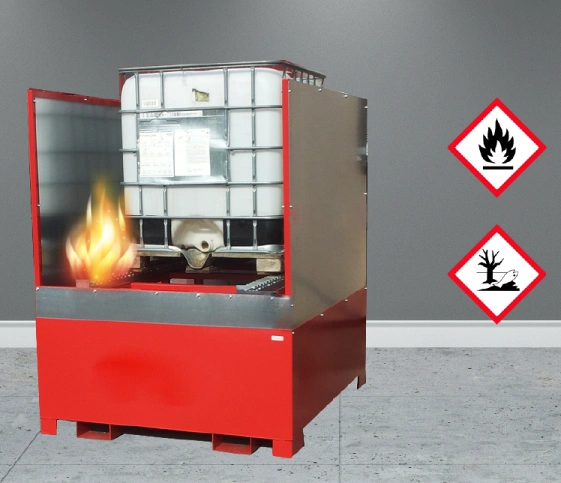
Example: replacing a standard spill containment pallet with a pallet with additional protection for IBC tanks containing flammable liquid - a fire trap.
A 1400-liter steel drip tray with an integrated flame arrester has been designed to enable the safe storage of flammable liquids in IBC tanks, in accordance with fire protection requirements and FM approval (optionally VdS)
In the event of an IBC tank leak during a fire, its entire contents are captured, which prevents: liquid spillage, evaporation, the formation of flammable vapor-air mixtures, and the spread of fire; additionally, after connection to a sprinkler system, automatic fire extinguishing may take place.
Benefits
- protection against ignition of flammable liquids escaping from a damaged container
- additional capacity of 400 liters for extinguishing agent provided in the event of activation of the fire extinguishing system
- prevention of overflow that could cause the spread of flammable liquid
- comprehensive splash protection
- easy handling thanks to roller guides enabling pallet placement using a forklift
- mobility – equipped with a forklift pocket
- compliance with insurers' audit requirements
- possibility of storing flammable substances closer to the workstation
Hazards
The storage and management of hazardous substances is a very dynamic issue, the main task of which is to protect employees while maintaining the highest possible efficiency of technological processes. Therefore, it is worth taking into account regulations related to storage, including:
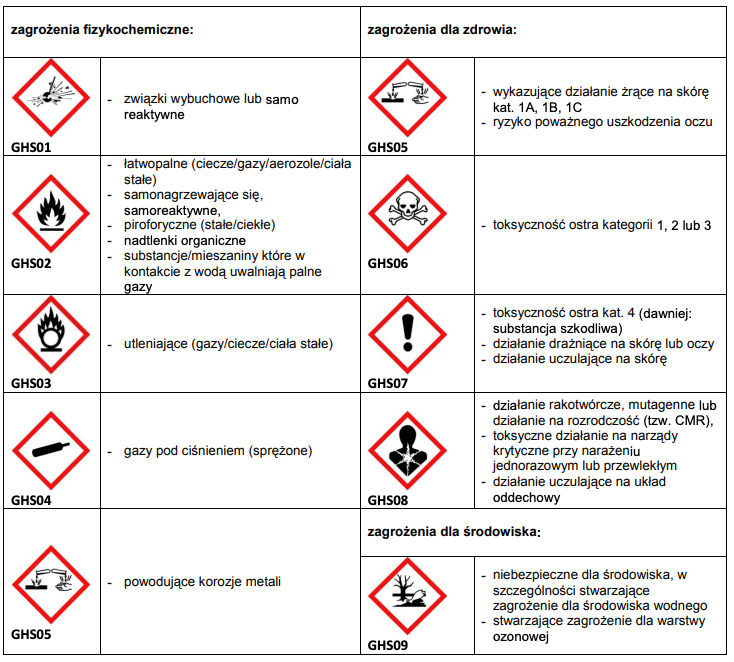
In the safety data sheet of the stored substance (also known as MSDS/SDS, i.e. Material Safety Data Sheet), in the section concerning storage, special requirements may be applied to rooms or storage containers (including retaining walls and ventilation), incompatible reactions, storage conditions (temperature / air / humidity / light, etc.), special requirements for electrical devices and equipment, and recommendations regarding antistatic properties and storage temperature. The MSDS contains a description of hazards related to the use of the substance, its basic physicochemical data, and guidance on its safe use and storage. If a given substance poses a hazard to the environment, the manufacturer is obliged to include an appropriate pictogram in the safety data sheet, enabling quick identification and assignment of the given substance to one or several hazard groups, in accordance with GHS regulations.
Regulations
Additionally, every workplace should follow internal procedures, but also regulations resulting from the act
Regulation of the Minister of Labour and Social Policy of 26 September 1997, on general occupational health and safety regulations
§93.1. Hazardous materials shall be stored in places and packaging intended for this purpose and appropriately marked. 2. Rooms, equipment, means of transport, tanks and packaging in which hazardous materials are used, moved or stored should be appropriate to the properties of these materials.
Act of 27 April 2001 - Environmental Protection Law
§96. Inadmissibility of accumulating hazards; storage instructions, item 2 In warehouses, instructions should be posted specifying the method of storing, packing, loading and transporting hazardous materials; employees engaged in this work should be familiarized with the contents of the instructions.
Act of 25 February 2011 - On chemical substances and their mixtures
Art. 21, item 1 Containers and tanks used for storing hazardous substances or hazardous mixtures, as well as containers and tanks used for working with these substances or mixtures, pipelines containing hazardous substances or hazardous mixtures or used for transporting them, and places where significant quantities of hazardous substances or hazardous mixtures are stored, should be properly marked, including with warning signs.
Regulation of the Minister of Internal Affairs and Administration of 7 June 2010, on fire protection of buildings, other structures and areas
§7.1. When using or storing fire-hazardous materials, the following shall be observed:
1) perform all activities related to the production, processing, treatment, transport or storage of hazardous materials in accordance with the fire protection conditions specified in the fire safety instruction referred to in § 6, or in accordance with the conditions specified by the manufacturer;
2) maintain at the workstation a quantity of fire-hazardous material no greater than the daily requirement or daily production, unless specific regulations provide otherwise;
4) store fire-hazardous materials in a manner preventing the occurrence of fire or explosion as a result of the storage process or due to mutual interaction;
Regulation of the Minister of Health of 25 August 2015 on the method of marking places, pipelines, and containers and tanks used for storing or containing hazardous substances or hazardous mixtures
§5.1.Places where hazardous substances or hazardous mixtures are stored in significant quantities shall be marked with pictograms specifying the type of hazard in accordance with Annex V to Regulation No. 1272/2008 or warning signs specified in the annex to the regulation, containing the same symbols, unless the appropriate information about the hazards posed by such substances or mixtures is placed on the packaging of such substances or mixtures.