Wiedza
- Case study - implementation of the LOTO system in a production plant
- Lockout/Tagout - what is it and why is it worth introducing LOTO?
- Why is it worth implementing a LOTO system with Marcin from 4safety?
- Case study: implementation of a flexible barrier system in a manufacturing plant!
- Steel or flexible: which industrial bumpers should you choose?
- Case study: protection of high-bay racking with a flexible barrier system
- How to safely store lithium-ion batteries?
- Explosion of lithium-ion batteries — how to avoid it?
- Hazardous substances in the storage container
- Safe crane operating zone
- LED safety projectors
- Classification of flexible barriers
- Everything about IBM
- Do It Yourself - industrial printers
- The meaning of the padlock in the LOTO system
- Why is it worth using ergonomic mats?
- Anti-slip protections
- A catch basin is good practice or a regulatory requirement?
- Industrial shelving - types and applications
- About employee comfort and safety
- Frost and structural monitoring of the facility
- What information should a nameplate contain?
- How to prevent accidents with safety containers?
- Fire-resistant cabinet – what should you pay attention to when buying?
- Selection of a spill containment tray
- Hazardous substances - what to do in the event of a leak?
- Hazardous materials under the supervision of an ADR advisor
- What problems do industrial barriers solve?
- Color coding of pipelines – colors, arrows, inscriptions
- Lasers for communication routes
- Natural neutralization of substances
- Energy-intensive barriers – Types, characteristics and application
Everything about IBM
Basic documents of the loto system
Procedurally, the LOCKOUT TAGOUT system is based on two types of documents. The first is a written hazardous energy control program, i.e. a general procedure. It is treated as a set of regulations defining the operating method of the implemented system. A well-written procedure is several, often even a dozen or so pages, which define the purpose of implementation, responsibility and the scope of duties of individual employees in relation to hazards they may face during their daily duties, including of course subcontractor companies working on the premises of a given plant. The content of such a document should also specify the method of work organization, including, among other things, the necessity of creating machine lockout instructions, which are the second basic element of the system and are most often the result of conducted audits.
These instructions should include:
- identification of hazardous energy isolation points,
- methods of safe shutdown and the manner of isolation
- methods of verifying the achievement of a “zero energy” state
- records regarding the mandatory sequence that must be undertaken when performing activities related to the use of the LOTO system.
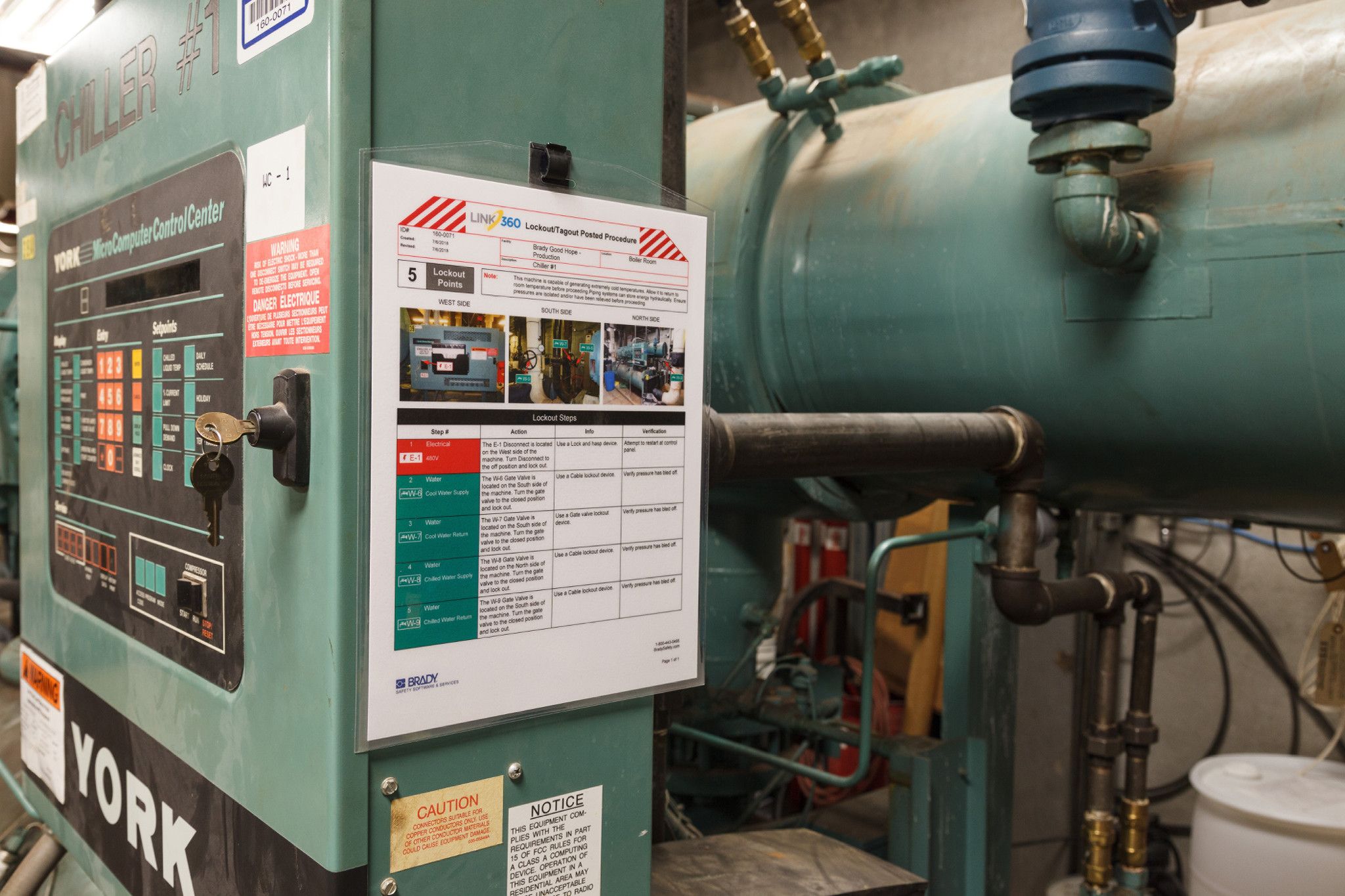
What to pay attention to
Due to our experience and the number of implementations carried out, we sometimes visit and audit companies that have been “struggling” with lockout on their own for some time already, or worse, entrust the correctness of implementation to companies that do not apply the principles of proper implementation of the solutions in question, treating every plant routinely and identically. A good implementation should each time be characterized by an individual approach, which includes:
- the specifics of the machine park,
- the structure of technical and production departments
- organizational charts related to the method of work including shutdowns, overhauls, servicing and even planned maintenance activities and TPM, which may partly take place with energy left on.
What the instruction should not look like – basic mistakes
Too long, unreadable
One of the most common mistakes regarding IBM (machine lockout instructions) is the fact that they are too long, taking up even several pages, most of which is unnecessary text, which makes them unreadable and difficult for the user.
The most desirable instruction fits on one page in the clearest possible way.
This is a very important element, if only due to the fact that it is a safety instruction, therefore it is important that it be as simple as possible and easy to apply in practice. Unfortunately, we still encounter versions that do not clearly indicate the points appropriate for a given type of energy, rely on illegible photos or layouts or drawings that in no way help identify the correct points.
Lack of verification by the appropriate units
It also happens that the instruction has not been properly verified by the appropriate persons, which consequently may lead to various types of errors, even related to indicating the wrong medium inside a given installation. Such a situation is unacceptable, because improper marking and identification of media can be extremely dangerous and may lead to an accident.
What a proper machine lockout instruction looks like
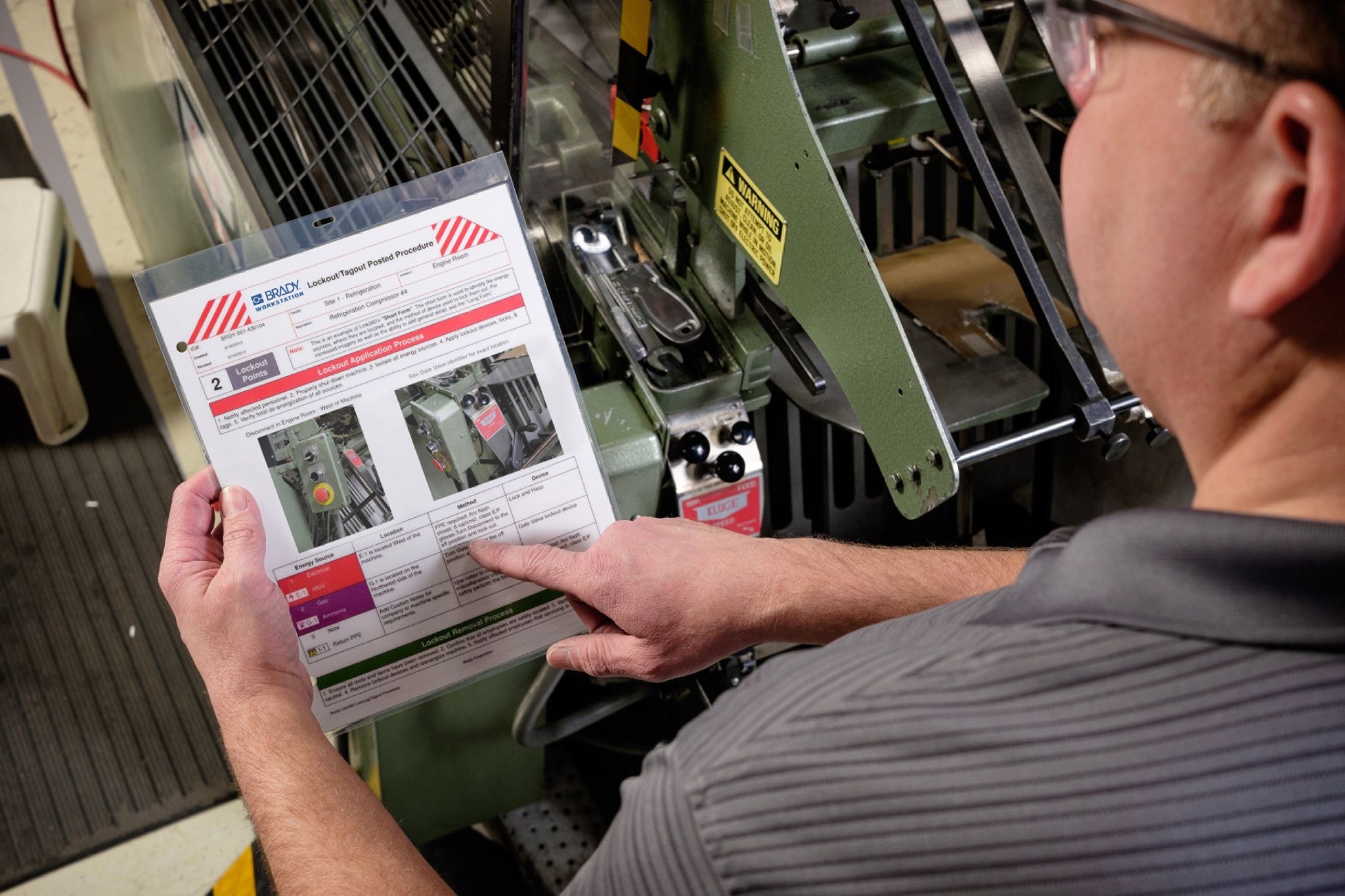
A well-prepared machine lockout instruction consists of four elements that make up one coherent and readable document.
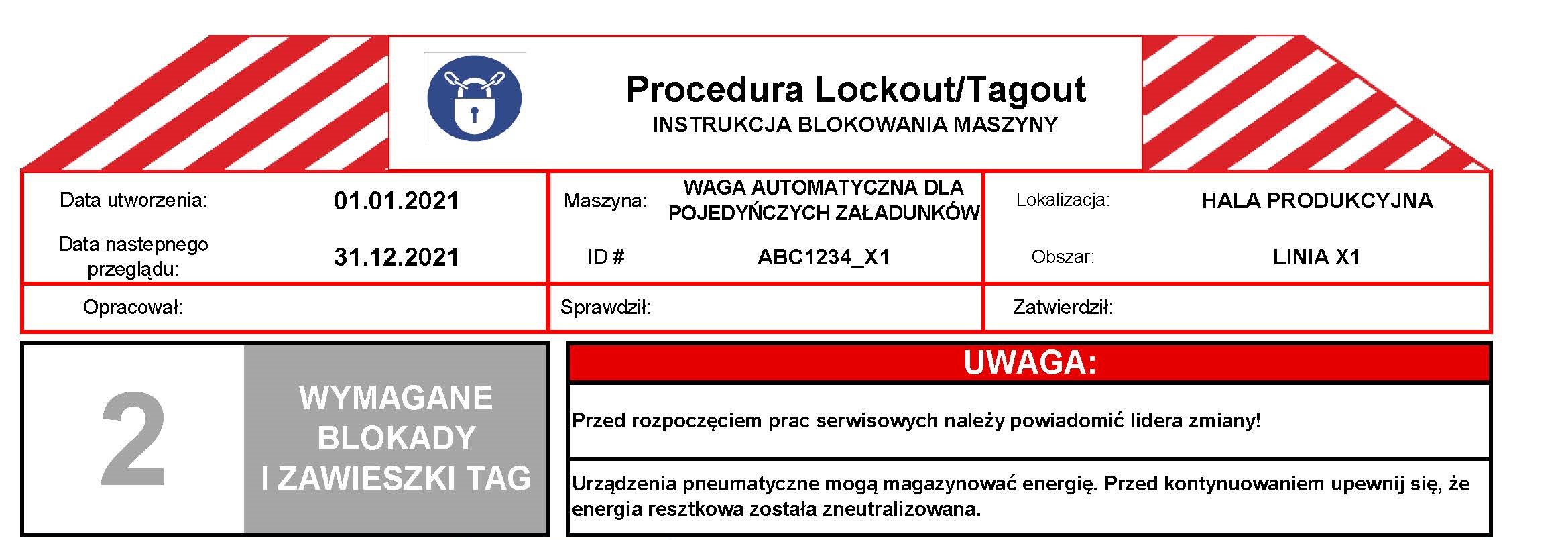
Organizational table
The first part is an organizational table that allows the proper assignment of a document to a specific device or machine. This is important because the instruction should be prepared individually for each device covered by the LOTO system. Of course, the graphic form is arbitrary and is often related to templates used by clients, however, each time, in addition to the device name, it should indicate:
- the instruction serial number,
- the area or line number,
- often the date and edition number,
- the expiration date,
- but above all, information regarding the author, the person who checks, and the person who approves/authorizes the document for internal circulation within the company.
Each of these people, of course, should personally check and sign the instruction, accepting its content. Regardless of the appearance and graphic arrangement of the individual data, each time we place a large, eye-catching number intended to indicate the number of padlocks necessary to lock the device in a “zero energy” state.
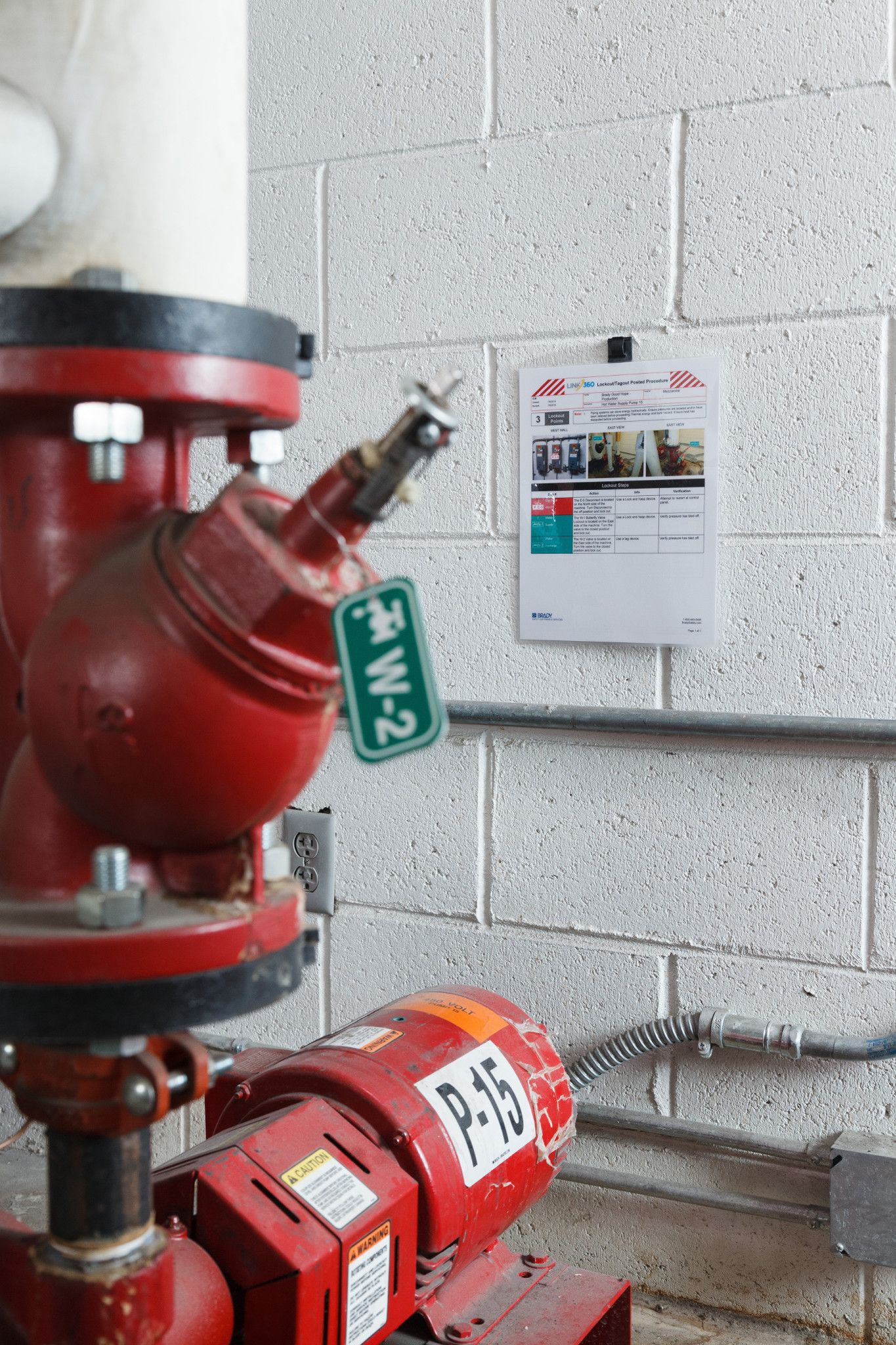
Photos / drawings / diagrams
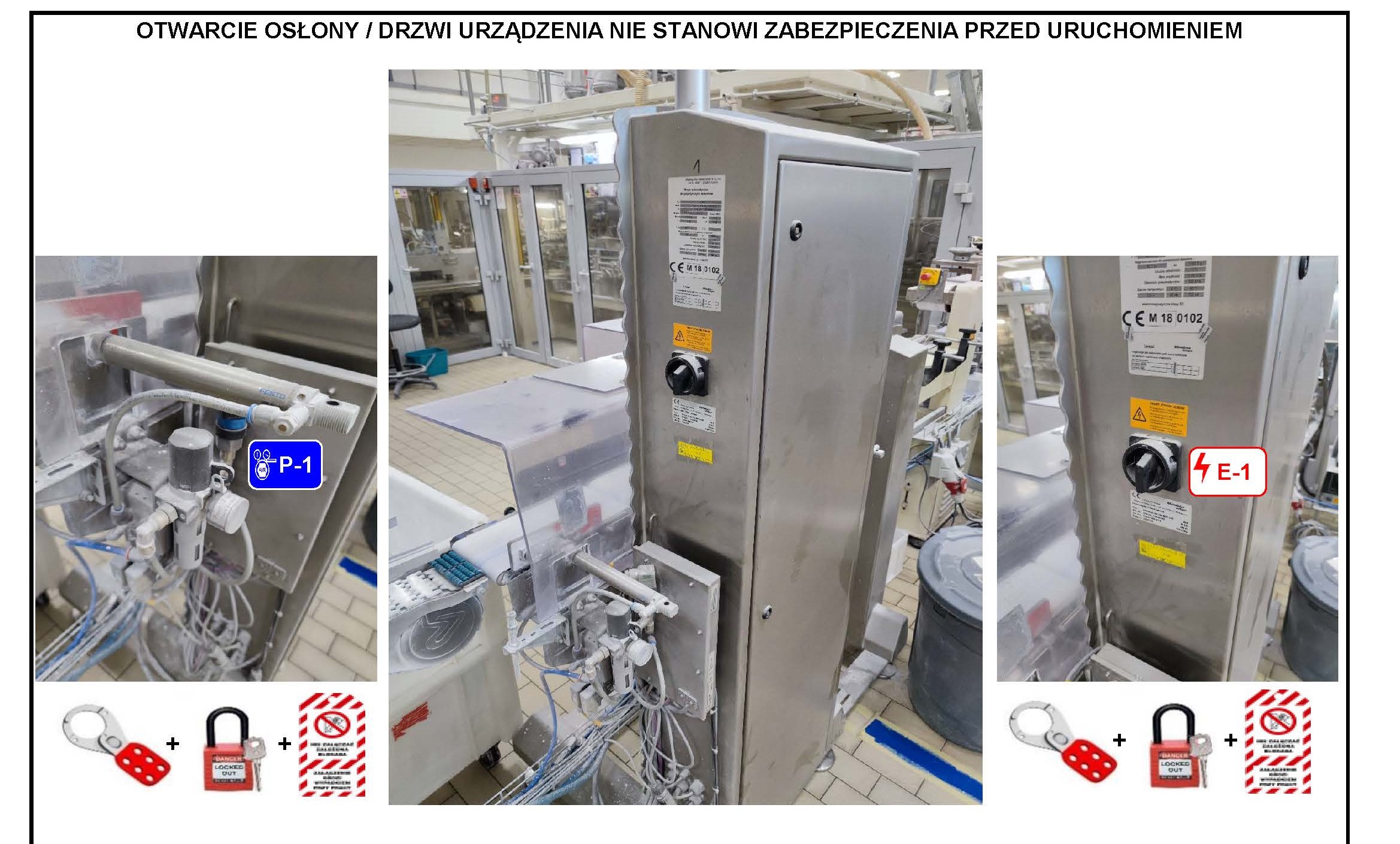
The second part, typically illustrative and very important for many people, especially visual learners, is the graphic section, where with the help of photos, drawings, diagrams, or layouts, we try to present all energy isolation points necessary for a given device. The form of presentation depends, among other things, on the number and location of isolation points, the construction and size of the device, but also on the preferences or standards of the companies for which the instruction is prepared. Regardless of the visualization method, however, we always pay attention to properly highlighting the correct switches and valves, clearly indicating them with the appropriate symbol and individual number.
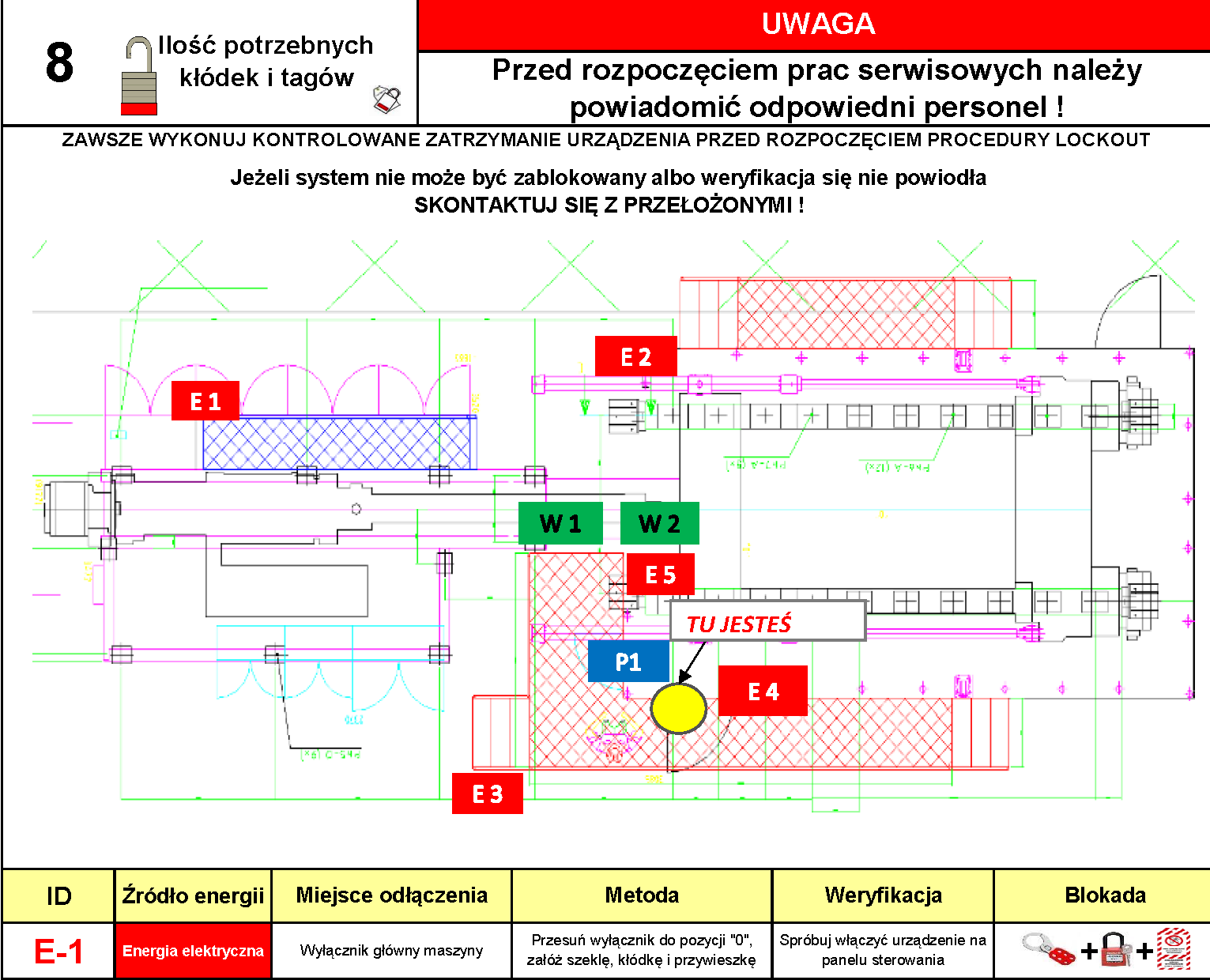
Hazardous energy isolation points, such as valves and switches specific to individual devices, should be marked with an appropriate label. These markings should have an established graphic design and an assigned serial number so as to clearly indicate the correct valve or switch. Identification labels should be found both on the machine lockout instruction and directly at the appropriate power supply control point.
Legend
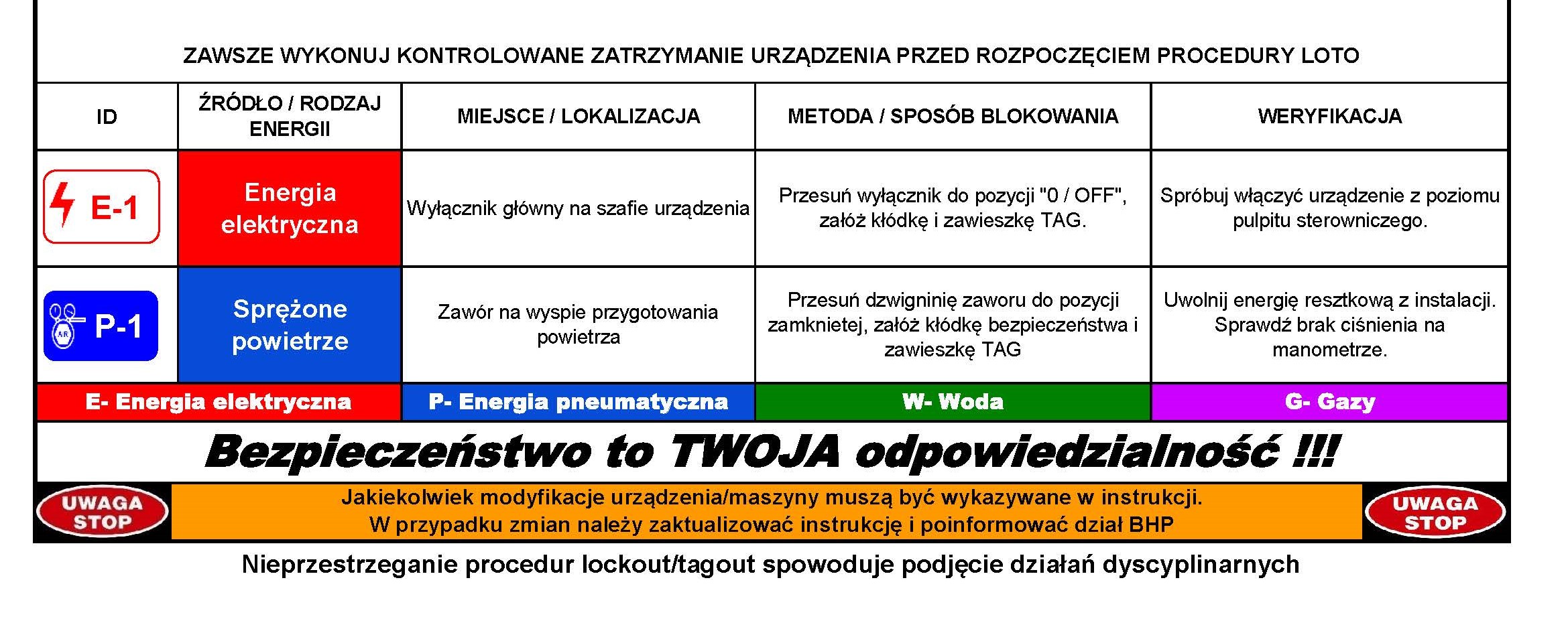
The next, already third and undoubtedly the most important in terms of content, part is a table that serves as a kind of legend to what is shown in the illustrations above. A properly prepared one should, in the simplest and most accurate way possible, cover the type and location, the method of isolating individual hazardous energy points, the actions necessary to verify the correct application of lockout devices and the elimination of residual energy, as well as a list of equipment helpful for locking the indicated switches and valves. What is important in this matter is keeping the actual state consistent with the content of the instruction, therefore any changes and modifications to the device require an update reflecting all changes.
Procedure instructions
The last element that we suggest as important is the inclusion of a mandatory sequence of actions which guides the employee step by step through the work using the LOTO system. In accordance with the provisions of the general procedure, it defines a series of actions necessary to be performed before starting the actual task and aimed at bringing the device to a zero energy state. Similarly, after the work is completed, the sequence indicates the precise path for restoring energy to the device and returning it to normal operation.
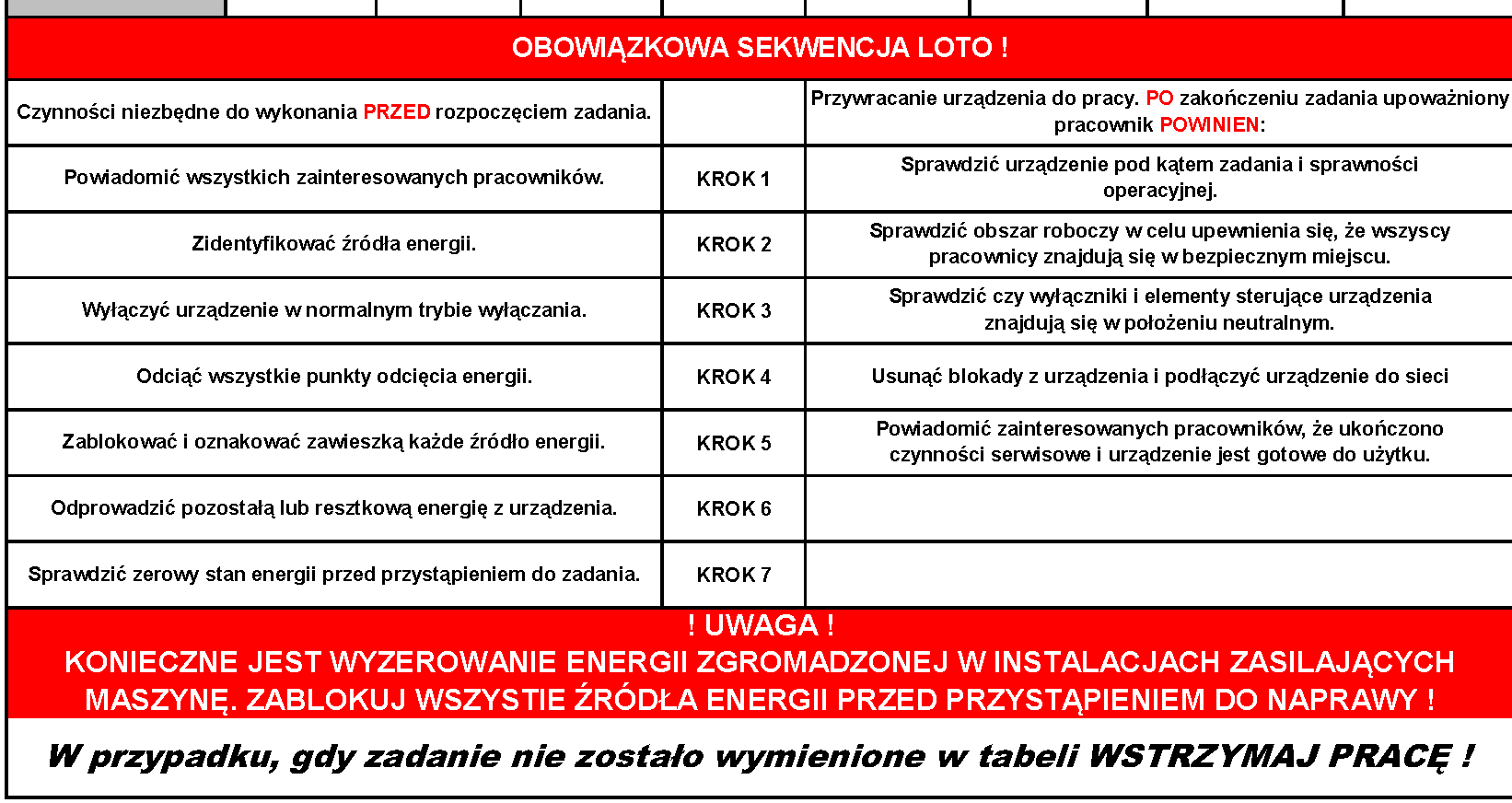
Maintaining the proper order of performed activities guarantees the maintenance of an appropriate level of safety for both employees and the serviced device. Below we present several correct machine lockout instructions: Below we present several correct machine lockout instructions:
I. Example of a correct instruction
II. Example of a correct instruction
As you can see, instructions do not have to be created according to one specific template; it is important that they contain all the necessary elements
When is an instruction necessary?
There are many variables that affect the necessity of preparing and placing such detailed instructions directly next to the device / machine; this is required, among others, when:
- repair/maintenance creates a hazard for other employees,
- there is more than one energy source, and locking one will not completely shut down the device,
- more than one lockout must be installed to achieve zero energy,
- there is one energy source that cannot be quickly identified and isolated,
- there is a risk of energy accumulation,
- a serious near-miss incident or accident related to the unexpected restoration of energy supply, startup, or release of residual hazardous energy during servicing activities on the device has occurred.
Regardless of the form and the internal requirements set by the company, we will be happy to help at every stage of implementing the LOTO system. If you are not yet decided on the method and scope of implementation, we can offer a “zero audit,” under which we will:
- show the leaders responsible for the project how to handle the implementation step by step,
- show what to pay attention to during implementation and what mistakes to avoid,
- help select the appropriate equipment,
- determine the approximate cost of full implementation of LOTO solutions,
- present the possibilities and scope of our offer as part of potential cooperation.
Of course, both the meeting itself and the written report are completely free and do not oblige you to any further cooperation.
More about implementing the LOTO system: LOTO SYSTEM IMPLEMENTATION
Click here