Wiedza
- Case study - implementation of the LOTO system in a production plant
- Lockout/Tagout - what is it and why is it worth introducing LOTO?
- Why is it worth implementing a LOTO system with Marcin from 4safety?
- Case study: implementation of a flexible barrier system in a manufacturing plant!
- Steel or flexible: which industrial bumpers should you choose?
- Case study: protection of high-bay racking with a flexible barrier system
- How to safely store lithium-ion batteries?
- Explosion of lithium-ion batteries — how to avoid it?
- Hazardous substances in the storage container
- Safe crane operating zone
- LED safety projectors
- Classification of flexible barriers
- Everything about IBM
- Do It Yourself - industrial printers
- The meaning of the padlock in the LOTO system
- Why is it worth using ergonomic mats?
- Anti-slip protections
- A catch basin is good practice or a regulatory requirement?
- Industrial shelving - types and applications
- About employee comfort and safety
- Frost and structural monitoring of the facility
- What information should a nameplate contain?
- How to prevent accidents with safety containers?
- Fire-resistant cabinet – what should you pay attention to when buying?
- Selection of a spill containment tray
- Hazardous substances - what to do in the event of a leak?
- Hazardous materials under the supervision of an ADR advisor
- What problems do industrial barriers solve?
- Color coding of pipelines – colors, arrows, inscriptions
- Lasers for communication routes
- Natural neutralization of substances
- Energy-intensive barriers – Types, characteristics and application
Industrial shelving - types and applications
Multi-level shelving
When building a warehouse, you need to remember many different issues. Above all, it should be located no more than 10 kilometers from the road and constantly monitored. It should be designed so that it is easy to search for the necessary goods, move loads, as well as load and unload them. Warehouse equipment is equally important. To store the maximum amount of goods in it while saving space at the same time. They are produced in two forms:
- warehouse mezzanines with shelving racks
- free-standing multi-level shelving racks
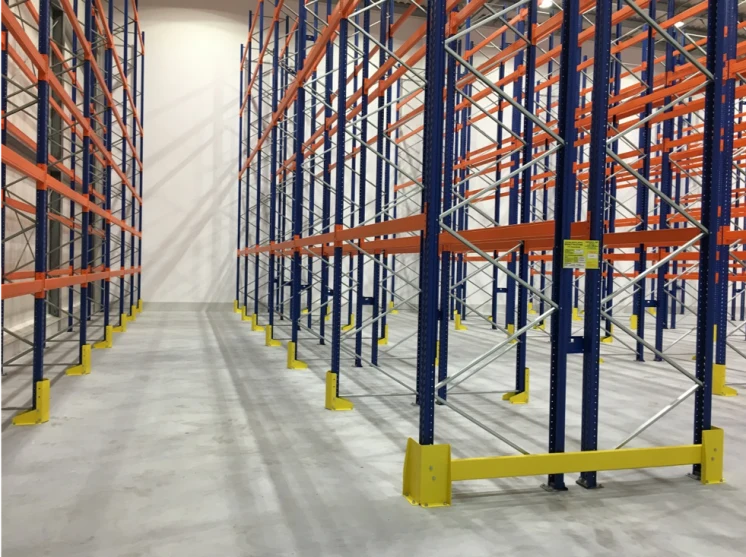
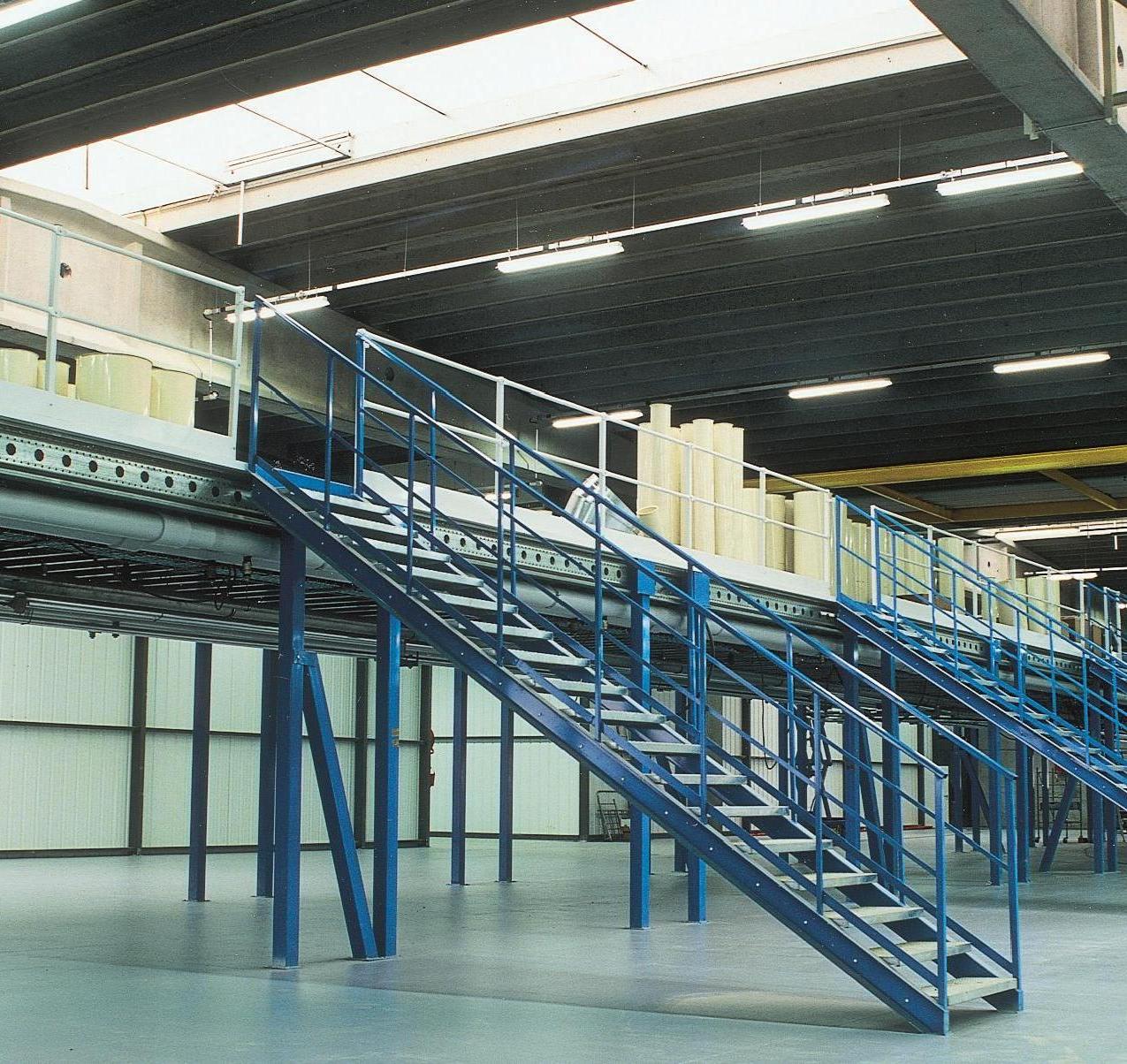
Multi-level warehouse mezzanines
The warehouse mezzanines available in our offer, like the shelving racks, are made of steel. They are characterized by high load capacity and ease of assembly and disassembly. Lighting elements, pipes, and cables can be installed in them. Thanks to them, you will increase the warehouse area of the hall, gaining additional space for storing goods. Moreover, modern warehouse mezzanines facilitate selective access to stored goods, making the order-picking process easier.
Free-standing multi-level shelving racks
Free-standing multi-level shelving racks are made of high-grade steel, which makes them extremely durable and strong. Their top layer has been protected with a zinc coating, so these racks do not corrode and are resistant to unfavorable weather conditions. Another advantage is the speed and ease of assembly and disassembly – their joints make it possible to assemble the structure without using complicated tools. The height of shelf levels can be freely modified, adapting it to the type of stored goods. The enormous advantages of the warehouse multi-level shelving racks we offer also include the ability to store a much larger quantity of goods than on standard racks, while simultaneously saving space. This reduces storage costs and means that even in a small hall area, a large quantity of goods can be stored, thus paying a low tax. The only drawback of multi-level shelving racks is their high purchase cost, which, however, will pay off very quickly.
Thanks to both free-standing multi-level shelving racks and warehouse mezzanines, you can easily bring order and tidiness to the stored assortment.
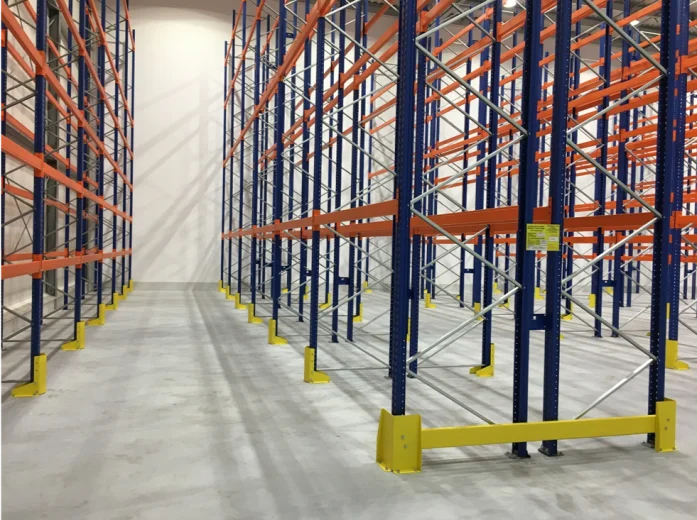
Pallet warehouse racks – types and their specifications
Pallet racks can differ significantly from one another. We distinguish the following racks:
- *row
- drive-in
- mobile
- flow
The former belong to the most commonly encountered storage system. They are characterized by ease of construction and a relatively low price. Row racks allow for quick configuration changes.
The next storage system described is drive-in racks, which work perfectly for long-term product storage. This type of rack allows for maximum use of space and is also simple to operate.
Next are mobile structures. This type of pallet warehouse shelving provides access to practically every pallet. Additionally, they make it possible to store different types of goods in one system.
Last are flow racks, which speed up handling and facilitate inventory control
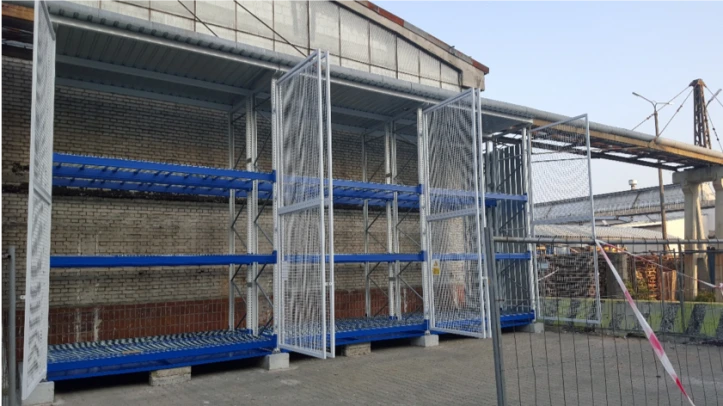
Pallet racks
Pallet warehouse racks are found in practically every warehouse. These are multi-level structures enabling the storage of goods and various types of pallets. Their purpose is to maximize the use of warehouse space. There are several types of pallet racks on the market, whose use and specification differ significantly. What are the types of pallet warehouse racks? What are they used for?
Applications of pallet racks
Individual types of pallet warehouse racks are used in different warehouses. Some allow only one type of load to be stored, while others are designed to store goods of various shapes and sizes. It is worth remembering, however, that every pallet rack allows for the optimal use of warehouse space, which significantly affects a company's efficiency.
What is worth remembering when choosing a rack?
The storage of products and raw materials always involves the need to provide suitable conditions and a proper place. One of the more commonly used solutions is the use of various types of warehouse racks. Depending on their design, they can be used, among other things, to store sorted details in small packages or to place entire pallets of considerable weight. This type of storage, regardless of the specifics of the stored products, means that racks must meet many safety-related requirements. The installation of warehouse racks should also be carried out professionally and with the use of appropriate equipment. Let us check what is involved in the use of this type of rack and what is worth paying attention to.
Warehouse racks must guarantee complete safety for people who may be in the storage area, and they should also provide proper protection for the stored goods. A warehouse rack must be very stable and withstand the loads for which it was designed. Setting up a freestanding rack requires preparing a floor with a load-bearing capacity matched to the weight of the equipment and the stored goods. Proper leveling of the floor is also very important.
Racks used for storage should be manufactured in accordance with the applicable standards, including PN-EN 15620:2010, PN-EN15629:2010, PN-EN 15635:2010, PN-EN 15512:2011. They contain requirements related to possible loads, permissible structural solutions, and the specifics of materials.
It should be remembered that racks, like all equipment used in enterprises, should be operated in accordance with the principles provided for in occupational health and safety regulations. Anyone intending to begin the assembly and use of a warehouse rack must remember to carry out a risk analysis related to the storage of a given type of materials and select and design a warehouse racking system in such a way that it guarantees safe use. In the case of using the services of a specialized company, it is that company which bears responsibility for the rack's compliance with regulations. It is also its duty to ensure the declaration of conformity or a system of information on the permissible load capacity.
The user of warehouse racks should remember the rules of safe operation as well as the proper performance of duties related to periodic inspections and maintaining the proper technical condition.
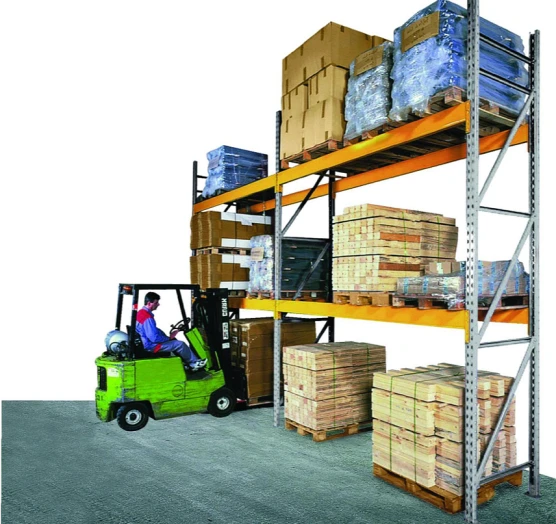
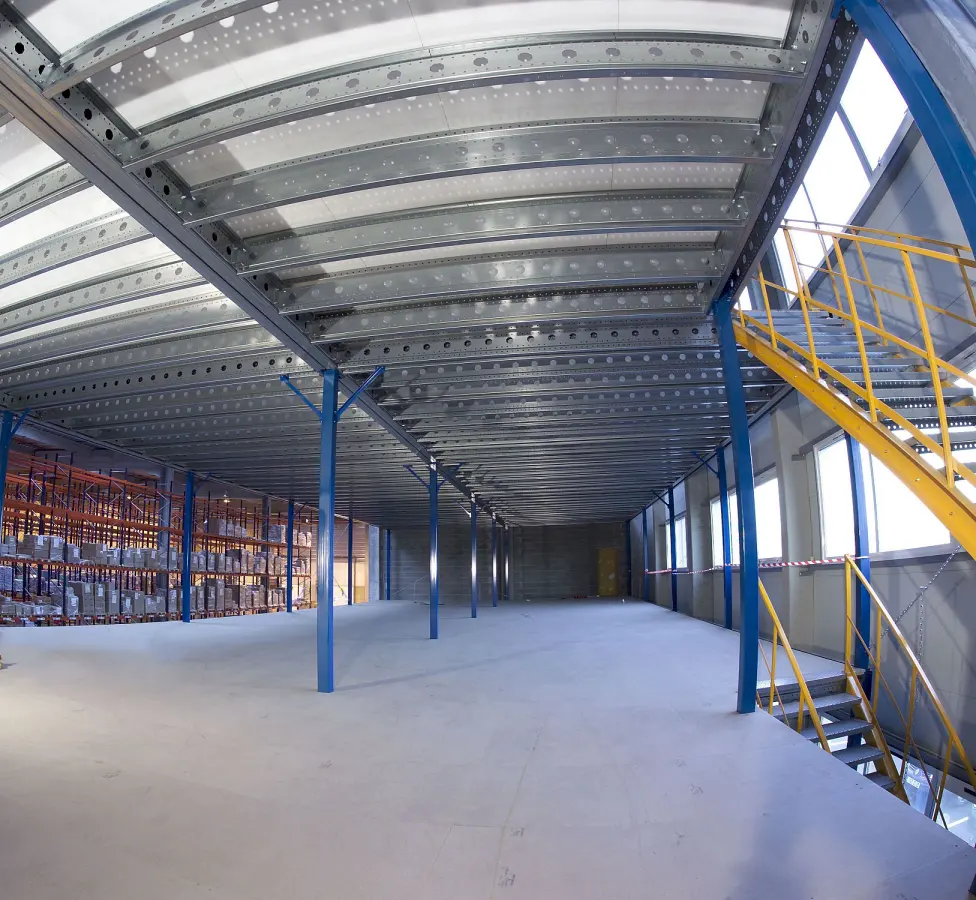
What are warehouse mezzanines?
Warehouse mezzanines are most often solid structures made of steel or aluminum. These are special platforms that make it possible to create additional space in a room by adding “another floor.” Platforms and warehouse mezzanines are the fastest and cheapest way to increase the available amount of storage space. Thanks to their high durability and appropriate load capacity adjusted to the customer’s needs and the planned load, they can be used to store a very wide range of different products – from bales of materials in a sewing wholesaler to containers with spare parts for machines. Thanks to stairs, they provide easy access to the racks placed on them and allow for efficient movement of stored goods.
Warehouse mezzanines - where are they used?
Storing products requires a considerable amount of space and ensuring the easiest possible access to them. In the case where stored goods are placed on pallets, transported and arranged on high-bay racks, the situation seems simple. On a relatively small area, it is then possible to fit a very large number of pallets, limited only by the rack’s load capacity and the height of the available room.
But what should be done when products stored on low racks need to be warehoused, products of smaller dimensions to which there should be relatively free access?
Such a situation occurs very often in spare parts warehouses, wholesalers, or logistics bases of mail-order companies or companies conducting online sales. The simplest solution then is the use of warehouse mezzanines.
What are the greatest advantages of warehouse mezzanines?
Warehouse mezzanines allow for full use of the space of goods storage rooms. Thanks to the multi-level structure, a greater quantity of products can be accommodated in the same area. The structure of mezzanines is durable and completely safe. They can be closely adapted to the shape and specifics of the warehouse, and even equipped with floors and ramps allowing the use of pallet trucks or, if necessary, forklift trucks for their operation. A great advantage is that warehouse mezzanines can be installed in a short time, and also quickly dismantled if necessary.