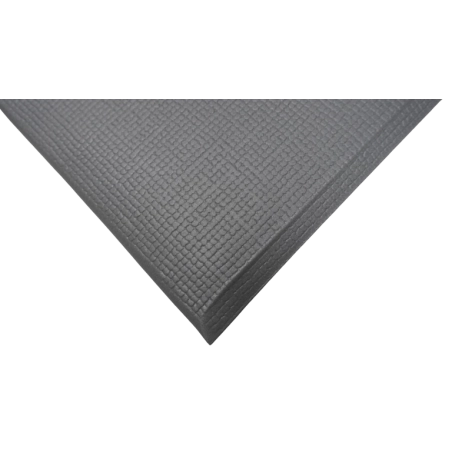
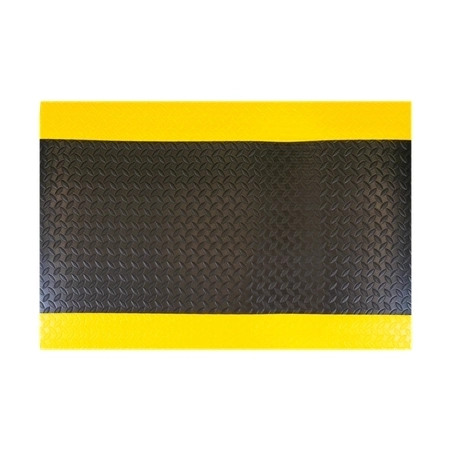
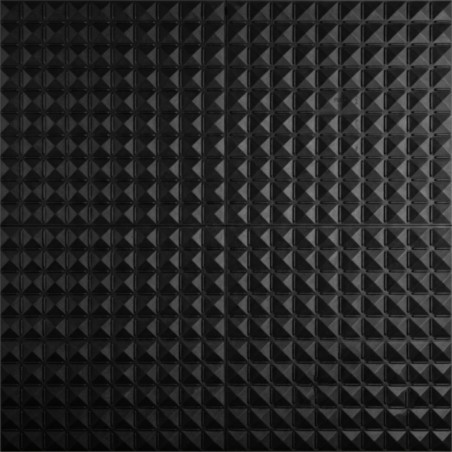
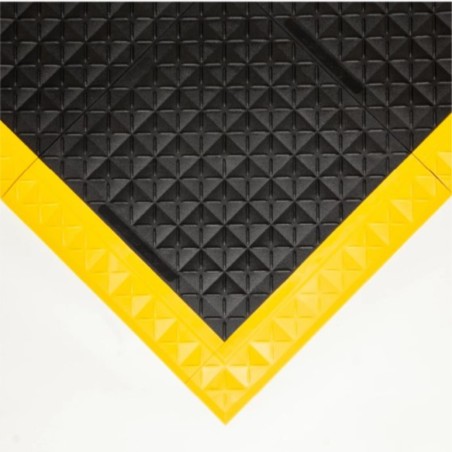
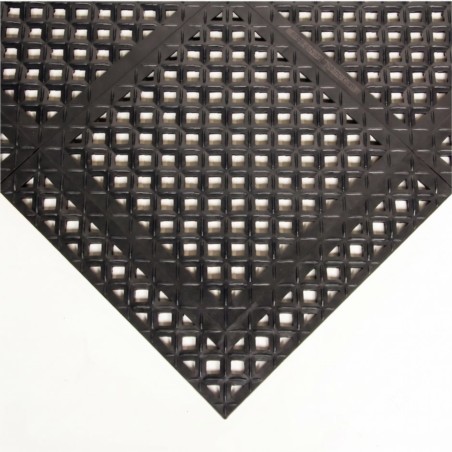
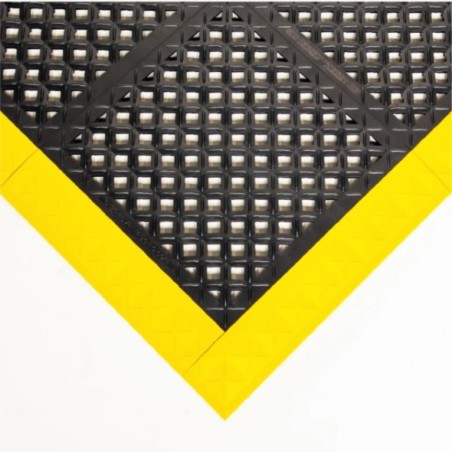
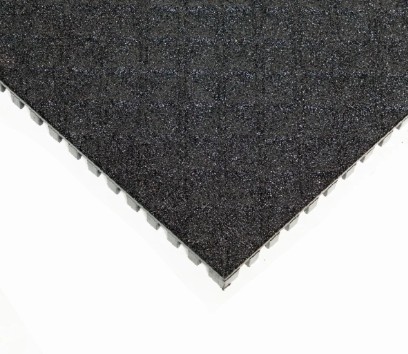
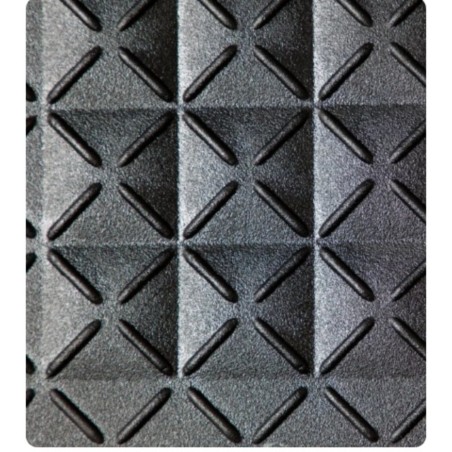
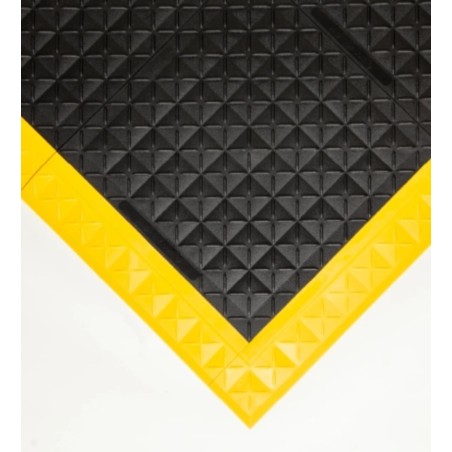
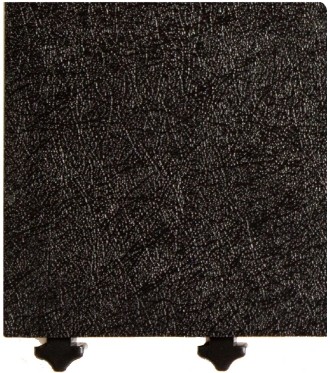
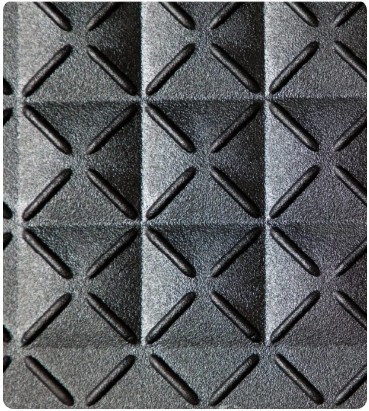
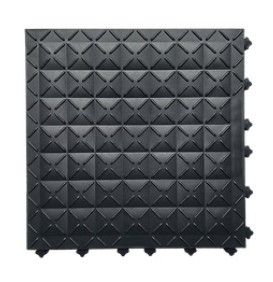
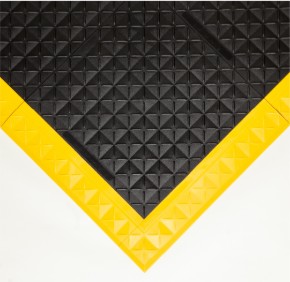
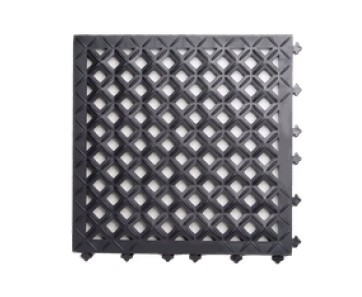
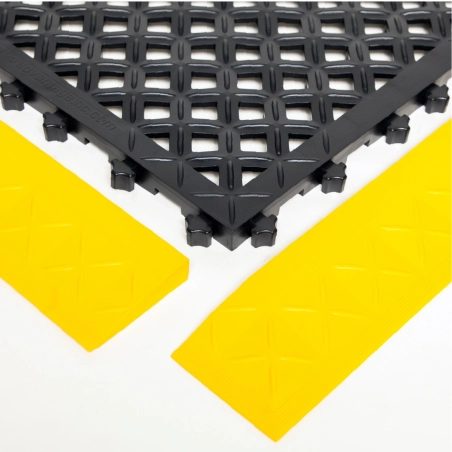
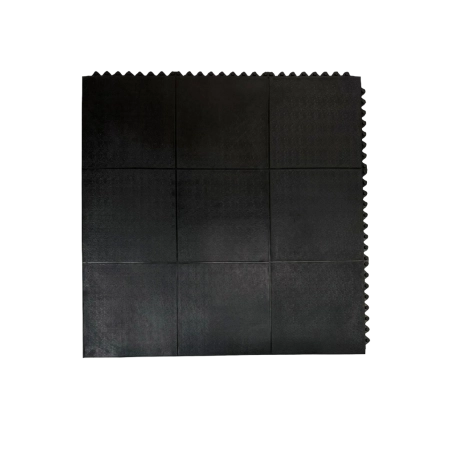
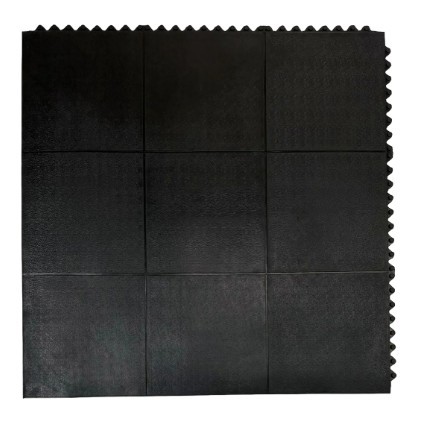
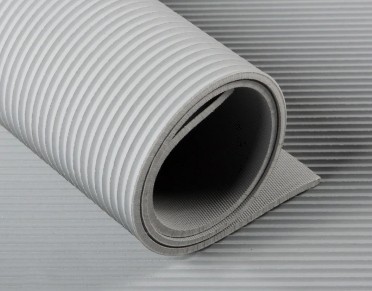
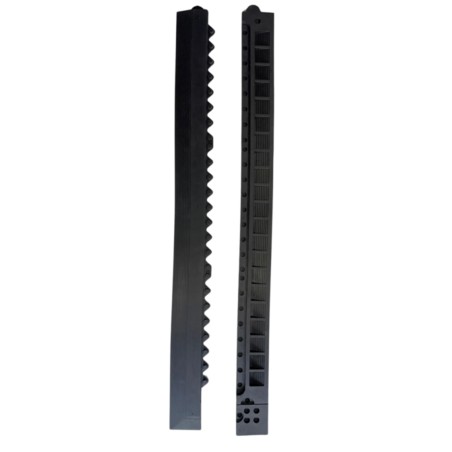
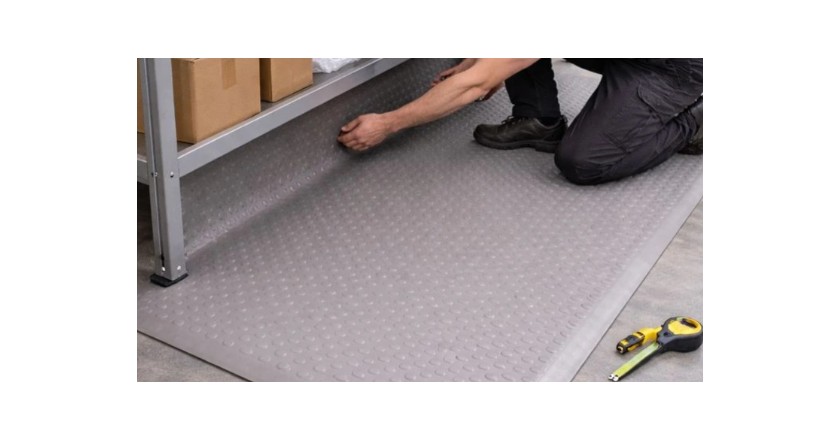
Ergonomic mats are specialized floor mats designed to increase comfort during prolonged work in a standing position. Thanks to their irregular structure, they stimulate venous circulation and force involuntary muscle movements, which also has a positive effect on the skeletal system. Ergonomic mats effectively insulate from cold and hard surfaces and provide high stability. Increased comfort affects employee productivity. Minimizing strain factors results in lower absenteeism related to injuries and overload.
In industry and production, where employees spend long hours standing or walking on hard and uncomfortable surfaces, ergonomic and anti-fatigue mats play a key role in ensuring comfort and workplace safety. These mats have been specially designed to reduce leg and spine fatigue, minimize the risk of injuries, and improve the overall productivity and efficiency of employees.
Why is it worth using ergonomic mats?
- Reduction of fatigue and discomfort: anti-fatigue mats are designed in such a way as to provide cushioning and resilience. They relieve pressure on employees' joints, muscles, and feet. This helps reduce fatigue and minimizes discomfort associated with prolonged standing or walking.
- Improved safety: anti-fatigue mats often have anti-slip properties, which significantly reduces the risk of slips and falls on slippery surfaces.
- Increased productivity: comfortable working conditions translate into higher performance and productivity. Improving comfort and reducing fatigue allows employees to maintain focus, concentration, and reaction speed, which leads to greater efficiency in the tasks performed.
- Protection against injuries: ergonomic mats provide an additional layer of protection for employees. They protect feet and knees from injuries such as sprains, bruises, or injuries caused by falls or impacts.
What should you pay attention to when choosing anti-fatigue mats?
Material: pay attention to what the mats are made of. Mats made of high-quality elastomers, rubber, or polyurethane foam are usually more durable, easy to clean, and resistant to chemicals.
Anti-slip properties: make sure that the selected mats have anti-slip properties that ensure safe work on slippery surfaces. Mats with rubber studs or a layer with an anti-slip texture are a good choice.
Thickness and size: it is worth paying attention to the thickness of the ergonomic mat. A properly contoured and sufficiently thick mat provides a greater degree of cushioning and comfort for employees. Additionally, adjusting the size of the mat to the workspace is important to ensure protection and convenience.
Resistance to oils and chemicals: if the mats will be exposed to oils, greases, or chemicals, you should choose mats that are resistant to these factors. This will ensure a longer service life of the mat and maintenance of its anti-fatigue properties.
Ease of cleaning: mats should be easy to keep clean to prevent the accumulation of dirt, bacteria, and other contaminants.
Fit for the workstation: choose standing mats according to their intended use and the conditions prevailing at the given workstation. Determine the type of environment - whether it will be a wet or dry environment. For wet environments, they drain excess liquids from the workstation and protect the employee from slipping. They are also resistant to oil and other chemicals or liquids.
How does an anti-fatigue mat work and what affects its ergonomic properties?
- Material: anti-fatigue mats are usually made of flexible material such as elastomer, rubber, or polyurethane foam. These materials have cushioning properties that reduce pressure on the feet, knees, and spine.
- Cushioning layer: the inner layer of an anti-fatigue mat is typically built from layers of resilient materials that absorb pressure and shocks during walking or standing. This layer acts like a shock absorber that reduces the load on joints and muscles.
- Surface pattern: anti-fatigue mats often have special patterns on the surface, such as studs, grooves, or unevenness. These patterns help stimulate blood circulation in the feet, improving flow and preventing blood pooling.
- Foot support: an anti-fatigue mat has ergonomic shapes and contours that adapt to the natural position of the feet. They provide support for the arches of the feet and help maintain proper posture, which reduces muscle tension and decreases fatigue.
- The anti-fatigue mat works by evenly distributing body weight, reducing pressure on joints and muscles, and absorbing shocks and vibrations generated during walking or standing. As a result, workers experience less fatigue in the legs and spine, which translates into improved work comfort, increased efficiency, and reduced risk of injuries.
- It is also important to regularly maintain and clean anti-fatigue mats to ensure their effectiveness and durability. The mat should be clean and dry to prevent slips and preserve its anti-fatigue properties.
Is the use of ergonomic mats required by regulations?
In Poland, there are regulations governing occupational health and safety issues that also relate to the use of anti-fatigue mats in workplaces. These regulations are intended to ensure appropriate working conditions and protect the health and safety of employees. Below I present several important regulations concerning the use of ergonomic mats in Poland:
Regulation of the Minister of Labour and Social Policy of 26 September 1997 on general occupational health and safety regulations - This is one of the basic legal acts regulating occupational health and safety issues. According to this regulation, the employer is obliged to provide appropriate equipment for workstations, including ergonomic mats, if they are necessary to ensure appropriate working conditions.
Regulation of the Minister of Labour and Social Policy of 26 September 1997 on workstations for which specific occupational health and safety regulations were established - This regulation specifies detailed requirements for various types of workstations. In the case of workstations where prolonged standing or walking occurs, the employer may be required to provide ergonomic mats in order to reduce the strain on employees' joints and muscles.
Labour Code - The Labour Code constitutes the general labour law in Poland. Under this provision, the employer is obliged to ensure safe and hygienic working conditions and to adapt workstations to the individual needs of employees, including through the use of appropriate equipment, such as ergonomic mats.
It is important for employers to comply with these regulations and take action aimed at ensuring safe and ergonomic working conditions. The use of anti-fatigue mats is one of these measures, especially at workstations where employees are exposed to prolonged standing or walking. Standing mats can help reduce the strain on joints and muscles, reduce fatigue, and provide greater working comfort.
The use of ergonomic and anti-fatigue mats in industry and manufacturing brings numerous benefits, including reduced fatigue, improved safety, increased productivity, and protection against injuries. When choosing mats, it is worth paying attention to the material, anti-slip properties, thickness, size, resistance to oils and chemical substances, and ease of cleaning. Investing in ergonomic mats is an investment in the health and comfort of employees, as well as in the efficiency and productivity of the entire workplace.
In our offer, we have anti-fatigue mats for dry and wet environments, in various sizes and shapes. We select mats according to the individual conditions prevailing in your facility. We also carry out custom mat designs for special environments. We pay attention to load factors and the conditions prevailing in the hall. Do you need an ergonomic mat? Check our proposals and contact us.