Our regional advisors will help you choose a product tailored to your needs | We provide installation, service, and inspections! | Only trusted suppliers!
Shopping cart (0)
- Products
-
Services
- Spill response training
- Lockout Tagout implementation
- Inspection and maintenance of safety cabinets
- Lockout Tagout training
- Office equipment and layout
- Selection and installation of industrial matting
- Delivery and installation of flexible barriers
- Marking of traffic routes
- Traffic risk assessment audit
- ATEX technical audit
- Selection and installation of industrial safety fencing
- Catalog
- Case study
- Blog
- About us
- Contact
How to choose an industrial mat for a facility? A comprehensive guide
Every year, the National Labour Inspectorate records thousands of accidents caused by slips, trips and falls in the workplace. According to the Central Statistical Office (GUS), this is one of the most common causes of injuries in manufacturing plants and warehouses. Article 207(2) of the Labour Code imposes an obligation on employers to organise the workplace in a manner that ensures safe and healthy working conditions.
An industrial mat is one of the simplest, yet most underrated, items of protective equipment.
Check out our comprehensive guide! You’ll be able to choose the right industrial mats for your workplace based on the working environment, industry, the amount of time staff spend standing at their workstations, and health and safety requirements – rather than being guided solely by price or size. Get in touch with 4safety for support.
Contents:
- Why is choosing an industrial mat a strategic decision?
- Where should you start when choosing an industrial mat? Define the working environment
- Types of industrial mats — A comprehensive overview of applications
Why is choosing an industrial mat a strategic decision?
Most health and safety specialists and production managers regard industrial mats as a secondary piece of equipment. This approach often ends up costing a company more than one might initially think.
The regulations are clear. In many cases, an industrial mat is a legal requirement. The Regulation of the Minister of Labour and Social Policy of 26 September 1997 on general health and safety at work regulations (Journal of Laws 2003 No. 169, item 1650) states in §16:
Floors in work areas must be stable, level, non-slip, dust-free, wear-resistant and easy to keep clean.
The same provision specifies that if the floor is made of a heat-conducting material, or if it is likely to become wet during the course of work, the employer is obliged to provide platforms that insulate against the cold or damp in areas where workers stand or sit, or to use other insulating measures.
The concrete floor of a production hall is a classic heat conductor. A wet surface near washing lines, at bottling lines or at water-jet cutting stations fulfils the second of the conditions mentioned. In both cases, therefore, the use of an industrial mat is a legal requirement.
In addition, there is Section 16(2) of the same regulation, which governs specific environments at risk of explosion:
In areas where explosive mixtures of flammable vapours, dusts or gases with air may occur, floor surfaces must be made of a material that does not cause mechanical sparks or electrostatic discharges.
For facilities with designated ATEX zones or workstations where sensitive electronic components are handled, this provides the direct legal basis for the use of antistatic or electrically insulating mats with verified specifications. Please note that if you have any doubts, you can seek professional assistance from the 4safety team.
Cost estimate for the accident vs. the cost of purchasing an industrial mat
A single serious accident at work generates costs that do not fit into any budget heading. These include:
- sick leave (on average, from a dozen or so to several dozen working days),
- substitution,
- a loss of production line efficiency.
To this must be added the indirect costs, namely:
- post-accident proceedings,
- a possible increase in the accident insurance contribution to ZUS,
- the health and safety inspector’s time spent on documentation,
- the risk of a fine being imposed by the National Labour Inspectorate (up to 30,000 zł for a breach of health and safety regulations),
- criminal liability of the employer or the person in charge of the employees (in extreme cases).
A high-quality industrial mat for a production line typically costs between a few hundred and a few thousand zlotys, depending on its size and material. Given a service life of 5–7 years for nitrile rubber mats, the annual cost of the investment is negligible compared with the costs of even a single incident. These are figures worth presenting to the finance department during the next budget planning exercise.
Where should you start when choosing an industrial mat? Define the working environment
An industrial mat must be a piece of equipment suited to specific working conditions. Every purchasing decision should therefore begin with a detailed description of the environment in which it will be used.
Industrial working environments, despite their diversity, can be categorised into four basic types based on the nature of the hazards at floor level. Understanding this classification is the foundation for making an informed choice.
Dry environments – comfort and durability as priorities
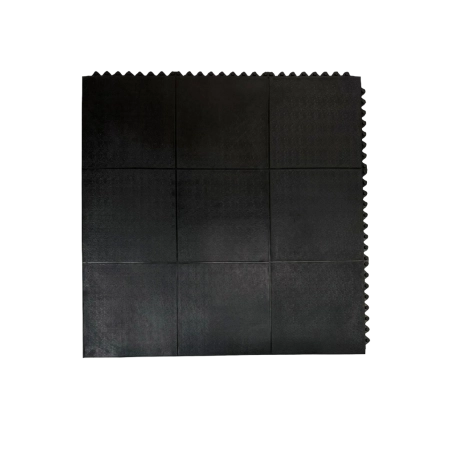
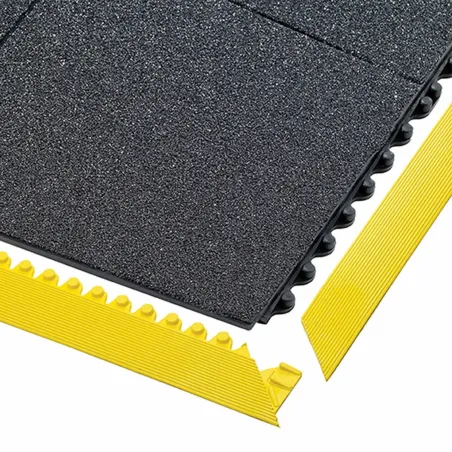
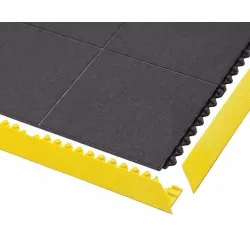
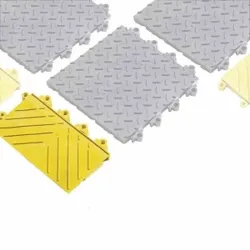
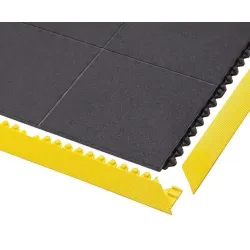
Common materials include PVC or EVA foam for lighter-duty applications, and nitrile rubber for environments requiring greater mechanical strength. Modular mats with a connector system work perfectly for workstations with irregular shapes, whilst rolls cut to size on site are the ideal solution for long packaging lines where a continuous path is required.
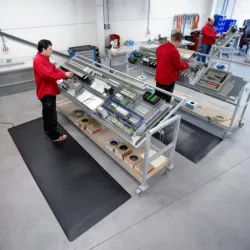
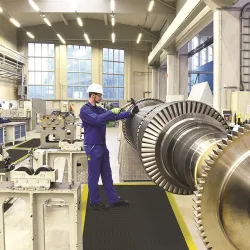
In a dry environment, ergonomics is a key factor. For shifts lasting several hours, a mat with the right level of resilience is required – one capable of stimulating micro-muscle movements and insulating the worker from the hard, cold concrete.
In a dry environment attention should also be paid to abrasion resistance. Hand trolleys, pallet trucks and heavy foot traffic lead to faster wear and tear of industrial mats and cause them to become misshapen, which in itself poses a hazard due to the possible presence of uneven surfaces or curled edges.
Wetlands — Drainage and hygiene as priorities
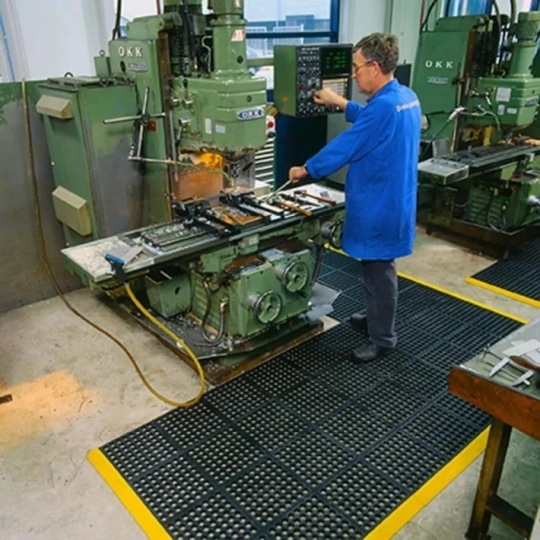
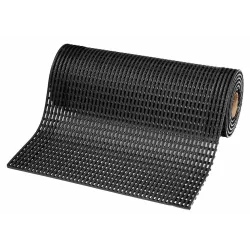
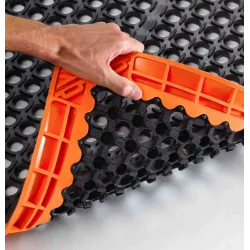
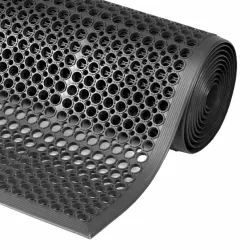
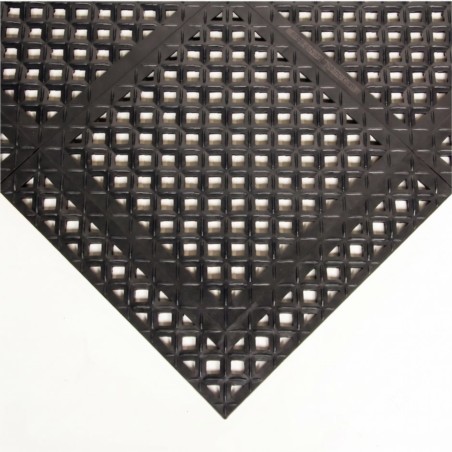
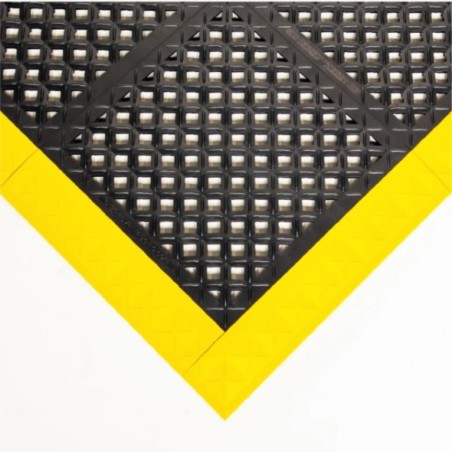
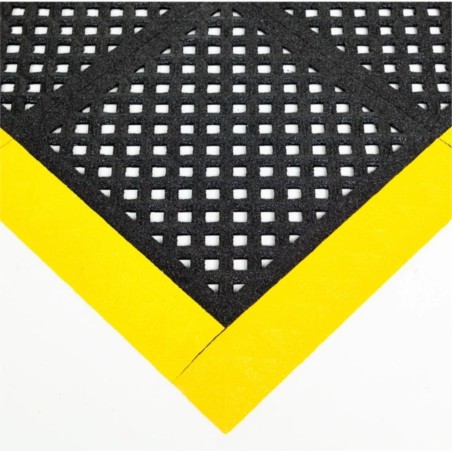
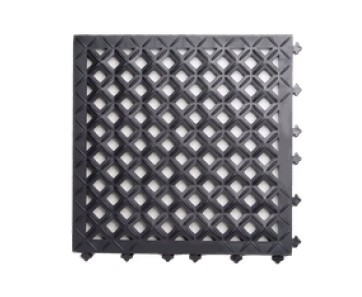
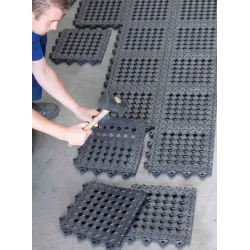
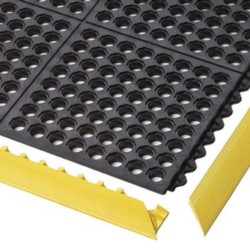
In a wet environment, a mat without drainage is ineffective. Liquids pooling on its surface create conditions worse than a wet floor itself. Drainage mats (with a system of holes or an openwork, permeable structure) drain liquid directly beneath the mat, leaving the surface dry and safe, regardless of the intensity of the spill or flushing.
An additional requirement is that the material must be resistant to the alkaline and acidic cleaning agents used in the food industry. Industrial rubber mats made from EPDM or nitrile rubber compounds perform better here than cheap foam alternatives, which, after a few weeks of contact with cleaning agents, begin to delaminate and absorb contaminants, becoming a breeding ground for bacteria.
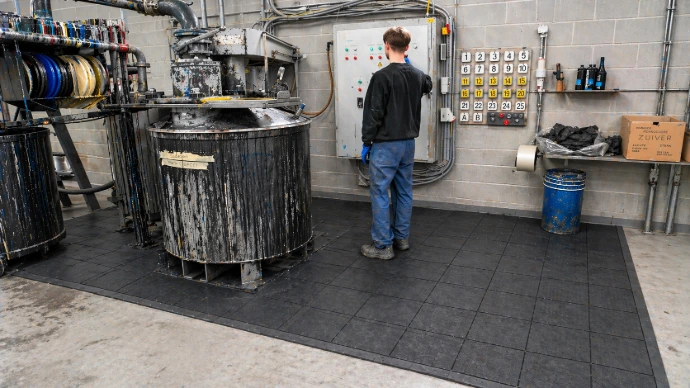
Oil-contaminated environment — Chemical resistance and drainage as priorities
Oil-resistant industrial mats are most commonly made from rubber containing nitrile (NBR). This material has proven resistance to mineral, synthetic and vegetable oils.
Did you know? Nitrile is the same material used to make hydraulic seals that come into direct contact with pressurised oils.
Industrial nitrile mats do not swell, lose their elasticity or come away from the floor when used in oily environments. Bear in mind that this can happen with products made from natural rubber or foam, which degrade rapidly when in contact with oils.
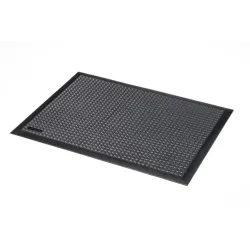
It is worth paying attention to the surface structure. An industrial mat designed for use in oily environments should combine a non-slip surface texture (ensuring footwear grip despite the presence of oil) with a drainage system that channels liquid away from the worker’s feet. Mats with a regular pattern of holes or grooves fulfil both these requirements simultaneously.
Environments with a risk of electrical discharges — Standards and precision as priorities
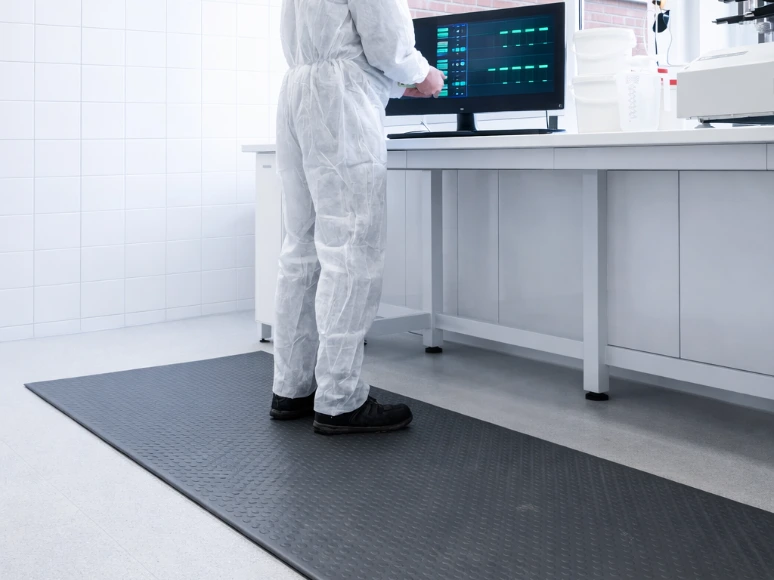
ESD anti-static mats and electrical insulation mats are products designed for two different protective purposes and cannot be used interchangeably.
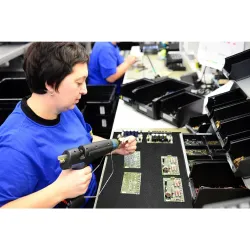
The ESD anti-static mat is designed for EPAs (Electrostatic Protected Areas), i.e. areas where work is carried out with components that are sensitive to electrostatic discharge:
- integrated circuits,
- electronic modules,
- automotive components,
- precision equipment.
Its function is to safely dissipate static charges to earth before they can cause a discharge that would damage the component. The key technical parameter is the resistance to earth.
Important! An ESD mat without a grounding lead is merely a non-slip underlay. Grounding is essential for it to function properly.
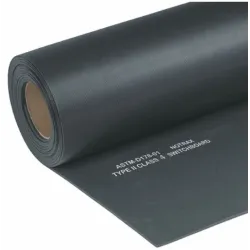
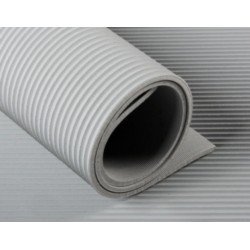
An electrical insulation mat (dielectric mat) works in the opposite way. Its purpose is to insulate the worker from the ground and any potential source of voltage. It is used near electrical switchgear, transformers, MV and HV substations, and wherever a worker might inadvertently stand near live components. The European standard IEC 61111:2019 classifies these mats according to their maximum test voltage and operating voltage:
- Class 0 (1,000 V AC),
- Class 2 (up to 17 kV),
- Class 3 (up to 26.5 kV),
- Class 4 (up to 36 kV).
The use of an ESD mat in a location where a Class 3 electrically insulating mat is required poses a direct threat to the health and life of the employee.
The fourth type of working environment also includes ATEX zones. These are areas where explosive mixtures of vapours, gases or dust with air may accumulate. Here, Section 16(2) of the aforementioned Health and Safety at Work Regulation imposes a direct obligation to use flooring and mats that do not cause mechanical sparks or electrostatic discharges.
Types of industrial mats — A comprehensive overview of applications
The industrial mat market currently offers a wide range of distinct product categories, each of which addresses a different set of hazards and ergonomic requirements. Understanding the differences between them enables you to select the right products and avoid costly mistakes, which, in extreme cases, could result in a lack of protection where it is needed.
Ergonomic, anti-fatigue industrial mats
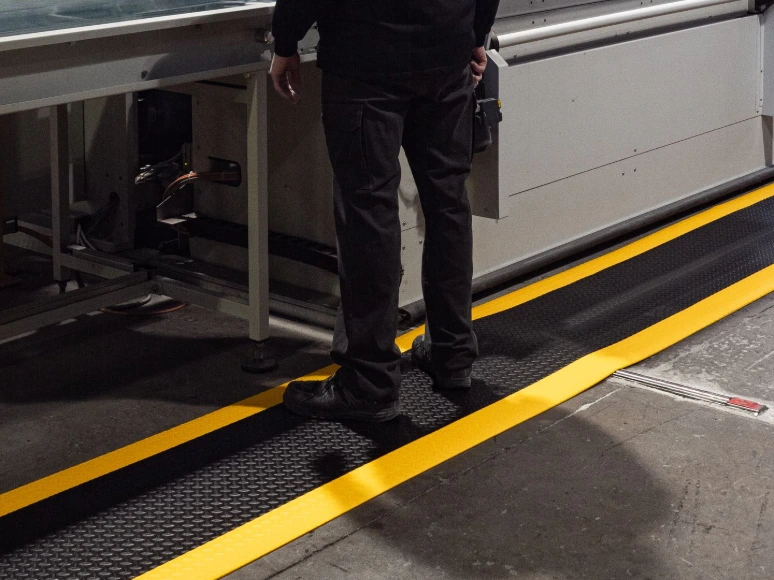
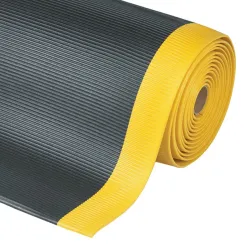
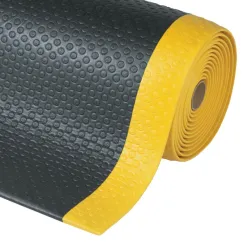
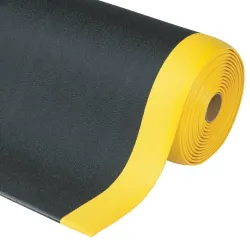
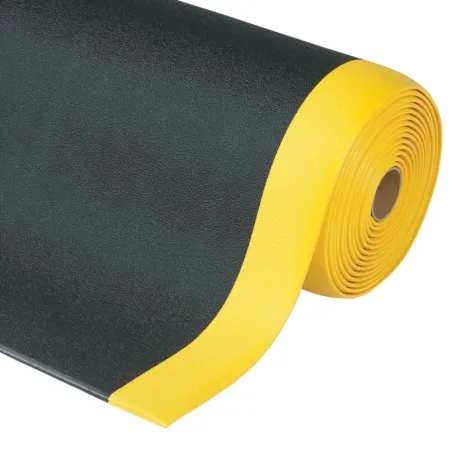
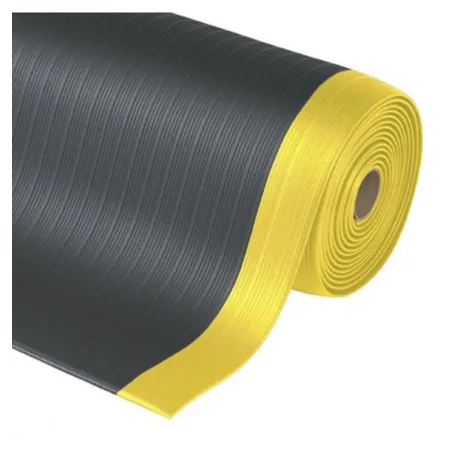
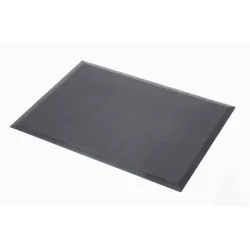
The anti-fatigue mat works by inducing controlled micro-contractions of the muscles. The springy structure of the material prevents the foot from resting in a completely static position. The muscles of the legs, calves and thighs perform continuous compensatory micro-movements, imperceptible to the worker, which aid venous circulation, reduce pressure in the blood vessels of the lower limbs and relieve strain on the lumbar spine. The result is reduced fatigue at the end of a shift, less frequent pain in the knees and feet, and improved concentration when carrying out precise tasks.
The key technical parameter is the thickness of the mat. This has a direct impact on the level of shock absorption.
- Mats with a thickness of 9–12 mm are the ideal choice for workstations where staff stand for 2–6 hours. They provide the right level of resilience without causing instability when moving loads or operating machinery.
- Thicker mats, 15–19 mm, are designed for workstations where staff spend the longest time on their feet and where the musculoskeletal system is subjected to the most intense strain.
- Products thinner than 9 mm have a minimum value, and their use during shifts involving several hours of standing is not very effective.
Beveled edges are a key feature of any anti-fatigue mat. These are edges that are cut at an angle, eliminating the sharp edge that causes people to trip and fall. A mat without bevelled edges, when subjected to heavy foot traffic, becomes a hazard: rather than preventing injuries, it actually causes them.
In wet or oily environments, anti-fatigue mats are made exclusively from nitrile rubber (NBR). This material is resistant to oils, coolants and cleaning agents.
Anti-fatigue mats with antibacterial properties form a separate group within this category – they are used in environments where humidity and organic contaminants encourage the growth of microorganisms (the food industry, bottling lines, and industrial catering). Antibacterial coatings based on silver ions or copper nanotechnology effectively inhibit the growth of microorganisms on the mat’s surface.
Ergonomics isn’t a luxury – it’s about productivity
A tired employee works more slowly, makes mistakes and takes sick leave more often. Research carried out by the Institute of Ergonomics and Human Factors at Darmstadt University of Technology has shown a statistically significant reduction in perceived fatigue among employees using anti-fatigue mats; this applied to both fatigue experienced during a shift and the level of fatigue reported in the morning after the shift had ended. Employees reported less pain in their feet, knees and lower back – areas prone to strain when working for many hours on their feet.
Standing for long periods on hard, cold concrete causes static muscle tension, puts strain on the joints and impairs venous circulation in the lower limbs. The body compensates for this with micro-movements and changes in posture, which distract from the task at hand. Thanks to the springy structure of the material, the anti-fatigue mat stimulates these natural micro-muscle contractions in a continuous and controlled manner. It improves blood circulation, relieves pressure on the lumbar spine and reduces the subjective feeling of fatigue by up to half when the right product is chosen.
Industrial anti-slip mats
It is essential to distinguish between two independent properties:
- non-slip underside (the mat does not slide across the floor),
- non-slip surface (the worker does not slip off the mat).
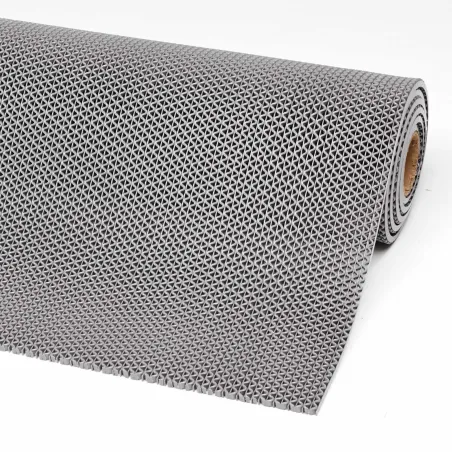
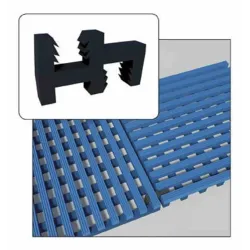
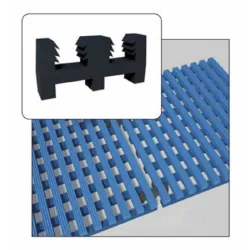
In wet and oily environments, drainage mats with an openwork structure or a regular pattern of through-holes are indispensable. Liquid flows freely beneath the mat and does not pool on the surface where staff walk. Mats of this type reduce the risk of slipping and make it easier to keep the area clean.
Anti-slip mats are also used as a temporary solution in passageways, near stairs, on ramps and at warehouse doors – in places where the floor is particularly prone to getting wet or dirty, but where conditions do not warrant the installation of permanent flooring. Please remember that the 4safety team is here to help if you have any questions.
Maty antystatyczne ESD
The EPA (Electrostatic Protected Area) is a concept that is crucial for any facility where electronics, automotive components, medical devices or other equipment sensitive to electrostatic discharge is manufactured, assembled or serviced. Electrostatic discharge (ESD), which is invisible and silent, can permanently damage a semiconductor component before an employee even realises that an incident has occurred. Losses due to ESD damage in the global electronics industry are estimated at billions of dollars annually.
An ESD mat is one of the essential items of equipment in an EPA zone. Its purpose is to ensure the controlled, safe dissipation of static charges accumulated on the worker’s body or on the surface of the mat to a common earth point — before the voltage reaches a level that could cause a discharge capable of damaging components.
The PN-EN 61340-5-1 standard is the primary document governing the requirements for EPA zones. It specifies that the resistance of an earthing mat must be less than 1×10⁹ Ω. In practice, ESD mats are divided into two sub-groups:
- conductive mats (resistance 10⁴–10⁶ Ω),
- dissipative mats (resistance 10⁶–10⁹ Ω).
Dissipative mats are most commonly used in production areas, as they dissipate the charge more slowly and in a more controlled manner. This minimises the risk of damage to components caused by an excessively rapid discharge.
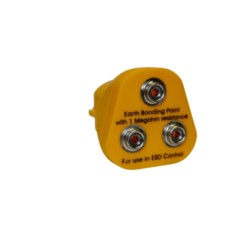
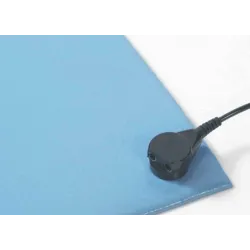
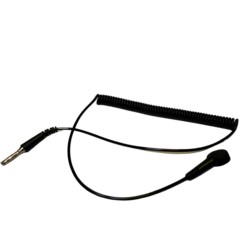
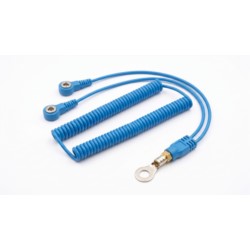
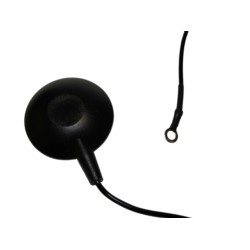
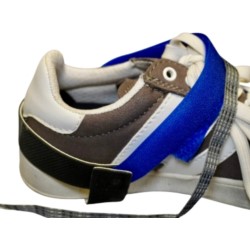
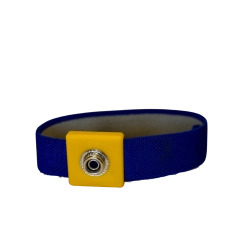
Proper earthing is an absolute requirement for the effectiveness of an ESD mat. A mat without an earthing lead connected to a certified equipotential bonding point does not fulfil its electrostatic protection function. To earth the mat, use dedicated cables with a snap-on connector or crocodile clip, fitted with a phase terminal featuring a limiting resistor, in accordance with the requirements of the standard.
The EN 14041 and EN 61340 standards also set out requirements for the correct installation of ESD mats, the use of conductive adhesives when fixing them to the subfloor, and the rules for regular testing of their electrostatic properties during use. Find out more from our 4safety advisers.
Electrical insulation mats
Electrical insulation walkways are life-saving products. During maintenance and repair work in switchgear rooms, on transformers, at MV substations or on high-voltage installations, contact with a live part can be fatal. An insulating mat placed at the workstation creates a physical insulating barrier between the worker and the ground, breaking any potential electric shock circuit.
The European standard IEC 61111:2019 (which replaces earlier editions of the standard, including the formerly used BS 921) classifies dielectric walkways into six classes of electrical resistance:
- Class 00 — test voltage 2,500 V AC, operating voltage 500 V AC.
- Class 0 — test voltage 5,000 V AC, operating voltage 1,000 V AC.
- Class 1 — test voltage 10,000 V AC, operating voltage 7,500 V AC.
- Class 2 — test voltage 20,000 V AC, operating voltage 17,000 V AC.
- Class 3 — test voltage 30,000 V AC, operating voltage 26,500 V AC.
- Class 4 — test voltage 40,000 V AC, operating voltage 36,000 V AC.
The choice of class must be based on a risk assessment of the workstation – specifically, on the maximum voltage to which a worker may be exposed. From a safety perspective, it is unacceptable to use a walkway of a lower class than that determined by the risk assessment.
Please note! Dielectric mats require regular technical inspections. Mechanical damage, wear and tear, cracks or moisture penetration may compromise the product’s insulating properties, even if the mat appears visually undamaged. Manufacturers recommend annual electrical inspections or replacement following any mechanical incident.
Hygiene and disinfection mats
In the food, pharmaceutical and medical industries, industrial floor mats form part of the contamination control system and act as a sanitary barrier, protecting clean zones from contamination brought in by staff or internal vehicles. Disinfectant mats used at the entry points to production areas are impregnated with biocides that inactivate pathogens carried on the soles of work footwear. In the food industry, regulations stem directly from the HACCP (Hazard Analysis and Critical Control Points) system.
An analysis of biological and chemical hazards must cover the routes by which contaminants are transferred into food-contact areas. A hygiene mat at the entrance to the production area is one of the critical control points.
The materials used to manufacture hygiene mats must comply with the requirements of Regulation (EC) No 1935/2004 on materials intended to come into contact with food, or at the very least be clearly excluded from such contact by placing the mat in an area where contact with food is impossible. Resistance to sodium hypochlorite, peracetic acid and other disinfectants used in CIP (Clean-In-Place) processes is a prerequisite for the product’s durability in these environments.
Drainage mats used in wet areas of the food industry must also be easy to clean with a high-pressure washer and must not absorb fats or organic residues, which act as a breeding ground for microorganisms. Non-porous materials are, in this respect, significantly safer from a hygiene perspective than mats with an open-cell foam structure.
Floor welding mats
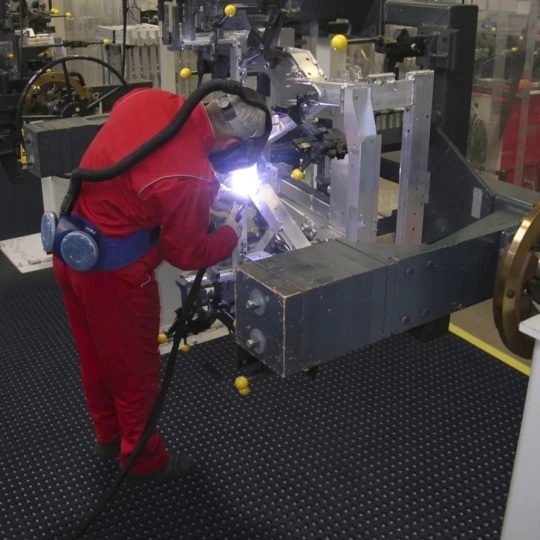
A welding workstation is one of the most demanding environments for industrial mats. It is subject to sparks and spatter with temperatures exceeding 1,000°C, intense mechanical movement, and contact with hydraulic oils and lubricants. At the same time, it is essential to ensure ergonomic comfort for the welder who spends the entire shift at the workstation.
Welding spatter can pierce or burn through any mat made from standard plastic or foam. The only suitable choice for welding workstations are mats certified for flame resistance. Under the ASTM E648-03 (NFPA 253), which applies to industrial-grade welding mats, Class 1 denotes a material with a Critical Radiant Flux of not less than 0.45 W/cm². This translates to high resistance to ignition upon direct contact with welding spatter. In the event of a fire, mats of this class produce minimal amounts of smoke and toxic gases, which is of crucial importance in enclosed production halls. In the European classification system EN 13501-1, the equivalent is class Bfl-s1 or Cfl-s1 (flame-retardant with low smoke emission).
As well as being flame-retardant, welding mats must meet the same ergonomic requirements as anti-fatigue mats. A welder standing at their workstation for 6–8 hours is exposed to the same strain on the musculoskeletal system as a worker on an assembly line. Adequate shock absorption, stability and a non-slip surface, even in the presence of welding spatter, are essential for safe and comfortable working conditions.
Drop us a line or give us a call – we’ll help you choose the perfect mats for your premises!
Piotr Śladowski, ergonomics specialist
Over 15 years’ experience in the industrial sector
Related products
Modular drainage mat H50, 91 cm x 91 cm
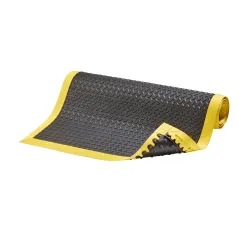
Ergonomic mat, oil-resistant D89

Modular, ergonomic, non-slip mat D62
Carpet runner G50 - fine profile
Grounding wire for the mat 4.5 m

Carpet runner G45 - bubble surface
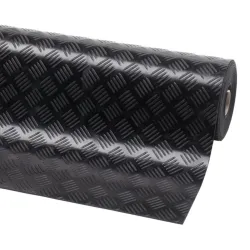
Shockproof, cushioning mat 0D5
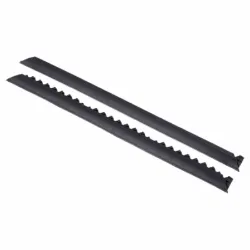
Element for arranging D69 mats
Mata magnetyczna, stalowa rama 900 x 600 mm
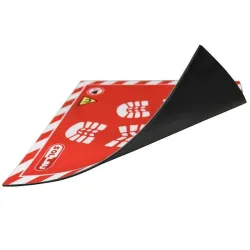
Magnetic, cleaning mat 500 x 500 mm

Related posts
Why is it worth using ergonomic mats?
Anti-slip protection