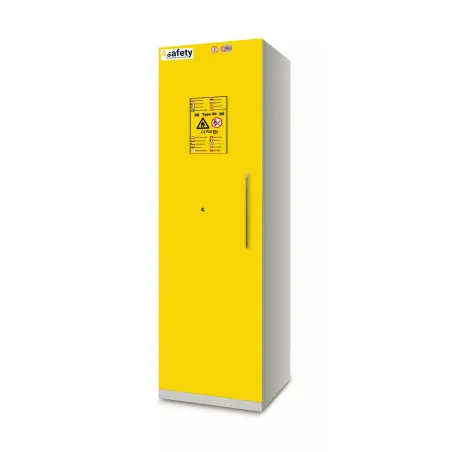
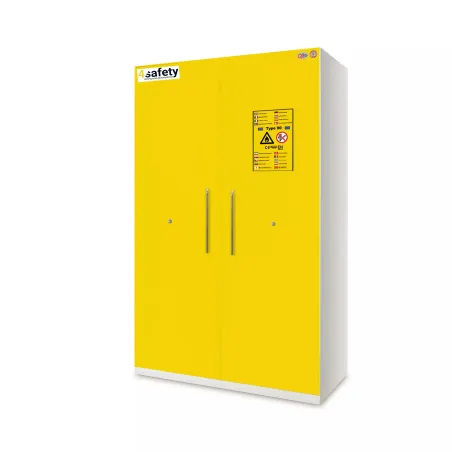
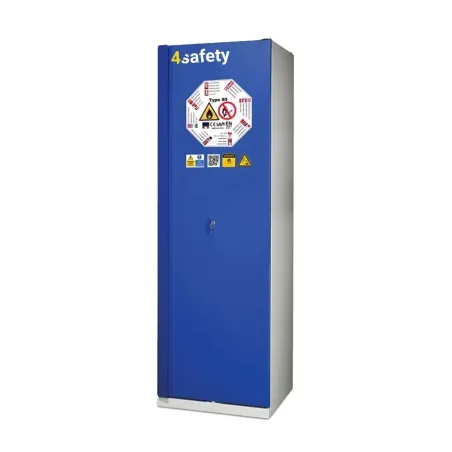
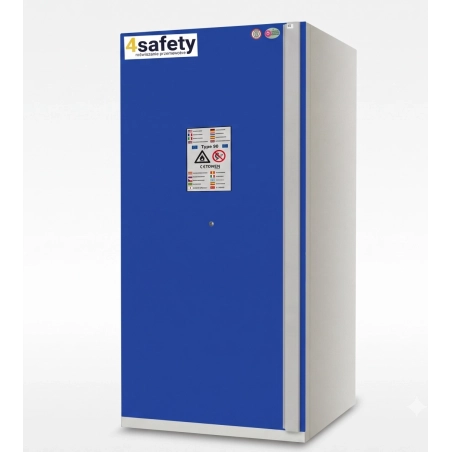
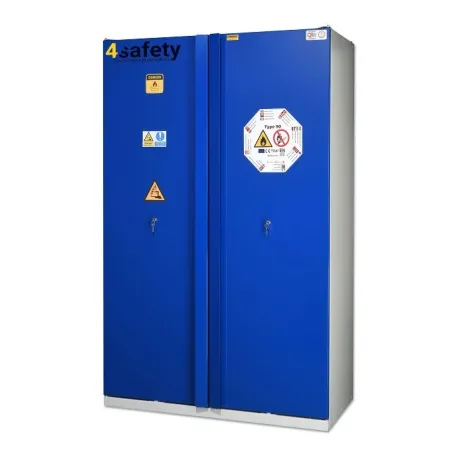
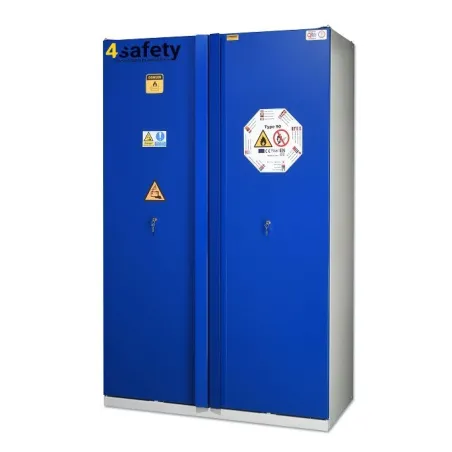
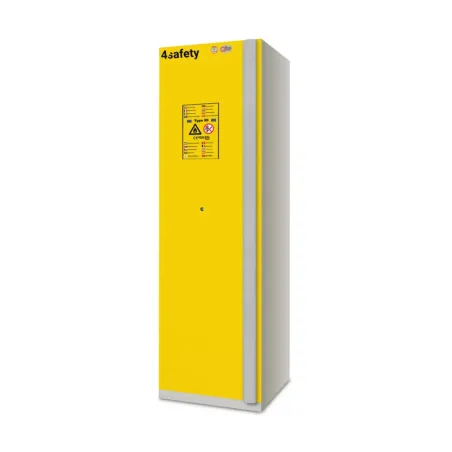
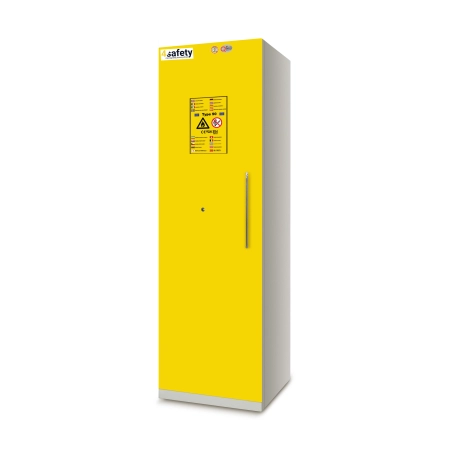
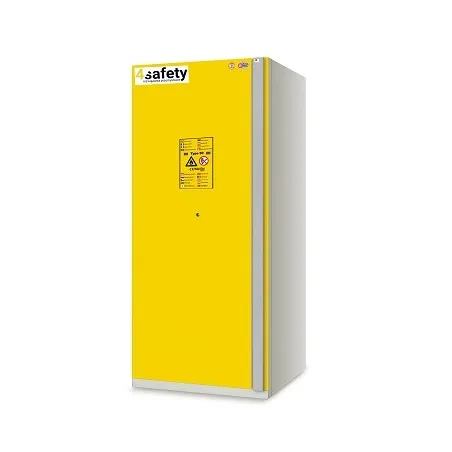
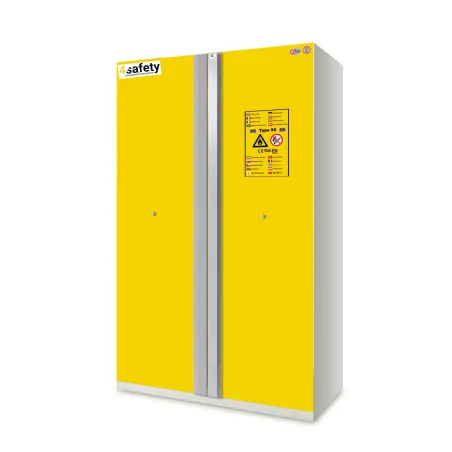
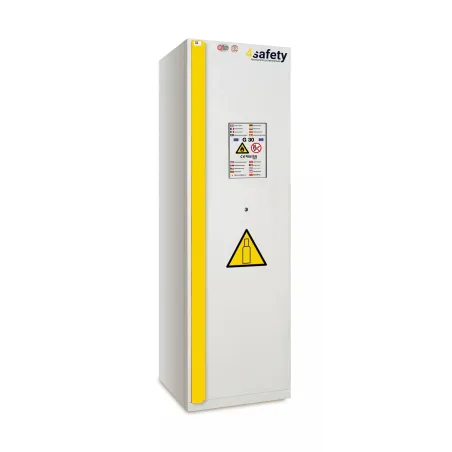
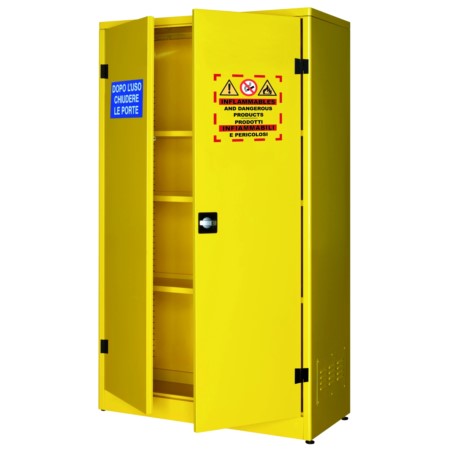
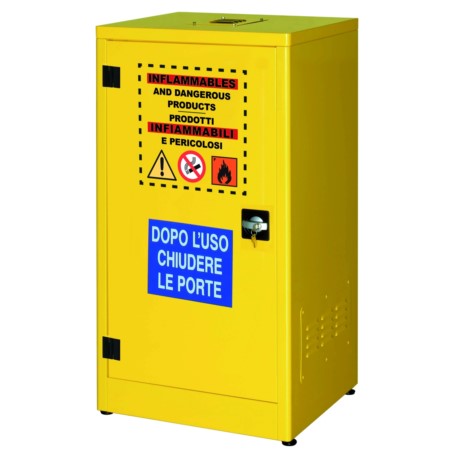
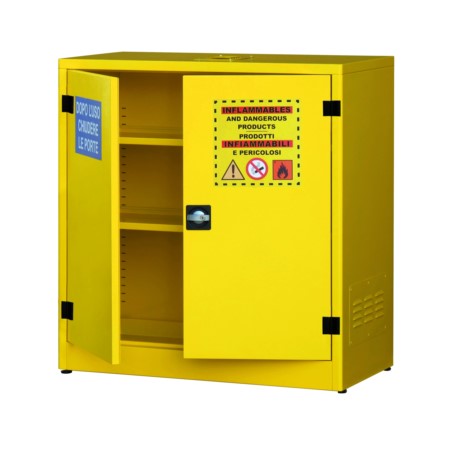
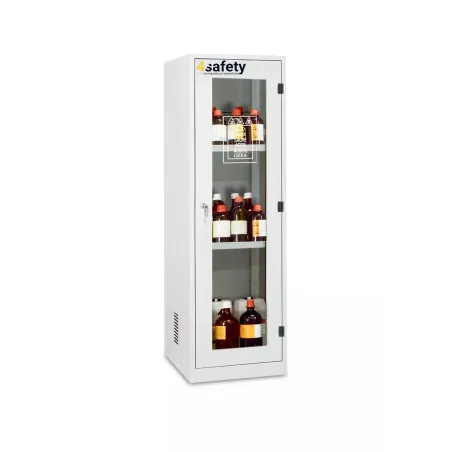
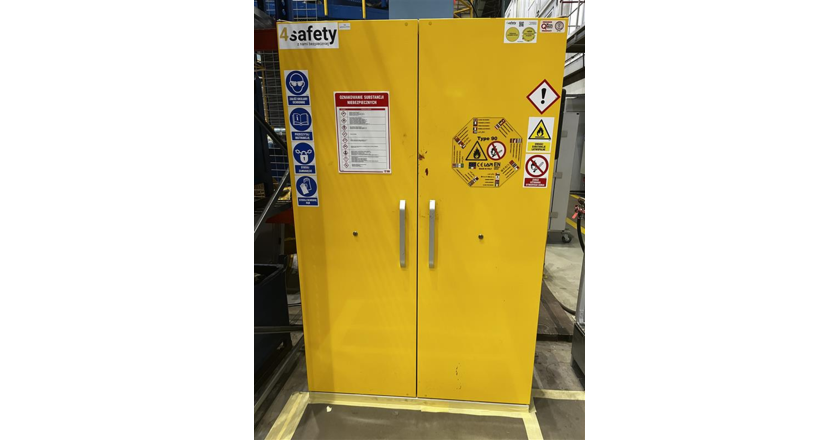
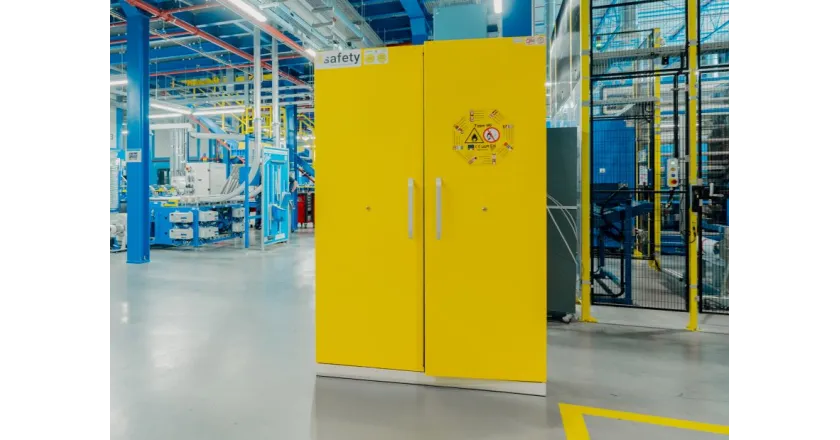
Manage hazardous substances in accordance with the requirements of ISO 9001, ISO 14001 and ISO 45001 and reduce the number of accidents, environmental incidents and fires in the workplace. You can safely store substances regardless of whether they are small containers, bottles, drums or IBC tanks. How? Choose the safety cabinet suitable for your facility.
Do you store hazardous substances, chemicals, flammable materials, batteries in your facility or warehouse? One of the key aspects of ensuring protection against incidents related to hazardous materials is special safety cabinets.
Depending on the type of substances stored and the function of the cabinet, they are divided into:
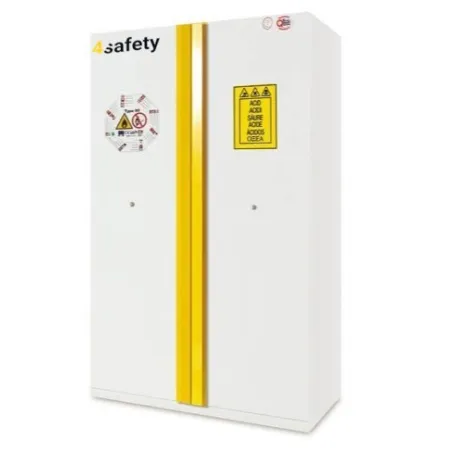
1. Chemical cabinets
Chemical cabinets are specially designed units for storing chemical substances. They are characterized by a durable construction and the possibility of separating the interior for different types of chemicals, which prevents chemical reactions and accidental mixing of substances. They usually have markings and colored labels informing about the contents.
2. Security cabinets
Security cabinets are versatile units that provide protection against various threats, such as fire, theft or unauthorized access. They can be equipped with various security mechanisms, such as electronic locks or alarms.
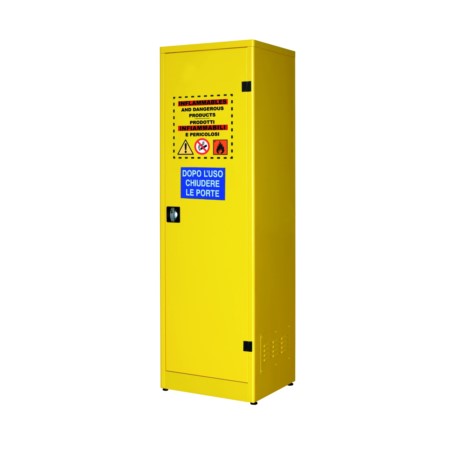
3. Cabinets for hazardous substances
These cabinets are intended for storing substances considered hazardous, such as toxic or corrosive materials. They usually have a special interior and ventilation systems to avoid possible leaks.
4. Fire-resistant cabinets
Fire-resistant cabinets are designed to protect the contents from the effects of fire for a specified period of time.
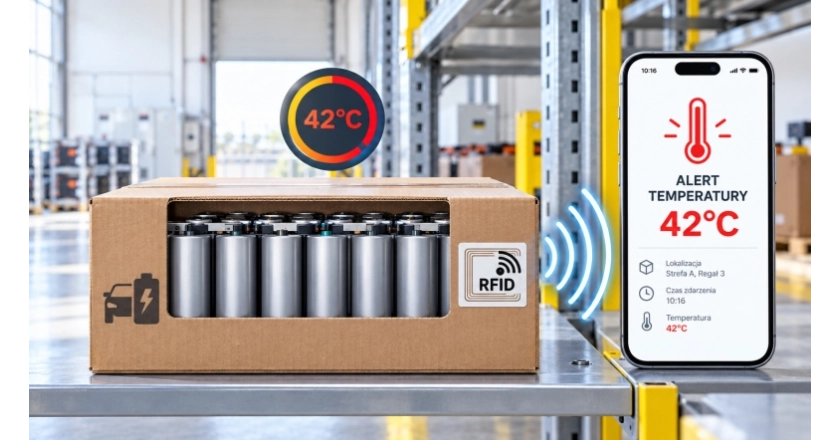
5. Cabinets for lithium-ion batteries
Lithium-ion battery cabinets are essential in facilities that use these batteries, ensuring safe storage and charging, as well as protection against overheating and overloading.
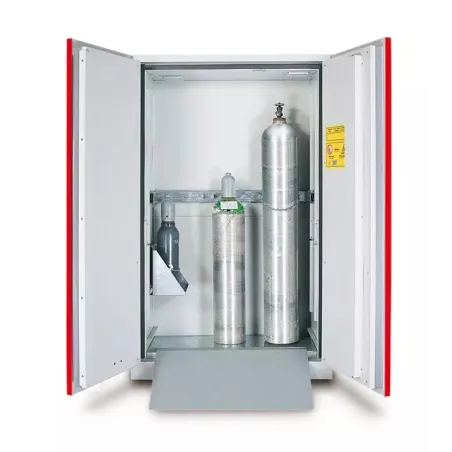
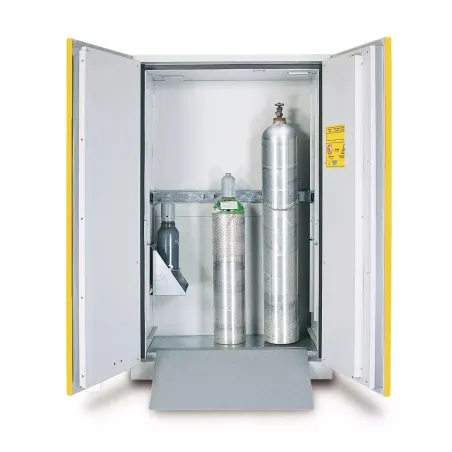
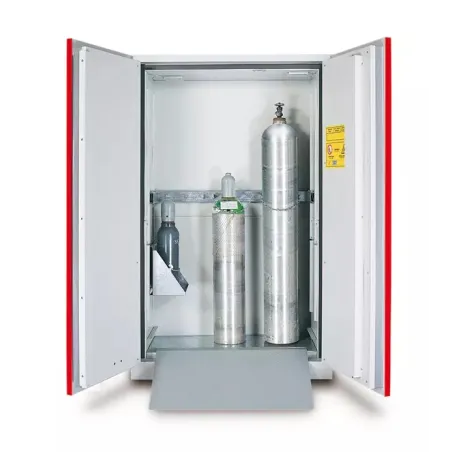
6. Cabinets for gas cylinders
In industrial facilities that use gases, gas cylinder cabinets provide safe storage and access to gases. They usually have appropriate holders and locks.
7. Under-table cabinets
Under-table cabinets are an ergonomic solution that allows employees convenient access to tools and materials without having to bend down.
8. Cabinets with pull-out shelves
Cabinets with pull-out shelves allow for better organization and access to stored items, which increases work efficiency.
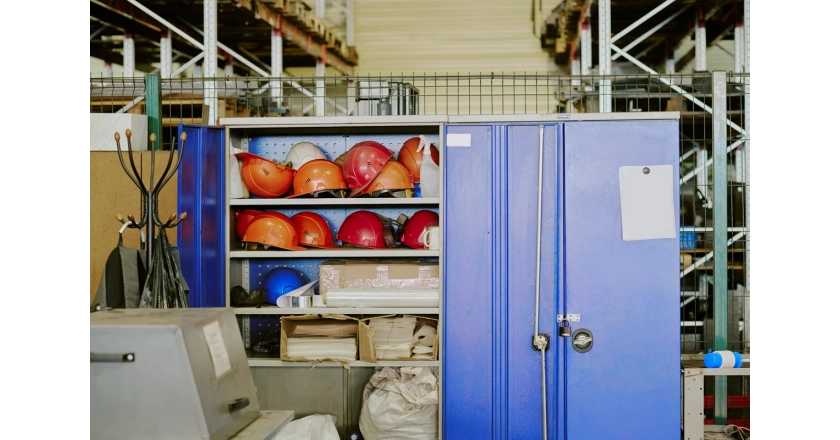
9. Workshop cabinets
Workshop cabinets are ideal for storing tools and equipment in workshops and service centers. They have special holders and tool organizers.
What should you consider when choosing a cabinet?
When choosing a safety cabinet, it is worth considering:
- the type of stored materials,
- safety requirements (e.g. fire protection, chemical),
- space availability in the facility,
- security systems (locks, alarms),
- standards and regulations governing the storage of specific substances.,
- the required fire resistance.
Why is it worth having protective cabinets?
- You will store hazardous substances in a safe and organized manner.
- You will ensure a safe evacuation time in the event of a fire.
- You will comply with regulations and standards.
- You will increase the permitted quantities of flammable and combustible liquids in controlled areas.
- You will improve efficiency by placing materials near the place of use.
- You will warn about dangerous and flammable contents.
- You will reduce the risk of environmental contamination.
A few examples of situations in which safety cabinets play an important role in minimizing risk:
1. Fires: safety cabinets, especially fire-resistant ones, help prevent the spread of fire. The fire resistance of the cabinet gives employees time to evacuate and allows firefighters to intervene before the fire spreads.
2. Leaks and chemical spills: cabinets are equipped with systems protecting against leaks and spills. Thanks to this, the risk of environmental contamination or employee contact with hazardous substances is minimized.
3. Explosions: in facilities where there is a risk of explosion (e.g. in the chemical industry), safety cabinets meet stringent safety standards to prevent explosions and minimize their effects. They are equipped with explosion-proof protections that reduce the risk of sparking and ignition.
4. Access by unauthorized persons - cabinets are equipped with locks and security features that make access difficult for unauthorized persons.
7. Temperature and humidity control: in the case of some chemicals or materials, temperature and humidity control in safety cabinets is crucial to maintain their stability and properties. Appropriately designed cabinets can provide controlled environmental conditions.
Safety cabinets for hazardous substances must meet appropriate standards and have appropriate certificates to ensure that they are safe and effective in storing these substances. Below are some of the most important standards and certificates that cabinets of this type should meet:
1. EN 14470-1 Standard: Fire-resistant cabinets for storing hazardous substances
- This standard specifies the requirements for the fire resistance of cabinets for hazardous substances. It defines the time during which the cabinet must be able to delay the development of fire to enable evacuation or intervention.
2. EN 14470-2 Standard: Fire-resistant cabinets for storing hazardous substances in quantities less than 850 liters
- This standard applies to cabinets with a smaller capacity than specified in EN 14470-1. These cabinets must still provide fire resistance, but the requirements are adapted to the smaller quantities of stored substances.
3. CE Certificate: Compliance with European standards
- The CE certificate confirms that the product meets European safety standards. In the case of safety cabinets for hazardous substances, the CE certificate means that the product has been tested and approved in accordance with the relevant European directives.
4. ATEX Certificate: Safety in explosive atmospheres
- If the cabinet will be used in explosive atmospheres (e.g. in chemical plants), an ATEX certificate may be required. This means that the cabinet is adapted for operation in an environment where there is a risk of explosion.
5. UL Certificate (Underwriters Laboratories): Safety standards in the USA and Canada
- If the products are intended for the American or Canadian market, the UL certificate is important. The Underwriters Laboratories organization deals with the evaluation and certification of products in terms of safety.
6. FM Certificate (Factory Mutual): Industrial safety
- The FM certificate is issued by Factory Mutual Insurance Company and is valued among industrial enterprises. The product must meet their rigorous safety standards.
7. ISO Certificate: Quality and safety management
- The ISO certificate is proof that the manufacturing company applies quality and safety management systems in the production process of safety cabinets. It is worth checking whether the manufacturer has ISO 9001 certification (quality management) and ISO 45001 certification (occupational health and safety management).
When choosing a safety cabinet for hazardous substances, it is important to make sure that the product has the appropriate certificates and meets the applicable standards, which ensure its effectiveness in storing chemical substances as well as the safety of employees and the environment.
Use our safety cabinets for storing flammable liquids, corrosive substances, and other combustible and hazardous materials.
Check out the offer and choose safety!