Our regional advisors will help you choose a product tailored to your needs | We provide installation, service, and inspections! | Only trusted suppliers!
Shopping cart (0)
- Products
-
Services
- Spill response training
- Lockout Tagout implementation
- Inspection and maintenance of safety cabinets
- Lockout Tagout training
- Office equipment and layout
- Selection and installation of industrial matting
- Delivery and installation of flexible barriers
- Marking of traffic routes
- Traffic risk assessment audit
- ATEX technical audit
- Selection and installation of industrial safety fencing
- Catalog
- Case study
- Blog
- About us
- Contact
Flexible post guards and bollards – What are they and why are they worth installing?
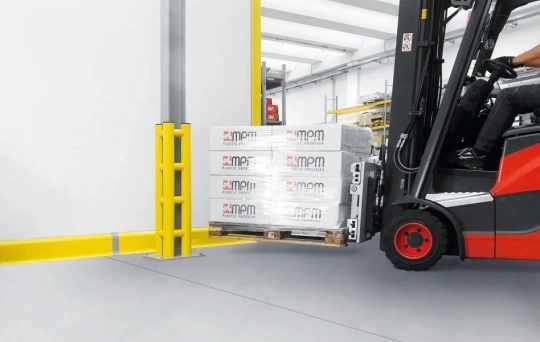
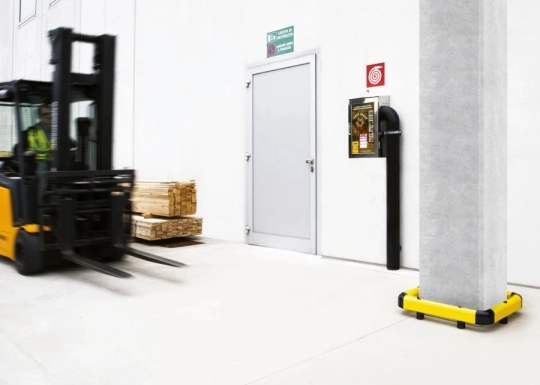
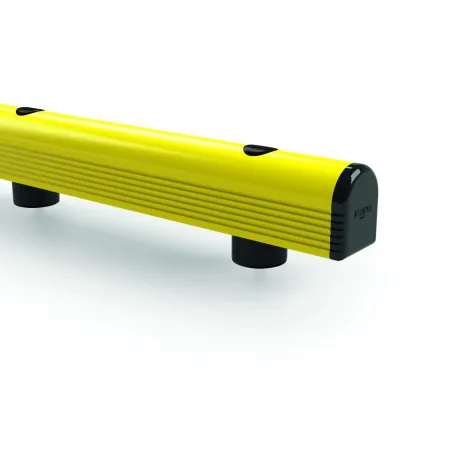
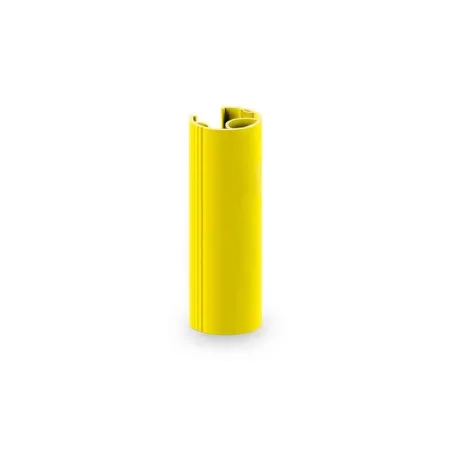
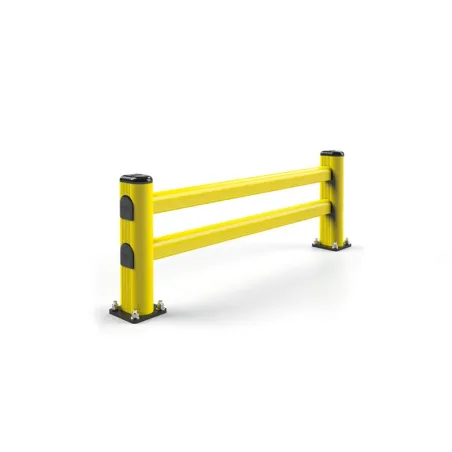
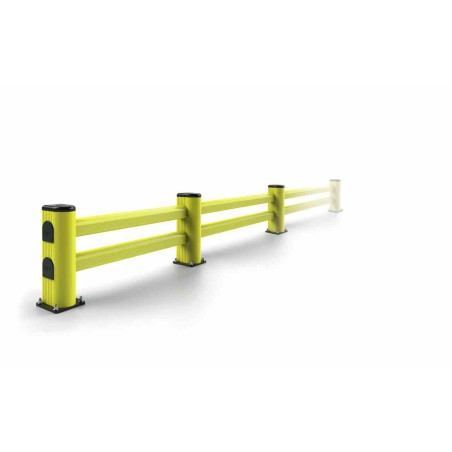
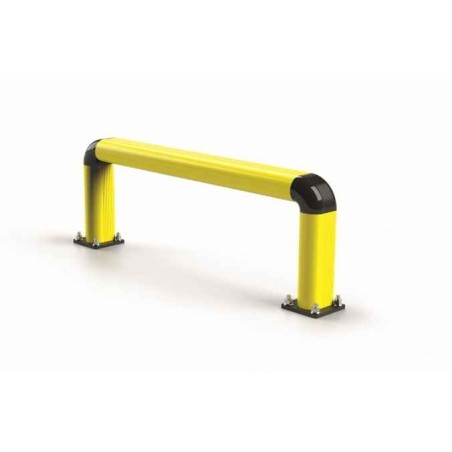
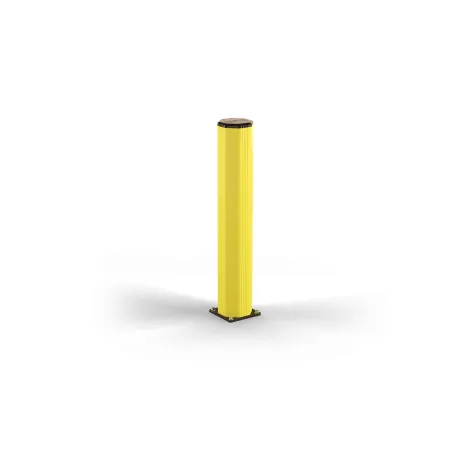
Flexible post-type bumpers and guards are safety devices designed to protect the infrastructure of warehouses or industrial and manufacturing halls. Their purpose is to absorb and dissipate impact energy in a controlled manner within an industrial environment, thereby eliminating the costs of repairs and downtime caused by accidents and collisions. Unlike traditional steel protective barriers, which suffer permanent deformation and transfer the impact force to the building structure or equipment, flexible post-type bumpers and guards absorb the energy.
Find out about industry standards and the solutions available from 4safety. Take advantage now of the opportunities we offer as a professional distributor.
Contents:
- What are flexible guards and post-mounted bollards, and when should they be used?
- Design, construction and specifications of flexible bollard barriers
- Where and why should flexible bollards be installed?
- Flexible post-type bumpers – For use in warehouses and production halls
What are flexible guards and post-mounted bumpers, and when should they be used?
The selection of safety measures must be preceded by a risk assessment, in accordance with the guidelines set out in PAS 13:2017. These guidelines state that safety systems in industrial facilities must be tailored to the specific parameters of the working environment, such as vehicle weight, speed of movement and potential impact energy. Flexible bollard barriers and guards are therefore an integral part of the overall safety management system, meeting specific requirements tailored to particular standards.
The use of flexible post-type bumpers stems from the need to meet organisational requirements regarding workplace safety. In areas with heavy forklift and internal transport traffic, it is essential to protect the infrastructure and clearly mark hazardous zones. Standards such as ISO 3864 and DIN 4844, which define the rules for the use of safety colours and warning signs – including the distinctive yellow and black stripes – are therefore of great importance. The use of bright colours on bumpers and guards is no coincidence. It is a deliberate measure aimed at increasing the visibility of obstacles and reducing the risk of collisions. Flexible post bumpers and guards therefore serve a dual purpose – they protect the area and workers, and warn of danger.
Crash barriers are required in areas at risk of traffic incidents, taking into account:
- structural columns,
- corners of walls,
- industrial doors,
- pallet racking,
- transport links.
It is in these areas that the highest number of incidents occur, resulting from limited visibility, time pressure and the intensity of logistics operations. Flexible post-type crash barriers help to mitigate the consequences of such incidents and improve staff safety whilst ensuring the stability of operational processes. Their use is therefore a practical tool for risk management.
Do you need practical support in putting together your equipment? Take advantage of the professional assistance offered by the 4safety team today. We are entirely at your disposal, and our adviser will ensure you receive support at every stage of your project.
Design, construction and specifications of flexible bollard barriers
Flexible post-type crash barriers are designed as engineering solutions. Their design therefore incorporates the use of high-resilience engineering polymers, capable of deforming and returning to their original shape even after repeated collisions. Unlike traditional steel safety barriers, flexible crash barriers minimise the impact of a collision on both the infrastructure and the vehicle. This is reflected in the PAS 13:2017 guidelines, which state that an effective barrier should be designed on the basis of real-world collision scenarios, rather than static parameters alone.
A key aspect of assessing the quality of a kerb is its technical specifications – for example:
- impact energy absorption capacity, expressed in joules,
- resistance to repeated collisions,
- size,
- method of installation and anchoring to the substrate.
The flexible post-mounted crash barriers and protective covers from 4safety available in our range are tested under conditions that simulate real-life incidents – taking into account the vehicle’s weight, speed and angle of impact. The specifications declared by the manufacturer are therefore supported by test reports.
Remember! Performance characteristics are also important, such as resistance to temperature fluctuations, chemical exposure and UV radiation, which, in an industrial environment, have a direct impact on the durability of the protective coating. If you have any questions, seek professional advice from the 4safety team.
Please note! The distinctive yellow and black colour scheme is based on the principles set out in the ISO 3864 and DIN 4844 standards. These standards define how safety colours should be used to maximise the visibility of hazards to users of industrial spaces. A well-designed bumper also acts as a preventative measure – it increases the visibility of obstacles and influences operators’ behaviour, reducing the number of potential collisions before they even occur.
Gdzie i dlaczego montować elastyczne odbojnice słupowe?
Flexible post-type crash barriers should be installed at sites where there is a risk of collision between vehicles and infrastructure. This applies to:
- structural columns,
- corners of walls,
- loading and unloading areas,
- industrial doors,
- transport corridors where transport routes intersect.
Their layout should be planned in accordance with the approach set out in PAS 13, i.e. it should be based on a risk analysis taking into account traffic volume, the type of vehicles used and the nature of the facility’s operations. A properly designed safety system helps to minimise both the consequences of collisions and their frequency.
Installing bumpers is one of the simplest and most effective ways to reduce the costs associated with damage to infrastructure. In a warehouse or production environment, even minor collisions can have serious consequences – ranging from downtime and costly repairs to risks to staff health. Take advantage of this opportunity by investing in a simple safety system from 4safety.
The positioning of the bollards should complement the road markings and signage, creating a consistent and clear working environment. If you are unsure how and where to install flexible bollards, we are here to help. Please contact us now.
Flexible post-type bumpers – For use in warehouses and production halls
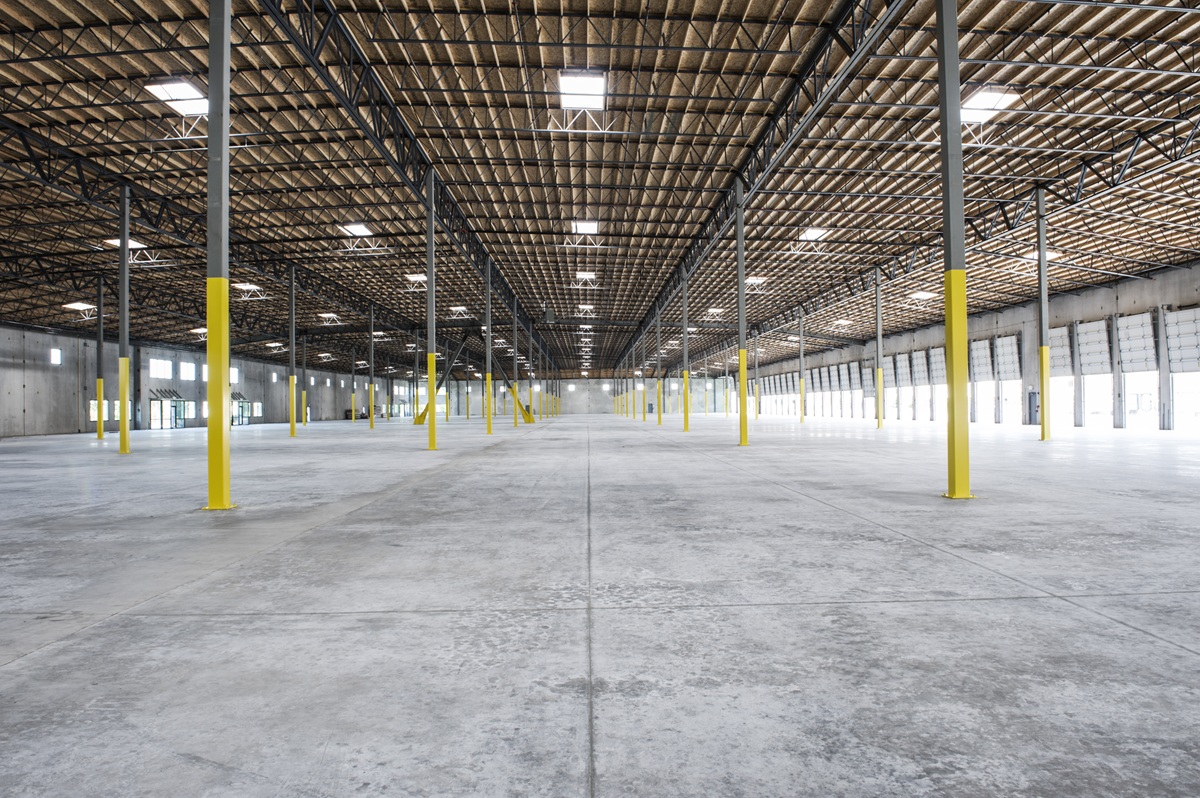
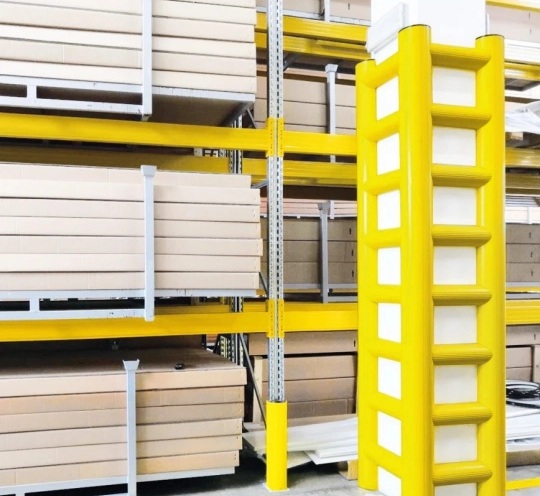
Warehouse environments (particularly high-bay warehouses) are among the most demanding in terms of infrastructure safety. Narrow working aisles, heavy forklift traffic and operational pressure mean that the risk of collisions is exceptionally high. Flexible column bumpers therefore play a key protective role, safeguarding columns, racking and critical points within the logistics system. Their use complies with the requirements of the PN-EN 15635 standard, which emphasises the need to protect storage systems against mechanical damage and to regularly assess their technical condition.
In production halls, the role of flexible post-mounted bumpers takes on added significance due to the presence of machinery, production lines and operators’ workstations. Unlike in warehouses, where the main aim is to protect racking and structural elements, in production it is crucial to safeguard high-value equipment and ensure the safety of staff. Flexible post-mounted bumpers minimise the impact of incidents that could lead to costly downtime or repairs.
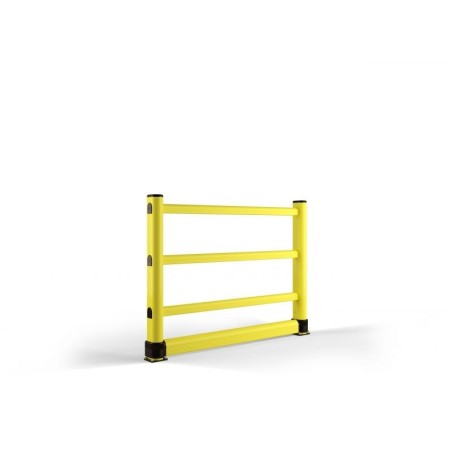
Flexible post-type barriers are essential in mixed-use areas where vehicle traffic and pedestrian movement intersect. It is in these areas that the highest number of incidents occur, resulting from restricted visibility or a lack of clear demarcation of spaces. Flexible post-type crash barriers, when combined with appropriate signage, help to demarcate the boundaries of these zones and raise awareness of hazards amongst staff. Their colour scheme and marking should comply with the principles set out in ISO 3864 and DIN 4844, which reinforces their preventive function and helps to improve traffic management.
Related posts
Case study: implementation of a flexible barrier system in a production plant!
Steel or flexible: which industrial bumpers should you choose?