Our regional advisors will help you choose a product tailored to your needs | We provide installation, service, and inspections! | Only trusted suppliers!
Shopping cart (0)
- Products
-
Services
- Spill response training
- Lockout Tagout implementation
- Inspection and maintenance of safety cabinets
- Lockout Tagout training
- Office equipment and layout
- Selection and installation of industrial matting
- Delivery and installation of flexible barriers
- Marking of traffic routes
- Traffic risk assessment audit
- ATEX technical audit
- Selection and installation of industrial safety fencing
- Catalog
- Case study
- Blog
- About us
- Contact
LOTO system in lighting production: how Trilux gained control over various energy sources and external companies
LOTO (Lockout Tagout) is a system for controlling hazardous energy that protects employees during maintenance work on machinery and installations. In this case study, you will learn how this implementation — from the audit, through the selection of equipment, to training and an educational video — enabled the TRILUX production plant to manage safety issues relating to several energy sources, its own staff and external subcontractors.
Find out what a full LOTO implementation looks like in practice and what real benefits a site stands to gain by adopting it.
What is TRILUX aiming for?
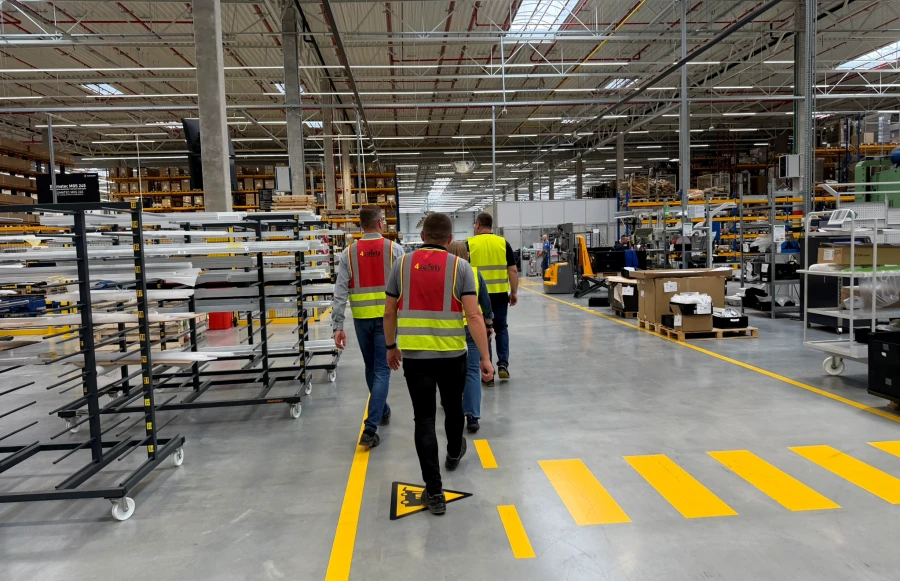
Trilux is a modern manufacturing plant specialising in the production of lighting, located in Świdnik near Lublin
Shift work, an extensive machine park and an increasing number of external companies carrying out servicing and maintenance. The plant utilises several energy sources — electricity, compressed air (high and low pressure) and gas systems. Each of these poses a risk of a dangerous release of energy if the machine is not correctly isolated prior to maintenance work. The more contractors there are on site, the harder it is to be certain that each of them is familiar with the exact procedure for isolating the power supply at a given workstation. TRILUX’s management has made one thing clear: the safety of employees and subcontractors — is a priority.
Solution: A LOTO system tailored to the facility
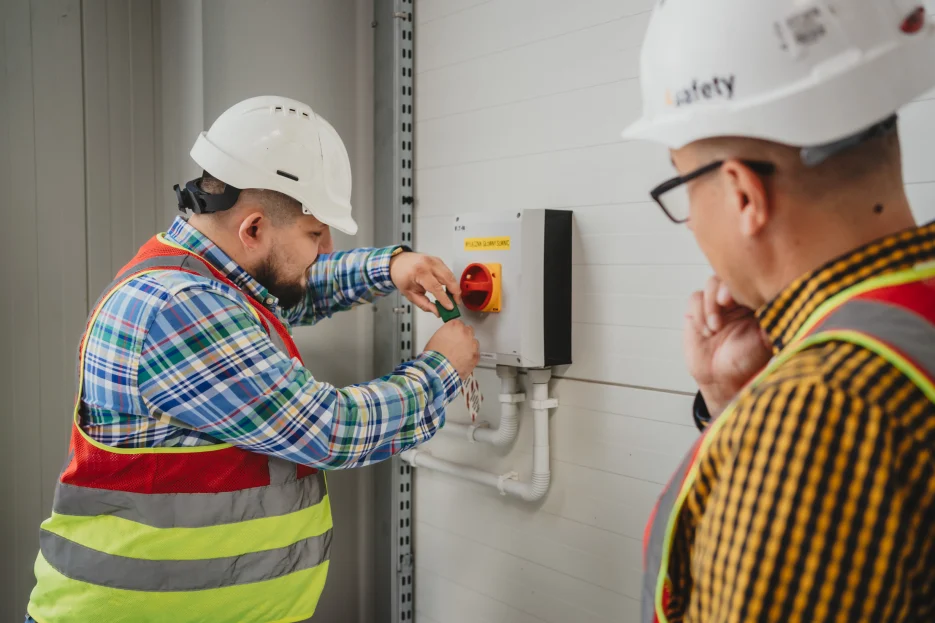
LOTO (Lockout Tagout) is a system for controlling hazardous energy sources — in a nutshell! Contrary to popular belief, it’s not just about padlocks and locks; what really makes it effective are precise instructions and trained staff!
What was the implementation process like?
The five-step implementation process:
1. **Facility audit**: a review of all energy sources.
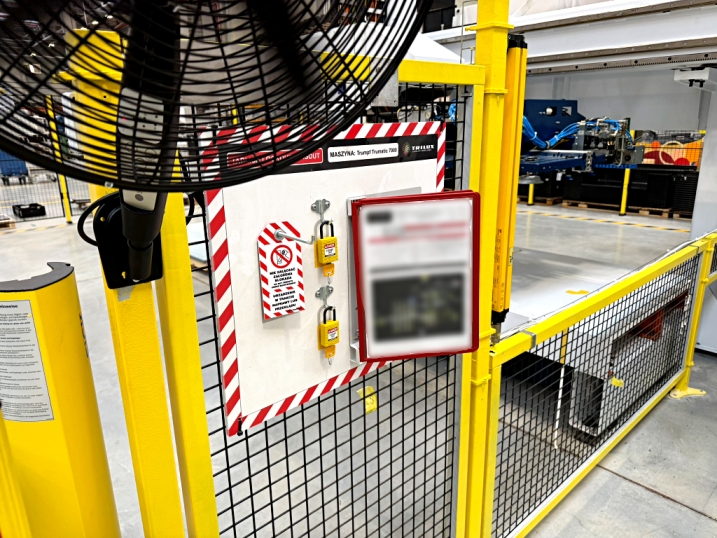
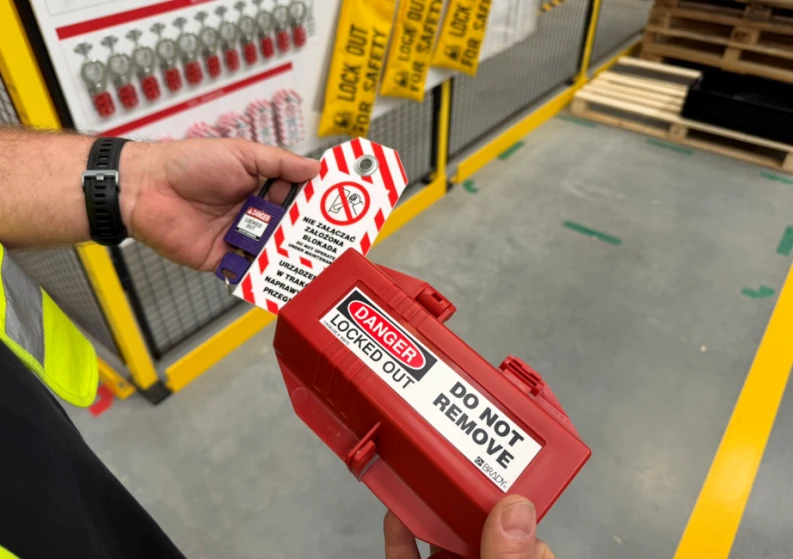
2. **Equipment selection**: locks and tags tailored to the specific machines in the installation.
3. **Workstation instructions**: detailed procedures for switching off the power supply at each workstation.
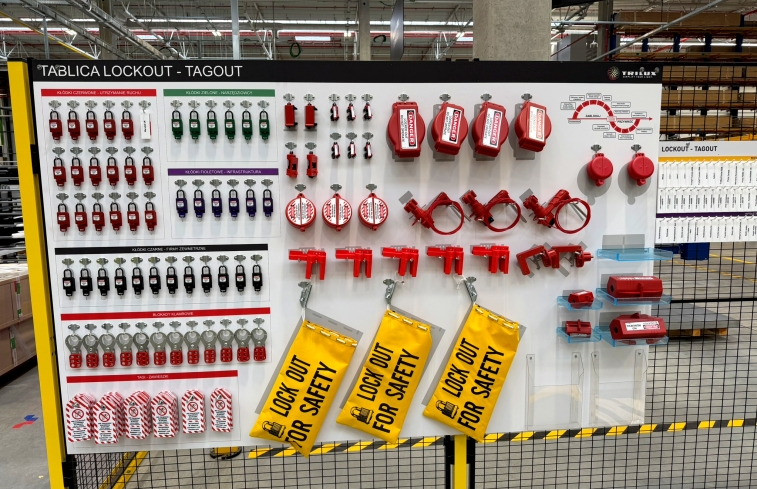
4. **Loto board**: a complete set of marking and locking equipment, all in one place.
5. **Training and video**: induction and refresher training, and videos to help new staff get up to speed quickly.
Watch video reports straight from the production plant! See how LOTO implementation works in practice and how the collaboration unfolded at every stage of the project. In the report, you’ll also hear from Adam Szymiec, Maintenance Manager, and Agnieszka Duda, EHS Manager for Health, Safety and the Environment.
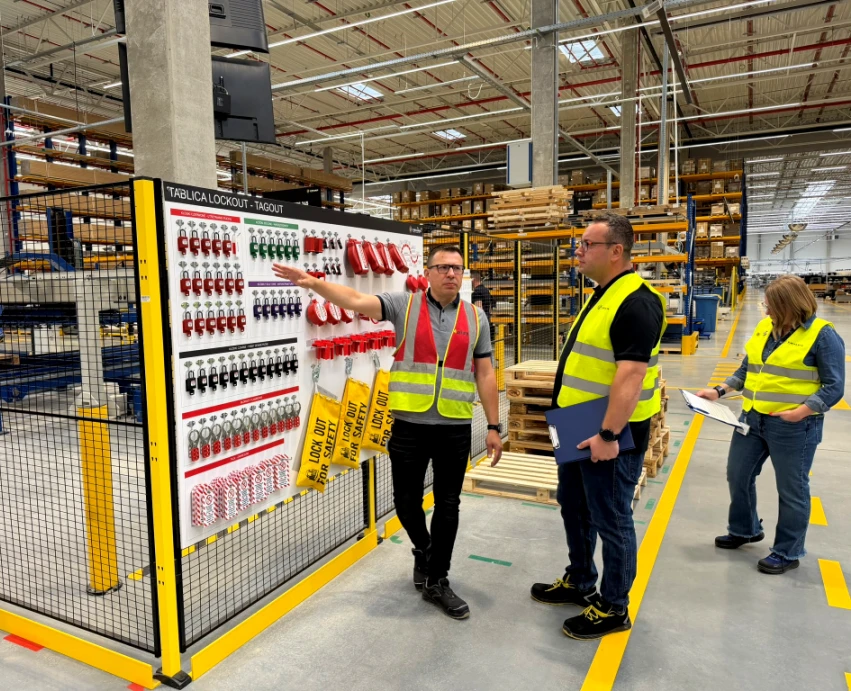
The Loto panel, which was designed specifically to meet TRILUX’s requirements, also deserves special mention.
Every lock, padlock and component has its own precise position, marked out in the shape of that component.
The result? A quick glance is all it takes to see whether everything is in its place, whether anyone is currently using a particular safety lock in the workshop, and any missing parts are immediately obvious. This is a real boon for maintenance and health and safety: the equipment is always complete, easy to check and ready for use whenever a machine needs to be secured.
But locks and padlocks aren’t the whole story! For TRILUX staff, the focus was on face-to-face training. This is more than just explaining a procedure: people needed to understand how the LOTO system works and why it is worth using in the first place, rather than simply because they have to. This distinction matters — an employee who understands the purpose of a lockout won’t bypass it ‘because they’re in a hurry’, but will treat it as a natural part of their work.
For external companies, however, a different approach works well — a short video setting out the safety rules, which every new team can watch before entering the hall.
Before they enter the hall — a five-minute film explains everything
And when a new maintenance team arrives on site, there’s no time for lengthy classroom-based training. That’s why, at TRILUX, external contractors watch a short film lasting a few minutes, recorded directly on the production floor — it isn’t pre-made footage from the internet, but a recording of their own machines, workstations and procedures, which they’ll be working with shortly. As well as the LOTO system itself, the video also covers the general safety rules in force on the premises – in other words, what everyone should know before they even set foot in the production hall!
Would you like to implement a LOTO system at your site? Book a consultation — online or in person. Drop us a line and an adviser will get in touch with you to discuss all the details and answer any questions specific to your production process."
The implementation of LOTO at TRILUX shows that safety during maintenance work does not have to mean chaos, downtime or endless training for successive teams. A well-designed system — tailored equipment, clear workstation instructions, a shadow board and a short video instead of training from scratch — ensures that both employees and external contractors know exactly how to safely disconnect the power supply before starting work.
For a manufacturing plant, this translates into tangible benefits: less risk, less uncertainty every time a subcontractor visits, and a single, consistent standard that works regardless of who happens to be on the production floor.
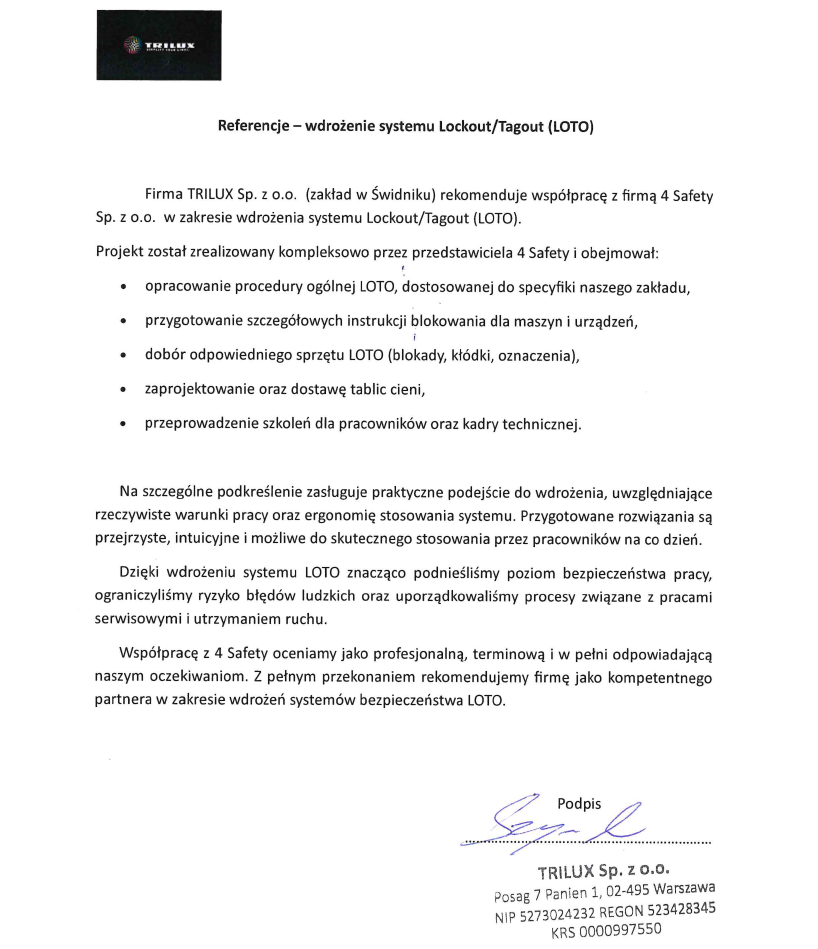
See the testimonial from TRILUX for 4safety regarding the implementation of the LOTO system.
Related posts
Case study: implementation of a flexible barrier system in a production plant!
Case study - implementation of the LOTO system in a manufacturing plant